

Urban Legends that Won't Die: Chalice-Shaped Stanzas

I would say that this post begins another (very) occasional series, but I would hate to raise the hopes of those readers who are eagerly awaiting the second installment of my last (very) occasional series. I will merely note that this may or may not become a (very) occasional series, but there is certainly enough material available for that to happen. Alternate titles could be “Bees in my [Metaphorical’ Bonnet” or “What Really Grinds My Gears.” I proffer these additional suggested titles to soothe the intellectual turmoil of those who may dislike my use of the term “urban legend” in this way, which I mean here to be “an often-repeated story or phrase that has no basis in historical reality, but whose constant repetition has given it a sense of authority in spite of its falsity.”
Now, to the matter at hand. If you are a reader of this blog, and thus also inhabit the broader sphere of the Lutheran Church—Missouri Synod or other Lutheran churches, you may well have heard some form of the following:
Did you know that when Philipp Nicolai wrote “How Lovely Shines the Morning Star” / “O Morning Star, How Fair and Bright” / “Wie schön leuchtet der Morgenstern,” he wrote it so that the lines of text form the shape of a chalice?
The appeal is obvious. It underscores the sacramental imagery of a hymn that is perhaps not always understood in a sacramental light. It purports to impart a secret knowledge of a familiar subject, thus allowing the hearer entrance into a superior intellectual realm that he did not previously inhabit. Most importantly, it gives him one more thing to kvetch about with the release of each subsequent hymnal that doesn’t lay out the stanza “the right/historic/original way.”
The trouble is, of course, that many sorts of texts can be arranged in the shape of a chalice, and this does not thereby signify a sacramental connection. Limericks, for example, almost universally form the shape of a chalice by reason of their metrical structure, and are not thereby explicating eucharistic theology. I will present only this structural example because
The limerick packs laughs anatomical
Into space that is quite economical.
But the good ones I’ve seen
So seldom are clean
And the clean ones so seldom are comical.
The necessary question is, then, this: Did Nicolai himself actually envision the stanzas of his hymn being arranged in such a way as to form the shape of a chalice? The answer, then, should be readily apparent in Nicolai’s own initial printing of the hymn.
I thus offer the following images of the decidedly not-chalice-shaped text from its first printing in Nicolai’s Frewden Spiegel deß ewigen Lebens (1599), with no further comment necessary, save only that I hope this urban legend is finally put to rest.
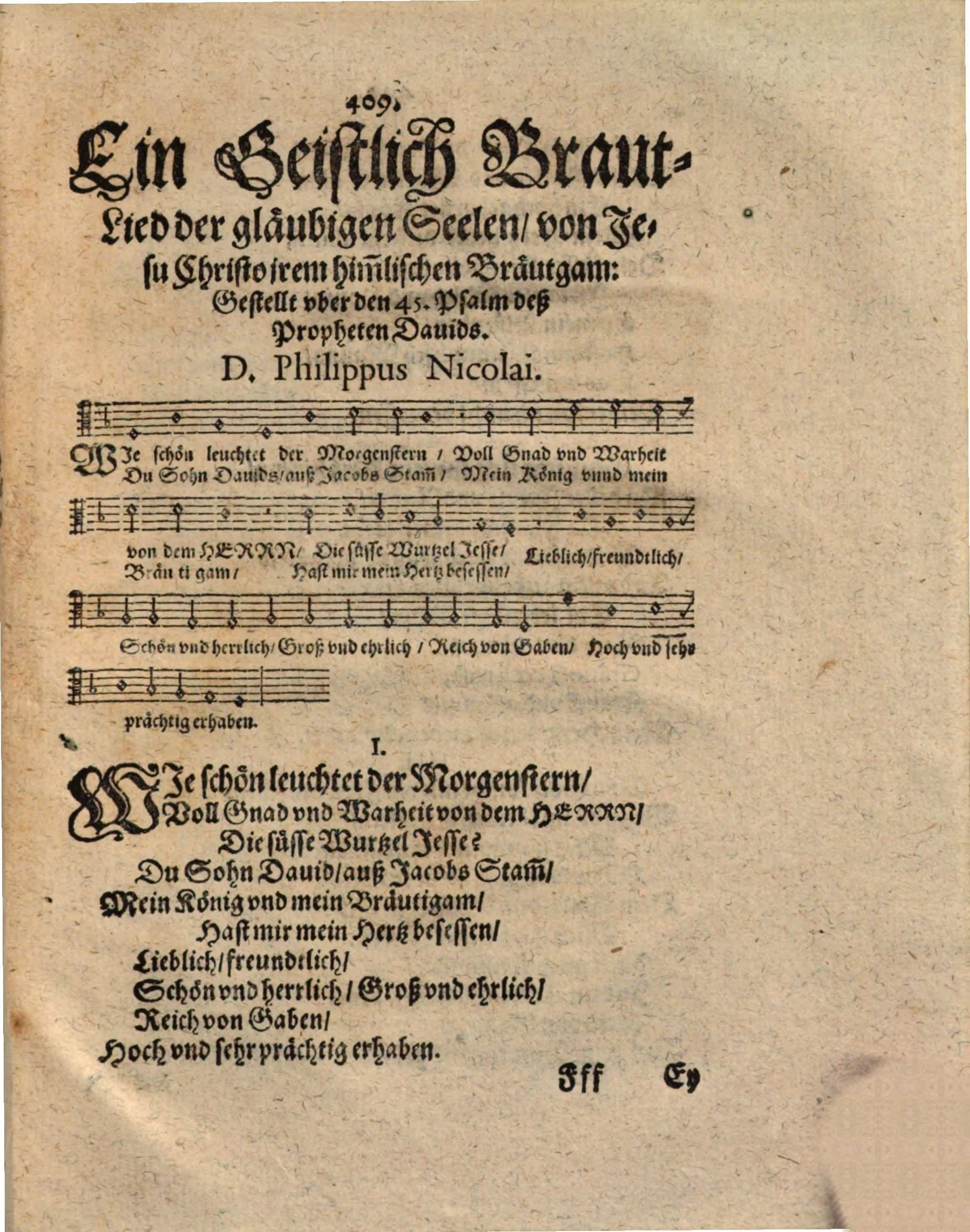
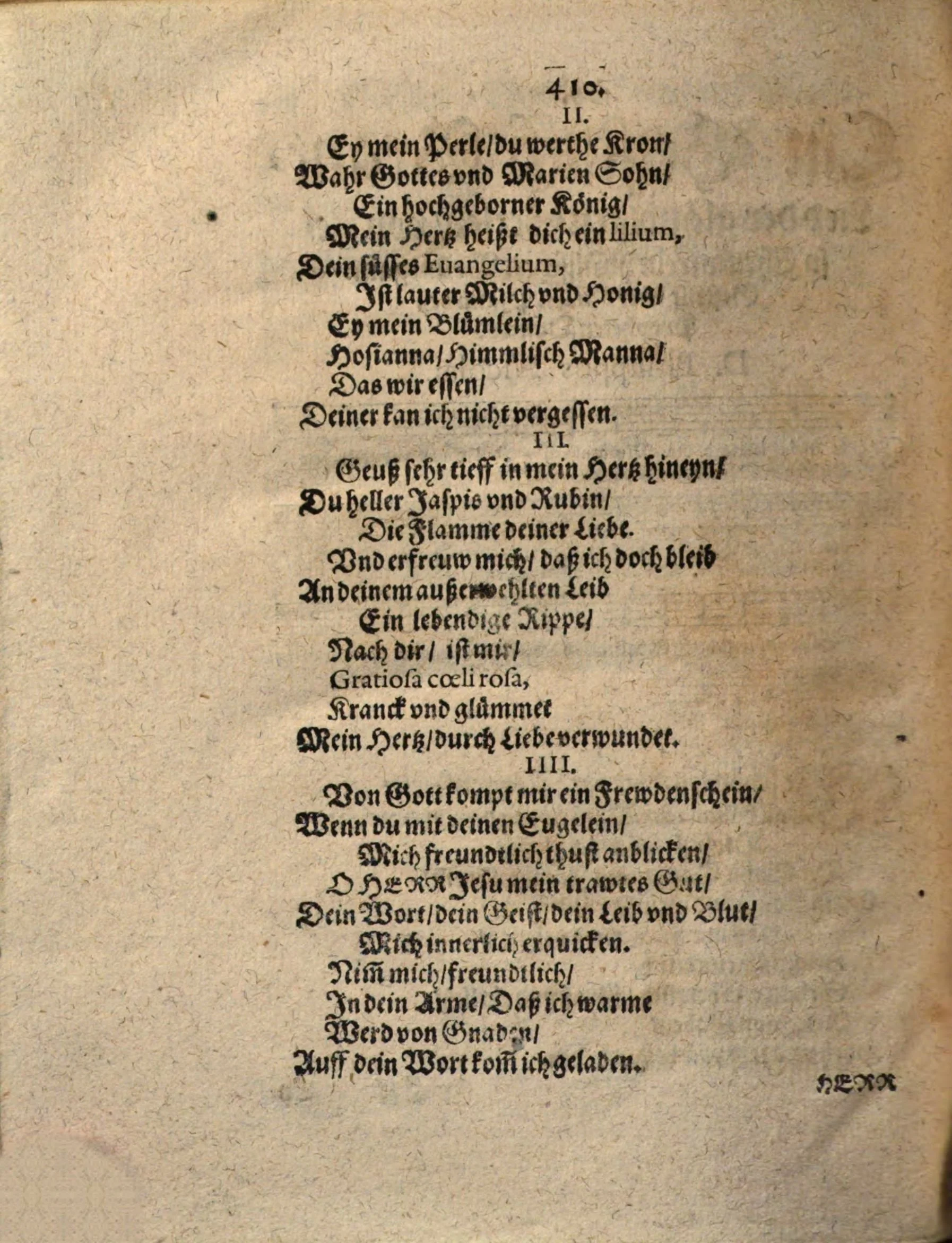
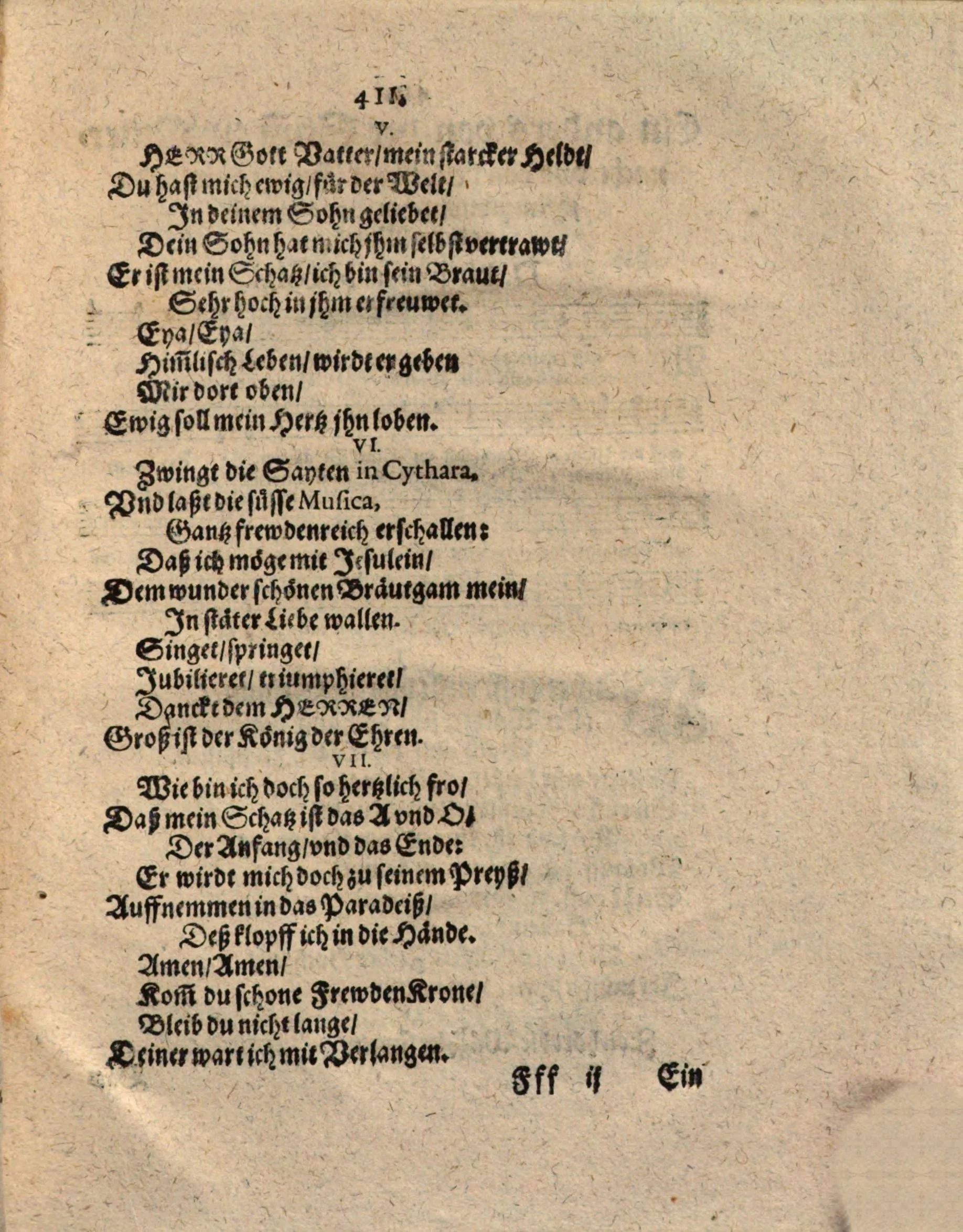
Fine, I have one more note. You should listen to this beautiful setting of Wie schön leuchtet der Morgenstern from Philadelphia-based and Grammy-nominated Lutheran composer Kile Smith.
[NOTE: I claim no credit for the above limerick, it is from an unknown author and was discovered on the interwebs.]