

The Corrosion of the Lutheran Chorale: "I Come, O Savior, to Thy Table" or, How Every 20th Century Theological Trend in the LCMS is Reflected in Revisions of One Hymn
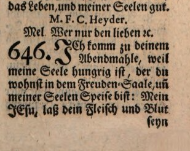
If there is one communion hymn that virtually everyone in the Lutheran Church—Missouri Synod knows in some way, it is “I Come, O Savior, to Thy Table.” You might have grown up singing it in a large stone church with clouds of incense, in a little wooden Gothic church in the middle of a cornfield, or in a drywall box at the unspeakably early “traditional” service before the praise band rolls in to take on the late service. You might have even sung it with a praise band. But if you grew up in the LCMS, you almost undoubtedly know it. The repetition of “Lord, may Thy body and Thy blood / Be for my soul the highest good” on every verse undoubtedly helps to cement it in the mind and heart from an early age. I certainly remember singing all fifteen stanzas (on red hymnal Sundays) in my youth.
It serves, then, as a great (and rather unfortunate) way to start this (very sporadic) series on the rather unfortunate fate that many Lutheran chorales have faced in the last century or so. As the reader has heard again and again, lex orandi, lex credendi, lex vivendi: the law of prayer is the law of belief. The aim of this sporadic series is primarily to show how the doctrinal upheavals of the last century have left their mark on Lutheran hymnody as it currently appears in Lutheran Service Book, and how these changes then shape our life together in the church today. I spoke in general about this idea briefly last summer, but a rather more thorough examination will doubtless prove more enlightening than off the cuff recollections. Thus, without further ado, we begin.
The hymn we know as “I Come, O Savior, to Thy Table” was written by Friedrich Christian Heyder (1677–1754) and first published in 1710 as “Ich komm zu deinem Abendmahle” with a total of 28 (!) stanzas. It is an exceptionally thorough meditation on the Eucharist, its first part primarily concerned with how a Christian ought to approach the Eucharist, and the remainder on the effects of the Eucharist — an abundance that recalls some of the richness of Lutheran Scholasticism on the subject.
It comes into the Lutheran Church—Missouri Synod as hymn no. 202 in the first hymnal of the LCMS, Kirchen-Gesangbuch für Evangelisch-Lutherische Gemeinden ungeänderter Augsburgischer Confession [Church Hymnal for Evangelical Lutheran Congregations of the Unaltered Augsburg Confession, hereafter KELG], reduced now to 21 stanzas (omitting the original stanzas 15–21), which is where our story must begin. While tracing the reception of the hymn’s original 28 stanzas in various hymnals over the century and a half from its first publication in 1710 to the first printing of KELG in 1847 would no doubt prove illuminating in some ways, it is not the question before us today.
It was not included in the Evangelical Lutheran Hymn-Book of 1912, or its predecessor of the same name from the English Synod, so its first English-language appearance is as no. 315 in The Lutheran Hymnal (1941). Nearly a century after its publication in KELG, the hymn has been reduced from 21 stanzas to 15, using the original stanzas 1–10, 14, 22–24, and 28. A comparison of the KELG and TLH versions can be found below (courtesy of Mr. Matthew Carver’s translation in Walther’s Hymnal), with stanzas omitted in TLH shown in italics. Take a few moments to read through the italicized stanzas, and note any common themes that were excluded.
1. I come, O Savior, to Thy Table,
For weak and weary is my soul;
Thou, Bread of Life, alone art able
To satisfy and make me whole:
Lord, may Thy body and Thy blood
Be for my soul the highest good!
2. Oh, grant that I in manner worthy
May now approach Thy heavenly Board
And, as I lowly bow before Thee,
Look only unto Thee, O Lord!
3. Unworthy though I am, O Savior,
Because I have a sinful heart,
Yet Thou Thy lamb wilt banish never
For Thou my faithful Shepherd art!
4. Oh, let me loathe all sin forever
As death and poison to my soul
That I through wilful sinning never
May see Thy Judgment take its toll!
5. Thy heart is filled with fervent yearning
That sinners may salvation see
Who, Lord, to Thee in faith are turning;
So I, a sinner, come to Thee.
6. Weary am I and heavy laden,
With sin my soul is sore opprest;
Receive me graciously, and gladden
My heart, for I am now Thy guest.
7. Thou here wilt find a heart most lowly
That humbly falls before Thy feet,
That duly weeps o'er sin, yet solely
Thy merit pleads, as it is meet.
8. By faith I call Thy holy Table
The testament of Thy deep love;
For, lo, thereby I now am able
To see how love Thy heart doth move.
9. What higher gift can we inherit?
It is faith's bond and solid base;
It is the strength of heart and spirit,
The covenant of hope and grace.
10. This feast is manna, wealth abounding
Unto the poor, to weak ones power,
To angels joy, to hell confounding,
And life for us in death's dark hour.
11. The weakened faith thou dost empower,
Thou sweet, celestial feast of love.
Then art Thou truly my strong tower,
When frailty me from Christ would move.
12. Like as a child cries for its mother
And fain would at her bosom lie
I long for Jesus like no other,
Who lays me here beside Him nigh.
13. Thou art the Cure and I the canker,
Thou art my Father, I Thy child,
My heart’s Thy ship, Thou art my Anchor
My Rudder, Sail, and Zephyr mild.
14. Thy body, given for me, O Savior,
Thy blood which Thou for me didst shed,
These are my life and strength forever,
By them my hungry soul is fed.
15. With Thee, Lord, I am now united;
I live in Thee and Thou in me.
No sorrow fills my soul, delighted
It finds its only joy in Thee.
16. Who can condemn me now? For surely
The Lord is nigh, who justifies.
No hell I fear, and thus securely,
With Jesus I to heaven rise.
17. Though death may threaten with disaster,
It cannot rob me of my cheer;
For He who is of death the Master
With aid and comfort e'er is near.
18. Thy holy flesh hath pow’r to wake me
And raise me out of death’s abyss,
No darksome grave therefore can shake me,
For Thou shalt change it into bliss.
19. My flesh, tho’ dead, again shall flourish,
Though long consumed, it yet shall live
Thy flesh which here doth feed and nourish,
New life to it again will give .
20. Thus every ache is vanished fully,
For now my heart the taste doth know
Of Jesus, precious, sweet, and holy,
The taste that sweetens every woe:
21. My heart has now become Thy dwelling,
O blessed Holy Trinity.
With angels I, Thy praises telling,
Shall live in joy eternally.
While stanzas 11–13 may have made your modern sensibilities squirm in discomfort at such effusive and unrestrained language, I have a feeling that you, like I, can’t quite believe that stanzas 18–20 were excised. This author is hard-pressed to think of any extant example in more recent hymnals that speaks so forcefully about the Eucharist in connection with the resurrection and, what’s more, stanza 17, still included in current renditions, is only an introduction to a fuller thought: not only “death does not frighten me,” (st. 17) but “death does not frighten me because my Savior has shattered the gates of death and, because I receive His very Body and Blood, they cannot hold me either.” (sts. 17–20). We are very clear about what the Eucharist is, but so frequently lack any language for what it does other than simply saying that it “gives the forgiveness of sins.” But, of course, where there is forgiveness of sins, there is also life and salvation, so….perhaps we could sing about that, too? These changes, alas, are only the beginning of this sad tale.
The next appearance of this hymn in a hymnal connected with the LCMS is in the 1978 Lutheran Book of Worship. You may protest that this is an unnecessary stop along the way, as the LCMS did not officially approve LBW, but it must be noted that this hymn was completely absent in the Service Book and Hymnal of 1958 (whose Eucharistic hymnody was so anemic that it would make a Methodist blush), and thus was only included in LBW as a result of its legacy within the LCMS. It has a grand total of…four stanzas. Approximately 11% of the original 28 stanza hymn finds its way into the great pan-Lutheran hymnal project, and can be found below.
1. I come, O Savior, to your table,
For weak and weary is my soul;
You, Bread of life, alone are able
To satisfy and make me whole.
Lord, may your body and your blood
Be for my soul the highest good!
2. Your body, giv’n for me, O Savior;
Your blood, which once for me was shed:
These are my life and strength forever,
By them my hungry soul is fed.
3. With you, Lord, I am now united;
You live in me and I in you.
No sorrow fills my soul; delighted
It finds its deepest joy in you.
4. My heart has now become your dwelling,
O blessed, holy Trinity.
With angels I, your praises telling,
Shall live in joy eternally.
It would be difficult to catalog everything that is missing (because fully 89% of the text is nowhere to be found), but you will notice a few themes retained in TLH that have vanished entirely: repentance, concern for worthy reception, judgement, new obedience, humility, death, and, well, sin. This is the withered fruit of Gospel reductionism: we can tell you that Jesus is here and that He loves you, but can’t quite say why that matters, why that might be a pleasant surprise, how we might then approach Him properly, why, in fact, we need Him to be here in the first place, or why any of this matters at all. I will note in passing that this hymn’s legacy in the ELCA continued no further, as it was not included in Evangelical Lutheran Worship (2006), though even in this emaciated form it would have been numbered among the more theologically weighty communion hymns in ELW.
The hymn fared slightly better as no. 242 in Lutheran Worship (1982), the hasty rebuttal of the LCMS to the LBW project, retaining six stanzas and thus a whopping 21.4% of its original text, printed below.
1. I come, O Savior, to your Table,
For weak and weary is my soul;
You, Bread of Life, alone are able
To satisfy and make me whole:
Lord, may your body and your blood
Be for my soul the highest good!
2. Restless am I and heavy laden,
With sin my soul is sore oppressed;
Receive me graciously, and gladden
My heart, that here is now your guest.
3. Your heart is filled with fervent yearning
That I a sinner come to you,
I, Lord, to your sure mercy turning;
My ancient bond of faith renew.
4. In hope I come to your high table,
Your testament of deepest love;
For by its grace I now am able
To know the heart of God above.
5. What greater gift can we inherit?
It is faith's bonded solid base;
It is the strength of heart and spirit,
The covenant of hope and grace.
6. Your body, crucified, O Savior,
Your blood which once for me was shed,
These are my life and strength forever,
By them my hungry soul is fed.
Quite interestingly, only two stanzas are held in common between LW and LBW, which may serve as an interesting case study in late-twentieth century Lutheran identities. Both hymnals take a small handful of the original stanzas for their use, but each takes a largely different handful of stanzas. The first stanza of each, also the first stanza of the original, is retained, as is the stanza beginning “Your body, giv’n” [LBW] / Your body crucified…” [LW]. While the version in LBW focused on new life and mystical union (“With you, Lord, I am now united; You live in me and I in you”) to the exclusion of repentance or worthy reception, the LW version is, by contrast, focused on the repentance and worthy reception of the Christian almost to the exclusion of actually talking substantially about the Eucharist! The received tradition from TLH broadly spoke about repentance in the first seven stanzas, and the Eucharist and its effects in the latter eight stanzas. LBW draws one stanza from the first half, and three from the second half, while LW draws three from each half, though the latter three are, arguably, focused rather more on grace more generally than on the Eucharist in particular. The text in LW seems chosen almost to be a rebuttal not just of the LBW rendition, but of the whole Seminex era, and in the process seems to lose sight of the whole point of the hymn — to direct the Christian forward to the very Body and Blood of God Himself.
And thus we arrive at nos. 618 and 619 in Lutheran Service Book (2006). In a happy change of course from its predecessors, LSB seeks to bring more of this theologically expansive hymn back into use, and includes a total of ten stanzas, divided between two “hymns.” The unfortunate modernizations of LBW and LW are largely gone, and 2/3 of the inherited English-language tradition from TLH is retained. But…which 2/3? Leaving discussions about hymn length aside, the simple math is that, if you are condensing fifteen stanzas into ten stanzas, then five are left on the cutting room floor, and a look at those five can be illustrative of the theological principles at work. As LSB largely drew directly from TLH in this instance, below are reproduced the 15 stanzas found in TLH, with the stanzas not found in LSB italicized — take a look.
1. I come, O Savior, to Thy Table,
For weak and weary is my soul;
Thou, Bread of Life, alone art able
To satisfy and make me whole:
Lord, may Thy body and Thy blood
Be for my soul the highest good!
2. Oh, grant that I in manner worthy
May now approach Thy heavenly Board
And, as I lowly bow before Thee,
Look only unto Thee, O Lord!
3. Unworthy though I am, O Savior,
Because I have a sinful heart,
Yet Thou Thy lamb wilt banish never
For Thou my faithful Shepherd art!
4. Oh, let me loathe all sin forever
As death and poison to my soul
That I through wilful sinning never
May see Thy Judgment take its toll!
5. Thy heart is filled with fervent yearning
That sinners may salvation see
Who, Lord, to Thee in faith are turning;
So I, a sinner, come to Thee.
6. Weary am I and heavy laden,
With sin my soul is sore opprest;
Receive me graciously, and gladden
My heart, for I am now Thy guest.
7. Thou here wilt find a heart most lowly
That humbly falls before Thy feet,
That duly weeps o'er sin, yet solely
Thy merit pleads, as it is meet.
8. By faith I call Thy holy Table
The testament of Thy deep love;
For, lo, thereby I now am able
To see how love Thy heart doth move.
9. What higher gift can we inherit?
It is faith's bond and solid base;
It is the strength of heart and spirit,
The covenant of hope and grace.
10. This feast is manna, wealth abounding
Unto the poor, to weak ones power,
To angels joy, to hell confounding,
And life for us in death's dark hour.
11. Thy body, given for me, O Savior,
Thy blood which Thou for me didst shed,
These are my life and strength forever,
By them my hungry soul is fed.
12. With Thee, Lord, I am now united;
I live in Thee and Thou in me.
No sorrow fills my soul, delighted
It finds its only joy in Thee.
13. Who can condemn me now? For surely
The Lord is nigh, who justifies.
No hell I fear, and thus securely,
With Jesus I to heaven rise.
14. Though death may threaten with disaster,
It cannot rob me of my cheer;
For He who is of death the Master
With aid and comfort e'er is near.
15. My heart has now become Thy dwelling,
O blessed Holy Trinity.
With angels I, Thy praises telling,
Shall live in joy eternally.
The attentive reader may well sense a common thread of early aughts LCMS-specific antinomianism in the omission of TLH stanzas 2, 4, and 7. Unworthy reception of the Eucharist is something that we’d rather not think about, because that sounds just a little too Law-heavy, and, as the saying went, “God repents you.” Loathing sin sounds an awful lot like the new man in Christ, and twenty years ago we were rather more content to talk about man being utterly dead and helpless, and rather less interested in hearing about how God has made us alive in Christ, put to death the old Adam, made us entirely different men in heart, spirit, mind, and all powers, and confers the Holy Ghost, so that it is impossible for us not to do good without ceasing. (cf. SD IV) Weeping over sin is not the most winsome phrasing — and it also sounds rather primitive, rather contrary to the current mood of optimistic, positive, affluent Christianity. It might also give the impression that you who have been made alive in Christ may not be as inert as a stone anymore and that you can, in fact, turn away from evil and do good.
All of this, dear readers, is meant to draw to your attention to how this hymn, ubiquitous as it is, has endured quite a lot over the last century, and how the various theological priorities of each era have shaped how — or if — these words were given to the church at large. All of these are shaped by the circumstances in which they were published, the theological hobby horses of the editors, the turns of phrase that were in vogue, and the movements, reactions, and counterreactions that were underway. As a result, the hymn first printed in 1710 is presented differently in KELG, which is different from the one in TLH, which is different from the LBW and LW versions, which are different from the texts now found in LSB. The history of our hymnals is the history of our theology, and this is living proof of Prosper of Aquitaine’s maxim lex orandi, lex credendi. It takes rather little imagination, for example, to see how our language regarding the Body and Blood of Christ might become deadened when we remove such texts as those in KELG from our collective memory. You might also have a sense of why your grandfather’s preference for “the red hymnal” (TLH) isn’t just nostalgia, but an inarticulable sense that some things have just gone missing. And now you can’t help but wonder what his father thought when they set aside the German hymnal for TLH, and if his protestations were also waved away as simple nostalgia, even as he knew fully well that things had meaningfully changed, and not just linguistically.
The Lutheran Church has always recognized the immense power of hymnody to shape the hearts and minds of the faithful, and so C.F.W. Walther and some of those who would form the as-yet-unfounded Missouri Synod immediately prioritized the replacement of their received Enlightenment-era hymnals with one that was actually Lutheran, a work that came to fruition when KELG was printed in 1847, the same year the LCMS was founded. I probably knew this hymn (in part), as well as any number of others (in part) before I could read and before I knew the catechism. It is these hymns that we sing again and again that form the foundation of Christian faith, the words that settle themselves deeply within us from our youth until our last years. It is these words that will still remain etched in our minds, even when our memories are taken away from us, even when we don’t recognize our own families, even when the world around us is a haze. So let’s make them count.
Hymn revisions in the 2000s, as in the 1970s or 1940s or 1700s, always say something about their own time and place. They showcase what is important and what is not, what is central, and what is peripheral. There are always some texts that have to be cut back or excluded for reasons of space, but which ones? And why? This is where the story is — between what was and was is, the difference between what was received and what was handed on. Each generation tries to correct the mistakes of their parents, cutting back their excesses and bolstering their shortcomings, but each generation in turn always falls into their own particular troubles, and these only become entirely clear in hindsight, or as the next generation advances. After enough of this, one would hope that we might be more cautious in the task of hymn revision, because we can see that in each instance it hasn’t gone terribly well.
As we are now twenty years out from the publication of Lutheran Service Book, it is time to make an honest assessment of our most recent hymnal. It has shaped the language and worship of the LCMS for a generation, and has become, for much of the synod, simply the air that we breathe. These twenty years have seen a great deal of change, as the LCMS and much of American Christianity have seen a rapidly aging membership, a move from a comfortable mainstream suburban existence to being decidedly countercultural. The last two decades have seen innumerable cultural wars and seismic shifts in American life, and it’s worth asking how our hymnal is holding up. Where does it speak well and clearly? Where are there gaps? Which things are oversights, and which are omissions? Over time, I’m sure we’ll see that some issues are too common to be coincidental, but how, then, do we go about fixing them?
I would note that twenty years after TLH was published in 1941, planning for the next hymnal was underway, and when LW was published in 1982, it was only sixteen years afterward that the Hymnal Supplement 1998 was published as a testing ground for the publication of LSB in 2006. I feel confident in saying that LSB has more longevity than LW, but is it as durable as TLH? Time will be the judge of that, I suppose, but it certainly is the time to be evaluating and broadly discussing where we are and where we ought to be, with the intent that we might be well-prepared to pass our sung confession of faith on to the generations that will follow after us, and not to leave them wondering why we received gold and handed on only brass.