

"We Should Not Argue Over Adiaphora"
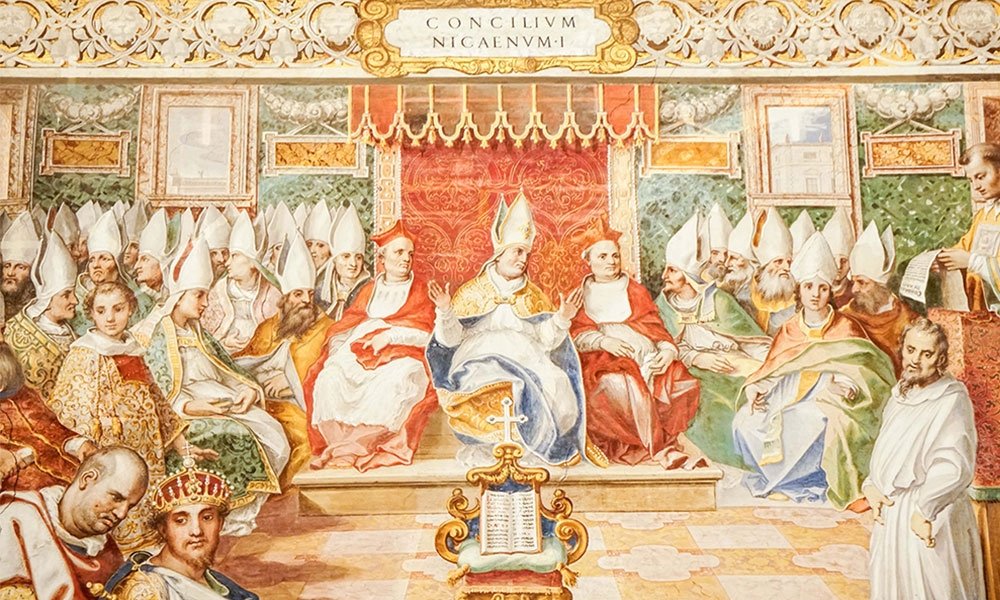
How many times have you heard this sentence: “We should not argue over adiaphora”? However, that’s exactly what we should be arguing over. For if we’re arguing over things that are not adiaphora, we have bigger problems. For example, arguing over the Trinity, or the Two Natures of Christ, the literal resurrection, the atonement - these are dogmas, not things that are “neither required nor prohibited by Scripture.”
So yes, let’s argue about adiaphora. For that is how iron sharpens iron. That is how men discuss things. And since the male-only pastorate is not an adiaphoron, it is also not an adiaphoron that our pastors should be masculine. We don’t facilitate conversations about our feelings over a Cosmo and a box of chocolates. We discuss, debate, and argue. And since the specific range of adiaphora is literally infinite - it stands to reason that some adiaphora are better than others. It also stands to reason that some adiaphora are really bad ideas.
As Pastor Karl Hess has argued, Equality is the god of the American interim. And as Dr. Gene Edward Veith entitled one of his books, we live in postmodern times. And as for the church’s worship, we are pressured, in the name of Adiaphora (which could almost be a god of the Stoics), to accept anything and everything in worship as adiaphora. And by adiaphora, they mean “anything goes.” Nothing is out of bounds, because there are no boundaries. For saying that one worship practice is superior to another is to offend the postmodern god of the American Interim. And we simply can’t have that!
I have heard a lot of this sentiment lately: “Worship style doesn’t matter.” But adiaphora doesn’t translate to “doesn’t matter.” Scripture doesn’t specify whether the Words of Institution are to be chanted or spoken. Nor does scripture say that they cannot be belched. Since belching the Words of Institution is a practice that is neither commanded nor prohibited by Scripture, and since everyone’s “context” is different, who am I to say that chanting the verba is any better, or any worse, than belching them? Who knows? A completely burped service might attract a whole new demographic to the body of Christ. And just maybe there is a wad of foundation grant money just lying around somewhere waiting to be snorted up like a line of coke through a Benjamin in a bad 1970s cop film for such an entrepreneurial endeavor. Catch the vision: An Exciting New Way To Do Church.
Before someone takes the idea and runs with it, I’ve already worked out the copyright with the aquilae legis over at CPH. So don’t. This is obviously an argumentum ad absurdum.
A lot of the guys who say we should not argue over adiaphora attend a conference called “Best Practices.” Unless they are looking at different doctrine to consider, this implies that some adiaphora are indeed better than others, not all adiaphora are created equal, or with a nod to George Orwell, “Some adiaphora are more equal than other adiaphora.”
And to throw a wrench into the whole works, the darling passage from the Book of Concord that the anti-liturgical faction of the LCMS likes to point to, FC SD 10, actually does put an asterisk on the definition of adiaphoron: “When there are useless, foolish displays [Latin: inutiles nugas et puerilia spectacula, German: unnütze, närrische Spektakel [Schauspiele]] that are not profitable for good order, Christian discipline, or evangelical practice in the Church, these also are not genuine adiaphora, or matters of indifference” (FC SD 10:7).
Therefore, even though belching the Words of Institution isn’t in the Bible, it is an example of the kind of Scheißspiel that fails the adiaphora test. So what about handing out slices of pizza by a peripatetic preacher playing standup comedian during a sermon in a seminary chapel? Such practices are an argument that the mournful chanting of the Kyrie should not be considered an adiaphoron.
But since the Bible doesn’t ever mention pizza, this must be an adiaphoron, right? If this doesn’t constitute a närrische Spektakel [Schauspiele] or a puerilia spectacula, I’m not sure what would qualify. Moreover, I argue that profaning sacred spaces is never an adiaphoron. Desecration is really not a component of Christian liberty, in my opinion. Could you imagine someone pulling such a stunt in the sanctuarium of the tabernacle or temple? How about at the altar of the Church of the Holy Sepulcher? Well, if not, then why would someone do that in the proximity to the rest of the holy altars where the Lord’s body and blood are consecrated (if you believe that sort of thing, as my wife is wont to say)? Why shouldn’t the pastor practice his putting on the carpet of the sanctuarium, as I saw once right next to an LCMS altar (Lord, have mercy!). The old saying, “Nothing is sacred” comes to mind. How can someone not be scandalized to see sacred space desecrated? How can someone not fear God’s wrath for treating the holy (sanctus) like the common (profanus)?
How sad that Christians are put to shame by Muslims and Buddhists, who would never do the things in their houses of worship that some Christians (including some Lutherans) do. Why? Well, though they are misguided, they actually believe their religion. Their serious belief is confessed by their serious actions. Their serious actions reflect and confess their serious belief. Although they are wrong, they worship the way they confess. Their orandi reflects their credendi. We can’t fault them for their consistency. Imagine what it must look like for them to see a Christian preacher at a Christian worship service dressed in a cow costume with dangling udders (at least that one was not LCMS, not this time, not today, Satan. Deo gratias!).
So let’s argue about adiaphora. For if we stifle those discussions, we will eventually be arguing about things that are not adiaphora. For our orandi will shape our credendi, whether we like it or not.
Thank you to the Rev. Dr. Matthew Richard for yesterday’s piece on adiaphora. Here is a link to past Gottesblog posts regarding adiaphora.