

LCMS Pastoral Formation and the Demise of Schlitz Beer: A Cautionary Tale

The following originated as an unreasonably long Twitter/X thread, but is better suited to paragraph form.
Last week, word broke that Schlitz, “The Beer That Made Milwaukee Famous,” has been discontinued after more than 175 years. Many of you may never even have heard of Schlitz, which is exactly why you should know their story.
Schlitz is iconic. Or, rather, was iconic. It was a beloved beer that, at its height, passed Budweiser in popularity. But the brand collapsed in the span of a couple of decades because of short-sighted management decisions, many of which are not so different from the questions that bedevil the LCMS pastoral formation conversation.
Schlitz found its origins in 1848 as the proprietary beer at a Milwaukee tavern brewery. By 1902, it was the largest brewery (by volume) in the US, and was responsible in 1912 for introducing the now-standard brown beer bottle in order to protect their beer from the deleterious effects of light exposure. They were at the forefront of American brewing, and quickly growing. They weathered Prohibition, and in 1934 Schlitz became the top selling beer in the world — and held that distinction for decades. They were only decisively surpassed by Anheuser Busch after a 1953 brewery workers strike in Milwaukee, but remained highly competitive with Anheuser Busch for another 20 years.
So…what happened?
Greed reared its ugly head, and Schlitz decided to increase their profit margins by changing their ingredients. But they didn’t do it all at once, they tried to ease into it little by little, assuming that their customers wouldn’t notice the slow and gradual changes. First a small amount of cheaper corn syrup started to replace some of the more expensive malted barley, and hop pellets started to replace fresh hops. Not all of it, not all at once, but a slow and undetectable increase in the proportions of the cheaper ingredients by a little bit, and then a little more. And then a little more. And more.
The owners were right, in the beginning. No one noticed the changes, and their profit-to-sales ratio soared. All seemed to be going just as planned. But over time, as the easier and cheaper ingredients and processes were introduced more and more, people did notice. While the changes over a few months might have escaped notice, the changes over several years were unmistakeable. This wasn’t the same beer that had once been number one in the US.
In an effort to get more product out the door more quickly, Schlitz also tried shorter, faster fermentation times, which proved to be a disaster. Chemical additives were required to remove the haze of proteins that would typically settle out naturally during a longer brew time, and one such additive had an undesirable side effect — a protein precipitate that looked like snot. Schlitz’s response was to say that it wasn’t a matter for concern, and that it was perfectly safe to drink. Needless to say, nobody cared, and Schlitz slipped from second place to third, and just kept dropping.
In 1981, the same brewery that once produced the top-selling beer in the United States had to be sold because it was much too large for the current rate of production, which had dropped dramatically in response to the crash in Schlitz’s popularity. You can still see the old brewery complex today — it’s an office park, with the arch and the cream brick buildings bearing the name “Schlitz.”
And did I mention that it was beautiful? The former tasting room boasts plaster ceilings, dark wood panelling, , chandeliers made of antlers (long before it was cool), and magnificent carvings imported from Europe, including a centuries-old carved oak door that was (to the best of this author’s recollection) brought over from a German hunting lodge. The walls were covered with photos of celebrities and dignitaries who had visited, like Lucille Ball and President Harry S. Truman. This is the world of Schlitz as it once was. It was finally sold to Stroh in 1982, but Schlitz’s enormous debt subsequently caused Stroh to collapse, and Pabst bought Stroh (and what remained of Schlitz) in 1999.
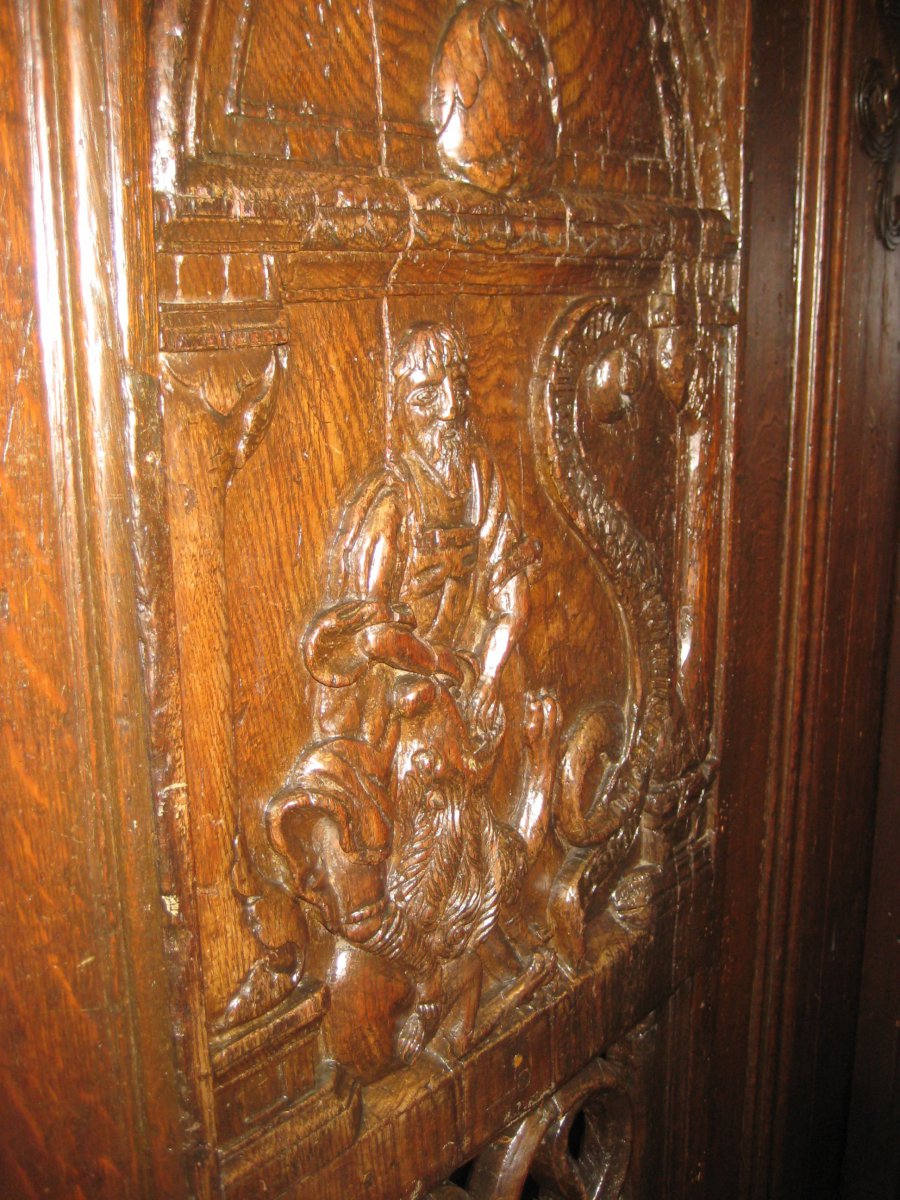
In 2008, forty years after Schlitz first started tinkering with their formulation, Pabst launched a recreation of the original formula with the marketing slogan “our classic 1960’s formula is back.” And it was pretty good. Definitely better than anything AB/InBev was offering. As a result, Schlitz had a mild resurgence in popularity — especially in its home of Milwaukee — but nothing compared to its former ubiquity.
And now, this month, the last batch is being made.
So….what does this have to do with LCMS pastoral formation?
The temptation for the LCMS is not so different from the strategy that the Schlitz leadership took in the 1970s. We want to get more clergy trained and sent out into parishes more quickly. And the answer being proposed is a reformulation of its own. Cut the languages here, reduce the overall instruction hours there, and speed up or eliminate altogether the time spent on a seminary campus, the time in which ideas and gifts and abilities and relationships ferment and develop and grow.
Yes, more graduates can go out the door more quickly, and it seems like a great solution in the short term, but what are the long term effects? Will people notice in the first few years if another 10% or 20% of clergy are trained online or largely at a distance? Probably not.
But will the changes be unmistakable over the decade or decades to follow? Without a doubt. What do you think happens to a church that formerly had 90%+ of its graduates trained in the Biblical languages (however imperfectly), but then the number slips to 80%, then 70%, 60%, 50%?
Well, some places are already at that mark. 50% of clergy with no residential seminary education and no languages means that circuit text studies become impossible. It isn't just one person who needs a little extra help, which has always been the case, it's half or more of the room that never even learned the Greek alphabet, and can’t begin to decipher the text on the page. But it isn't just about the niceties of meetings studies and iron sharpening iron, though you can quickly see how much of that becomes impossible. The pastors who are tasked with teaching Holy Scripture are entirely at the mercy of commentaries and commentators, of translations and translators. They are no longer able to take up the text of Holy Scripture in its original languages and read, and it must instead be interpreted for them by someone else.
And it isn't just about the Biblical languages, though that's a primary presenting symptom. The overall effect is to create a more shallowly rooted body of clergy that are all the more easily "carried about with every wind of doctrine, by the trickery of men, in the cunning craftiness of deceitful plotting."
But, some will say, you can actually have much better learning outcomes online than in person. It all depends on the quality of the instructor. The test results can prove it.
But is that all seminary education is? Downloading data like a computer so that you can regurgitate it at will when assessed? Or is it also intended to form a solid foundation that will not give way easily, to form a habitus of prayer and devotion, to create and strengthen bonds of social and spiritual cohesion that hold clergy together? Any seminary graduate will tell you that education and formation don’t end at the classroom door, but continue out through the rest of the day and week as students argue and discuss and go back and forth. Iron sharpening iron, and all that. But online seminary education can’t really do any of those things very well.
The ugly truth, though, is that for some in the LCMS, that isn't a bug, but a feature. Seminary graduates without deeply rooted experience in exegesis, without deep training in systematics, confessions, historical, and pastoral theology more broadly are easier to push around, to manipulate, and will kowtow all the more readily to their superiors, whether district presidents, senior pastors, or whoever. They will more easily go along with the absurdities that are foisted on them, because a core part of distance education is that while seminary classes are taken online with the occasional intensive, the students are, in reality, primarily shaped by one or two other pastors who supervise them on a day to day basis. Which, I ask you, has more impact in this model — the faraway professors that you rarely interact with in person, or the senior pastor and other clergy who are there day after day after day for years? The answer is obvious.
The appeal of the SMP program for some seems to be the relative ease with which congregations or districts and their senior pastors or district presidents can shape clergy in their own image and likeness, without being bothered by impediments thrown in their way by a deeply rooted theological education that will not be so easily swayed.
“Open communion? That’s the way we’ve always done it here, you can just ignore what those seminary professors have to say, they don’t understand our context. It’s nice in theory, but we live in the real world.”
“Unionism and joint worship with other denominations? No problem, don’t worry about it. Our context is really different and the rules don’t really make sense for us.”
What's more, the move to increased emphasis on distance seminary education means that individual clergy are more isolated — it means that you no longer have a thick, dense network of mutual support. You are trained at a distance, have limited interaction with your peers, and simply cannot gain the lifelong brothers that are only formed by living and studying side by side for years. Which, again, means that you are all the more easily manipulated and pushed around. It means that you don't have all of those fellow seminary colleagues to call on in times of trouble, to ask for advice, or to tell you that you're being an idiot. Instead, you are — as is increasingly the case across in our time — alone.
Is an isolated and atomized body of clergy a group that holds together when the adversary is walking around like a roaring lion? Does such a pastoral education system produce clergy with deep roots, or are they left to be “reeds shaken by the wind”?
While the reformulation of pastoral may seem like a good idea in the moment, a quick solution for a pressing problem, the consequences will be — not to put too fine a point on it — dire. What seems like an expedient solution today is sowing the seeds of destruction for tomorrow.
If you, like me, are a millennial, you're becoming increasingly aware of what previous generations have sown that we now have to reap. Why in the world would we knowingly do the same for the generations that will follow after us?
Don't let the "Schlitz Mistake" become the "LCMS Mistake." Read the whole sad Schlitz saga here.