

The Coming Judgment: An Answer for the Christmas Blues
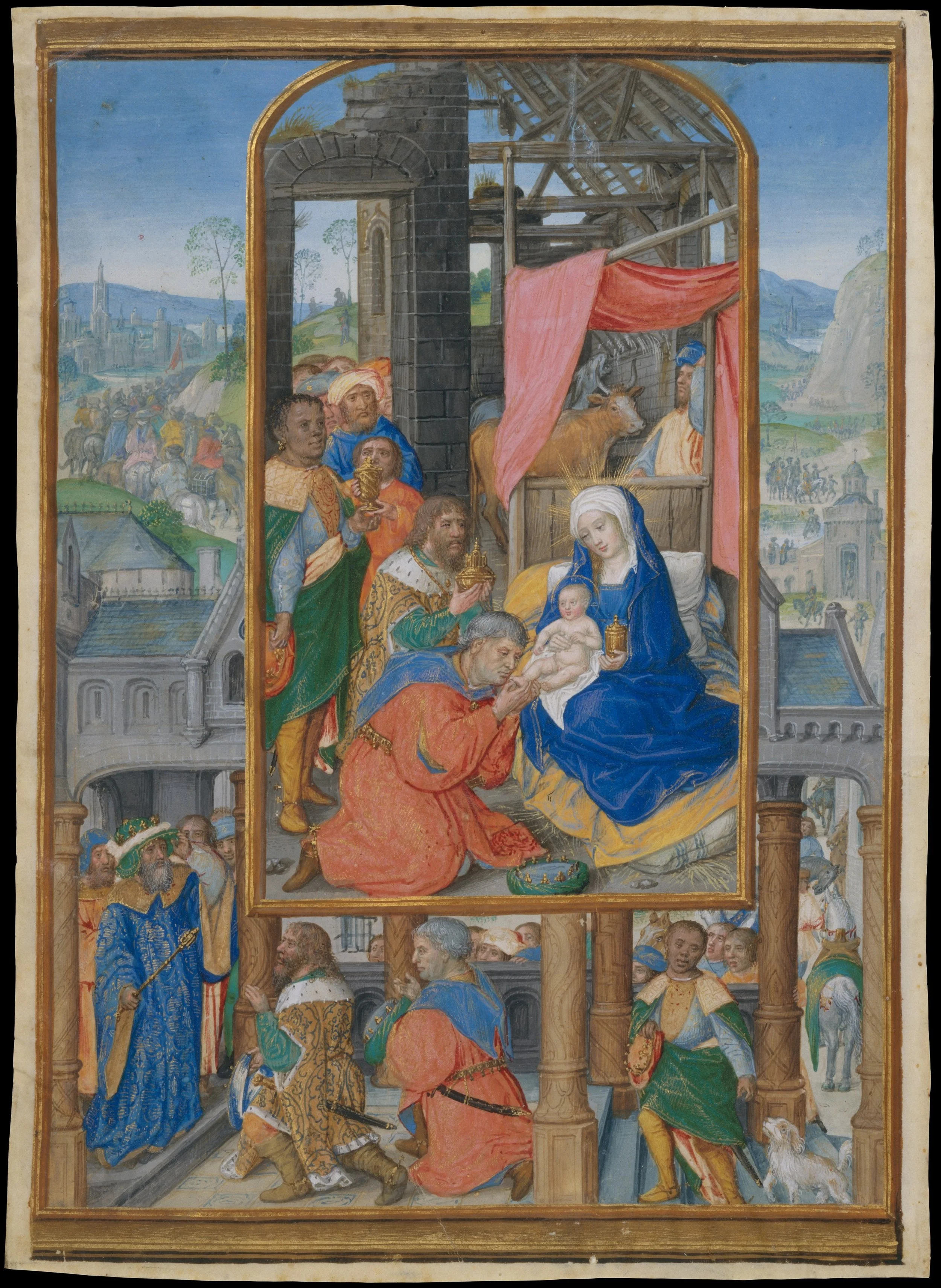
Cover art for the Christmas issue of Gottesdienst soon to be published.
by David H. Petersen
Here’s a preview of what you’ll find in the coming Christmas issue of Gottesdienst. Fr Petersen’s article deals with preaching at Christmas, so we thought it would be helpful to put it here on the blog ahead of schedule, so as to be of use to preachers. The Christmas issue is at the printers and won’t be out of the barn until mid-December. Not a subscriber? Take care of that matter right here.- ed.
One of the most poignant descriptions of the fallenness of Narnia in The Lion, the Witch, and the Wardrobe is that it is always winter and never Christmas. The LCMS is situated in a culture where it is always “Christmas” and never the Mass. There is plenty of room for Santa Claus but none for Jesus. It is a perpetual holiday without a hint of holiness. Themes of the Atonement, the Eucharist, and a full-throated preaching of the Gospel typically mark our Christmas preaching, but for those looking to invigorate their preaching this year with a bit more pointed polemic, I suggest that nothing could be more applicable than the eschatological aspects of Christ’s birth.
The Setting and Frustration
In the early 2000s there was something of a media frenzy about “the war on Christmas.” Politically and socially conservative commentators expressed outrage over big-box stores forbidding their employees from saying “Merry Christmas” as a greeting and requiring them to say “Happy Holidays” instead. Sometimes the commentators also decried the removal of nativity scenes from the public square. I don’t recall any of the talking heads suggesting that people resist the wave of secularization and liberalism by worshipping Jesus in a church. As I remember it, the bold move suggested by these commentators, that which seemed certainly to bestow righteousness before God and men without any real risk or cost, was that we return the greeting “Happy Holidays” with a militant “Merry Christmas.” Thus the “war” ended and the fakest of all victories bestowed.
In the intervening years, it seems that I have heard more and more celebrities and newscasters and influencers on social media gushing about how much they love “Christmas.” The war is over. Christmas has won! But, of course, by “Christmas” they mean gifts and fancy food and “holiday” movies. They love the idea of laughing children and toys in the same way they love cozy cottages in snowy woods. These things are best kept as postcards. Many are moved by such images to drop a few coins into the Salvation Army’s red kettles and donate to Toys for Tots, with the aftertaste of the morning-after pill lingering in their mouths, while they consume, feast, and rest on their soft-won laurels.
Here is the reality that often lulls our members into complacency. Our society can tolerate A Charlie Brown Christmas playing in the background in the same way it tolerates the Pilgrims saying a prayer before the big meal. They might even enjoy a few Christmas carols, in moderation, sung by professionals. They know Christmas is somehow related to Jesus’ birth, but it has grown so much bigger than that. They most certainly do not love Jesus. Perhaps He and His followers meant well once, for all their superstition and naivety, but at this point He is a bit player at best. The center of their Christmas, the one for whom they have a deep and abiding love, is Santa Claus. They want to believe he is real because he is the type of god they most want.
I don’t mean, of course, the god who gives coal to naughty children. They want, instead, the god who pretends he will give coal to naughty children but who never does because there aren’t any naughty children. The god they want is indulgent even though he does favor the rich.
Just think for a moment how much our culture loves movies about Santa Claus. When people watch the Avengers or Star Wars, they don’t think those characters are real; it is mindless fantasy. Santa Claus movies are a much more spiritual experience because some viewers suspend their disbelief at a deeper level than they do for other movies. Santa Claus movies fill them with a sense of faith and joy that The Avengers and Game of Thrones do not. This is because people want Santa Claus to be real. That is the god they want. This is also why they so want children to believe and will sometimes go to great lengths to deceive them, believing that this deception is a great kindness. I think this is deeply spiritual because they themselves want to be deceived. They want to escape and live in the fantasy of a Christmas movie in a way that does not occur with other fiction.
An Eschatological Antidote
Lutheran preachers find it easy to preach the Atonement at Christmas. Mary’s Son, rejected in Bethlehem, hunted by Herod, is the Baby of Sorrows come to redeem the world with blood. Ties to Eucharist come easily as well. The Bread of Life lies in a manger in the House of Bread to feed the world. Coming after the rigors of Advent, and with so many family and social pressures of the season, such low-hanging fruit might keep us from noting that the birth of our Lord is also a significant eschatological event, and, it seems to me, an eschatological reading is what we most need.
The birth of the Christ is the end of Adam’s condemnation and the beginning of Satan’s judgment. The Year of Our Lord is rightly measured from His birth, not from the promise in the garden, nor from His resurrection or Pentecost. To be sure, such distinctions are unhelpful if pushed too far. The promise in the garden was real; it delivered salvation to faith and shifted damnation to the Substitute before Adam could realize his full danger. The point of Christ’s birth is His crucifixion, resurrection, ascension, and sending of the Holy Spirit. One could easily back up the beginning of this redemptive sequence to the annunciation and the overshadowing of the Virgin by that same Spirit. In any case, the Incarnation is the hinge of the two eras, the old and the new. It ushers in a change from sacrifices to Sacraments, an openness to Gentiles, and a promise of vindication for all believers.
The four last things—death, judgment, heaven, and hell—are all present at the Nativity. Jesus is born in an issue of blood, under the fullness of the Law, according to the curse. Mary endures the pains of childbirth with the threat of death. She and our Lord are harshly judged by Joseph’s relatives and denied a room. Like the false judgment of Pilate, this false judgment mirrors the Father’s own: the Babe takes on the sins of the world and is counted as guilty—a King in a stable, rejected by men and unaided by heaven. Yet heaven opens to mankind with the joy of this great exchange and witnesses to the shepherds of its glory, pronouncing peace and God’s good will for men. Hell is exposed and driven back by the angelic announcement, but will soon, through its agent Herod, send its armies.
John Stephenson notes three categories of biblical signs of the Lord’s return in judgment. The first consists of divine judgments of violence in nature and among men that point to the future last judgment. These include warfare, natural disasters, famine, and pestilences. The second category is an increasing rebellion against God in His left-hand kingdom. The third is likewise increasing rebellion, but within the Church, together with apostasy.1
Something of each category can be seen in Bethlehem. The first is embodied in Caesar Augustus’ census, decreed to fund his army and his empire won by war and enforced by the sword. This census upends families and creates many hardships for his vanity and greed. The second is seen not only in Caesar but also in a complacent Sanhedrin and the Hellenized nobles of Jerusalem who do not follow God’s Law or rightly uphold justice. The final is seen in the Pharisees and scribes who sit in the seat of Moses but lack compassion for the people and who will plot to kill Jesus, no different than Herod.
All of these eschatological signs continue into our own day; they are constant. The sign-makers mean to manipulate us, to use us. Their goods aren’t good and their “gifts” don’t deliver. The apostates want us to imbibe the spirit of the season and not get caught up on details, but that is the broad road that leads to hell. The false prophets want to make Jesus into a folktale meant to promote peace and tolerance without sacrifice or forgiveness. The extreme capitalists want us to spend what we cannot afford and, if we let them, will deliver us to the inevitable despair of the day-after hangover and the slavery of debt. Even the makers of nostalgic Santa fantasies, who feign innocence and love of children, would, in fact, replace Jesus with a lie. This is what Christ came to rescue us from. These sign-makers won’t be with us forever. Satan’s oppression is coming to an end. The clock began ticking down the night that Jesus was born.
As He was present for the shepherds, for Mary and Joseph, so is He present for us. Stephenson notes a further biblical sign of the coming of the Lord, one which falls under the title “Gospel”: the evangelization of the whole world.2 We are the beneficiaries of this sign. We suffer now as those who must live in the last days, but the risen Jesus is still incarnate, and He comes to us in the manger of paten and chalice, greeted, worshipped, and received by angels and archangels and the whole company of heaven, even by those of the company, like us, who still have one foot on earth. We receive and suffer the signs of the end as little promises that our discontent is not unjust and that this world can never be our home. Nonetheless, we absolutely do have a home, a mansion with the Lord, and a family.
Preach that, brothers. Preach to the pain that afflicts your members, our brothers and sisters, a pain they themselves sometimes cannot articulate amid the brain fog of the retail season, work parties, and family obligations, but which they most certainly feel. Jesus was born to relieve that pain and make all things right.
Notes
1 See John R. Stephenson, Eschatology (1993), 65.
2 Ibid., 65.