

"Dignified Worship" Part Two
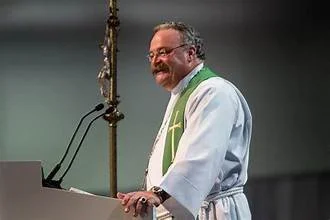
Note: The following was published by LCMS president the Rev. Matthew Harrison on his Facebook account on December 10. This is what we have decided as a synod. Those who reject this are accusing us of not “walking together” with them, when in reality, they are the ones who have left our mutual path. I’m sharing this here as a postscript to my earlier post, “Dignified Worship Centered on the Cross of Christ” — Ed.
***
Here is the official position of the LCMS on Worship and the use of the ordo (the order and constituent parts of the Divine Service), from a resolution from the 2016 LCMS national Convention. Don't ditch the confession and absolution. Don't ditch the creeds. There is no right to rob the people of the ancient creeds which we wholeheartedly confess. Don't rob the people of the three readings of the lectionary. The Augsburg Confession says specifically we retain vestments and the lectionary. Don't mess with the LORD's Supper. There is great freedom to use various settings. Keep the ORDO. We are not evangelicals. We are Lutherans.
— Matt Harrison
To Appeal to the LCMS Congregations, Workers, and Institutions within Christian Freedom and for Love’s Sake to Retain a Common Order of Service for the Lord’s Supper
RESOLUTION 4-04A
Overtures 4-14–15 (CW, pp. 333–334)
Whereas, The Lutheran Church has long heeded the Apostle’s injunction that all things be done decently and in order (1 Cor. 14) by joyfully and freely receiving the Church’s historic order of Divine Service (service of Holy Communion) as a precious gift from previous generations of Christians by which the Word of God is not bound but given free course that it may be proclaimed to the joy and edifying of Christ’s holy people; and
Whereas, The Lutheran Church confesses that it suffices for
the true unity of the Christian Church that the Gospel be preached in conformity with a pure understanding of it and the sacraments administered in accordance with the divine Word (see AC VII 2); and
Whereas, It is simply not necessary for the true unity of the Christian Church that ceremonies instituted by human custom should be observed uniformly in all places (see AC VII 3); and
Whereas, The Lutheran reformers nevertheless protested ardently that they had by no means allowed the Mass, that is, the Divine Service (service of Holy Communion), to be abolished, but rather observed it with the customary ceremonies with even greater reverence than their opponents (see AC XXIV 1 and Ap XXIV 1); and
Whereas, The Lutheran reformers could insist that those church usages that have been established by human authority ought to be observed, provided they could be observed without sin and without the erroneous opinion that they justified (see AC XV) for the sake of training the unlearned in the faith (see AC XXIV 3); and
Whereas, The reformers rejected the notion that humanly instituted ceremonies are in and of themselves divine worship or a part of it (see FC Ep X 3); and
Whereas, The Lutheran reformers confess that the churches of God in every locality and age have authority to order such ceremonies in ways that are fitting and profitable for the building up of the community in the faith (FC Ep X 4); and
Whereas, All frivolity and offense are to be carefully avoided in this regard so that the weak in faith are not scandalized (FC Ep X 5); and
Whereas, That no church should condemn another because one has less or more external ceremonies not commanded by God (FC Ep X 7 and Negative Theses); and
Whereas, The reformers also authored church orders, such as the Church Order for Braunschweig-Wolfenbüttel, recently published in English by CPH (2015), which show how evangelical freedom may fruitfully be joined with a grateful reception and creative appropriation of the Church’s living liturgical and hymnological heritage; and
Whereas, The church orders evidenced variation in the details of the humanly established ceremonies from place to place, yet all within the order received from previous generations; and
Whereas, This received order provides in a remarkable way for the whole counsel of God to be set before the congregation in a weekly and yearly pattern that delivers the riches of Christ to His Bride, balancing both what changes weekly or seasonally (the “Propers”) with the stability of a framework that remains largely constant (the “Ordinary”); and
Whereas, The LCMS Constitution Art. III 7 states, “The Synod, under Scripture and the Lutheran Confessions shall— … Encourage congregations to strive for uniformity in church practice, but
also to develop an appreciation of a variety of responsible practices and customs which are in harmony with our common confession of faith”; therefore be it
Resolved, That the LCMS in convention appeal to the congregations of the Synod for love’s sake (Philemon 9), when celebrating the Lord’s Supper, to regularly use these basic components of the Order of Service (Ordo): to gather in the triune name, confess our sins and receive Absolution, praise the blessed Trinity, attend to the reading and the proclamation of God’s Holy Word, confess our faith using the historic creeds, offer prayers for all people according to their needs including praying the Lord’s Prayer, celebrate the Lord’s Supper with Christ’s own words, and then depart with God’s blessing to send us forth as His forgiven children and witnesses to His grace; and be it further
Resolved, That the LCMS in convention appeal to the congregations of the Synod to rejoice in the freedom of instrumentation, style, and sequence within this basic framework; and be it further
Resolved, That the LCMS in convention appeal to the congregations of the Synod to remember and consider for use the richness of the biblical canticles (for example, the Kyrie, Gloria in Excelsis, Sanctus, Agnus Dei, and Nunc Dimittis); and be it further
Resolved, That the LCMS in convention appeal to the congregations of the Synod to reaffirm Synod’s Constitution Art. VI 4, in which we willingly agree to the “exclusive use of doctrinally pure agenda, hymnbooks, and catechisms in church and school” in all worship services; and be it further
Resolved, That the LCMS in convention appeal to the pastors and other worship leaders of the Synod to make a rich and full use of the Church’s liturgies, “psalms and hymns and spiritual songs” (Col. 3:16); and be it further
Resolved, That the LCMS in convention appeal to the educational institutions of the Synod to educate and form students in the riches of the Church’s liturgies, “psalms and hymns and spiritual songs” (Col. 3:16); and be it further
Resolved, That the LCMS in convention appeal to our congregations and workers to welcome and encourage the development and use of new hymns, spiritual songs, and liturgical settings which continually are called forth by the Holy Spirit, not as a supplanting to what has come before, but as a supplement to it, its living growth; and be it finally
Resolved, That the LCMS in convention appeal to the circuits and districts of the Synod and the Council of Presidents to engage in full and open discussion in the next triennium of how this spirit of unity and freedom is put into practice in our walk together, and that the District Presidents would encourage the implementation of the spirit of unity and freedom expressed in this resolution and report back to the 2019 convention.
Action: Adopted (9)
(During discussion, a proposed amendment was accepted as a friendly amendment by the committee to add the phrase “including praying the Lord’s Prayer” in the first resolve paragraph after the word “needs.” An amendment was also proposed to replace the first resolve paragraph with the first resolve paragraph from the original Res. 4-04 printed on pages 64–66 in the preconvention issue of Today’s Business. After discussion, the proposed amendment was withdrawn. When the chair asked whether the assembly was ready to vote on the resolution, debate was ended
[Yes: 726; No: 192] and Res. 4-04A was adopted as changed [Yes: 795; No: 146].)