

The Big Church Blues
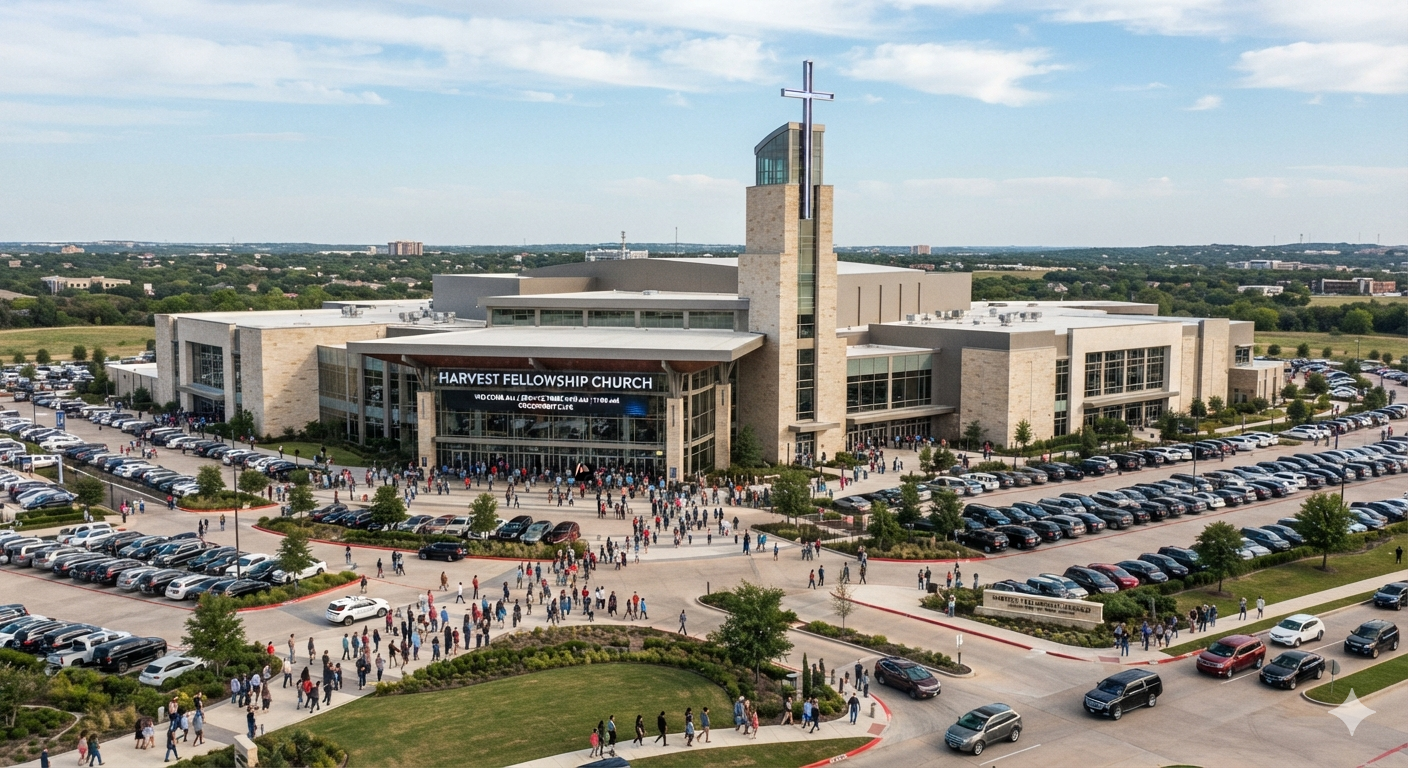
I heard a recent podcast in which the guest, the pastor of a very large LCMS congregation, was complaining (along with the hosts) that large churches don’t have a big enough voice in the synod. The complaint is that the member congregations are treated equally, when, according to them, being bigger, they deserve to have a greater say in synod. They appealed to the example of the U.S. federal government that has a House of Representatives that is apportioned proportionately according to population.
Of course, Jesus rules a kingdom, not a republic. But it is also true that our synod is governed as a kind of republic. But it is a unicameral republican model. We do not distinguish between Lords and Commons, nor did we begin with a compromise to create a House and a Senate. The LCMS began as a free association of equal congregations and pastors. They did not join a synod that gives big churches a proportionally bigger vote. They did not establish a pecking order of pastors of big churches getting a larger share of votes than the pastors of normal-sized, or even small-sized churches. For all the plusses and minuses that go along with it, our polity is more confederate than federal, more Jeffersonian than Hamiltonian: a decentralized union in which the member congregations are autonomous, and even retain the right of unilateral secession. Such an arrangement is naturally going to be more democratic and egalitarian than a more traditionally centralized polity in which the large rules over the small.
Normally when this topic is broached by advocates of abolishing this original equality between LCMS congregations, it is prefaced by a lot of “buttering up”: strategic praise for “small churches.” They will swear up and down that they think small churches are wonderful, and the fact that that they are bigger churches doesn’t mean that they are better churches. They rather typically frame this as a matter of fairness, as “taxation without representation,” as if their larger per capita assessments to remain in synod ought to equate to influence-purchasing. After all, that’s how it works in the world: pay to play, the one who pays the piper calls the tune, the one who works twelve hours gets a bigger payoff than those who only worked one hour (rather than everyone getting a denarius). When you are of the world, you begin to think of the church as a worldly organization.
But on this occasion, this large-church pastor said the quiet part out loud:
I guess the large churches are large churches because they're they're doing something right. I mean, I don't know how to say that in the context of, I mean, God is blessing what we're doing.
Now, with any given large church, that might be true, or it might not be true. And the corollary is the same for small churches. Maybe they’re small because they’re doing something wrong. But then again, maybe they’re not. I don’t accept this pastor’s premise that size is an indicator of “doing something right.”
One of my critiques of the church growth movement is that, like the world, it is driven by econometrics, by data, statistics, and things that can be monitored by executives on dashboards: the commodification of people, turning them into a product, manufactured widgets, enumerated empirical cogs in an organization. The church growth movement sees itself as entrepreneurial, and has coopted the language of marketing and industry. But isn’t the church sui generis? Isn’t she supernatural? Isn’t she the mystical body of Christ? Isn’t she confessed in the third article precisely because she is the creation of the Holy Spirit, whom Jesus compared to the wind (using the same Greek word for Spirit) that “blows where it wishes, and you hear its sound, but you do not know where it comes from or where it goes” (John 3:8)?
Maybe we should be cautious about taking credit for what seems to be success. Maybe we should adopt the mindset as taught by our Lord, “We are unworthy servants; we have only done what was our duty” (Luke 17:10). Maybe we should be careful about too much number crunching (2 Sam 24:10). Maybe we should think of the success of the kingdom less in terms of our own numbers and more about the Lord’s miraculous work, as our Lord revealed through the divine counterexample of Gideon (Jdg 7:1-25). Maybe we should take heart even when we do feel outnumbered, just as God instructed the dejected Elijah (1 Kings 19:9-18).
One of the podcast’s hosts made a curious claim that his large congregation had “no representation” at the synod convention, limiting his ability to support his position that SMP should not focus on men above the age of 40. But his large congregation had the same representation as my small one. I was not our pastoral delegate. None of my laity were the lay delegate. But our circuit elected its representatives, as did his. We all have the same opportunity to participate in synod elections. And that is the point. He wants churches to be equal - but for some churches to be more equal than other churches.
The pastor (the guest on the podcast) complained about the challenges facing large churches: large budgets, large building projects, large staffs, etc. I’m sure that’s all true. Of course, it’s even harder to maintain buildings with a small budget and to keep things running with a small unpaid staff. But his point is well-taken. I’m sure I have a lot less financial and managerial headaches than he does. Of course, he probably makes district pay scale, if not more. He probably has a decent benefits package. Maybe not. I don’t know for sure. But I’m willing to speculate in the affirmative. He probably doesn’t have a side hustle or two like many pastors do these days. Unlike my classmate at his first call that I remember visiting, and partaking in the government cheese that was part of his family’s “benefit package,” I doubt that he or any other large church pastor, has that particular headache of worrying about feeding his family or making sure his child can get his prescription drugs. So there are trade-offs.
He also complained that the large church model makes it hard for the parish to be a family. They have to simulate it by means of a small-groups program. And I can see where that would be difficult. That is something I don’t have to worry about.
So for that reason, I do feel sorry for this pastor. I have been serving my smaller-than-average parish now for 21 years. We have endured good times and bad times together. We have been through deaths of every kind imaginable (and a good bit of my beloved parishioners now rest in the above-ground tombs of our city’s very old cemetery - and I visit them when I take strolls through the neighborhood). I don’t drive to church, I live a block away in the historic neighborhood. I know my neighbors and my vibrant community. It is a walkable small city where we know the mayor and councilmen, and see them often at civic events. We know the business-owners, the firemen and cops by face if not by name. Our civic events almost always involve not only prayer, but also food and beer and wine. And similarly, there are always “Lutheran beverages” available at our congregation’s Bible class and potlucks (not to mention the tradition of Easter mimosas). And speaking of potlucks: this is Louisiana, cher!
If I were at a large suburban church, at best, the church family would be an institutional programmatic simulation. I would not be able to be as involved in my community. I am often called upon to give the prayers at local civic functions - even though we are an overwhelmingly Roman Catholic city. Yes, I have side hustles. But I am also able to volunteer as a local fire and police chaplain. I serve as a military chaplain at both the federal and state level, and participate in emergency preparedness and disaster relief missions with my neighbors of every age, ethnicity, and religion. If I served a megachurch, I suppose all of that would have to go too. These are all invaluable parts of my ministry in the kingdom, and service to my neighbors, though they don’t translate to people joining my congregation. Measured econometrically, such ministry is a “waste of time and resources.”
My little church really is a family. A high school student that I taught is now one of my parishioners, and I am teaching her children. Her father in law and aunt are my parishioners as well. I have families with children, and we all take care of one another. Nobody grumbles about the kids in church - and we don’t cast them away so the grown-ups can worship without them. Our services are inclusive, traditional, and reverent. We use the liturgy right out of the book, and we sing the same glorious hymns that are the treasury of the early church, the medieval era, the Reformation, and those of more modern times. We have a talented organist who has played for us for more than fifty years. We are so blessed! We eat together, laugh together, suffer together, console one another, pray for one another, worship together, do business with each other, and we study God’s Word together. Most importantly of all, we receive the gifts together, week in and week out, in the Holy Mass. We don’t have to break up and factionalize into small groups. Jesus doesn’t turn His nose up at small churches, but promises His Presence even if the congregation is only one pastor and one layman. The world sees this and mocks. And so do some Christians.
As for outreach, we live in an area where almost everyone already belongs to a church. We are about 40% white, and most of them are Roman Catholic, and we are about 30% black, and most of them are Baptist, Methodist, or Church of God in Christ. We have Hispanics and Asians in our community who are generally Christians as well. We enjoy a kind of “Christian Urbanism” that includes the public display of Christian symbols, the reading of Scripture, and government and business leaders who are open about their Christianity. Even our Democrats here are Christian conservatives. Everywhere I go in the city, I’m greeted warmly. People here love the clergy. My congregation is a small Lutheran church surrounded by Roman Catholics and Protestant Evangelicals. It makes numerical growth for our congregation difficult, but we don’t see ourselves as not “doing something right.” When we have needed money, the Lord has supplied us with what we have needed. We really do have to “walk by faith, not by sight.”
So, we’re not a large church, not by any means. But I pray that we are “doing something right” and that “God is blessing what we’re doing.” I don’t think the fact that this other pastor’s parish is fifteen times the size of mine is indicative of whether or not we are faithful. Nor do I think our congregation ought to be punished with proportionately diminished representation.
And who knows? Maybe one day this pastor will be called to a small, traditional parish that is doing something right and blessed by God apart from the pressures of Big Numbers, Big Staffs, Big Programs, and Big Budgets. Having watched this podcast and reflecting on his plight, I do feel bad for him.
I hope he gets over his big church blues.