

Identity
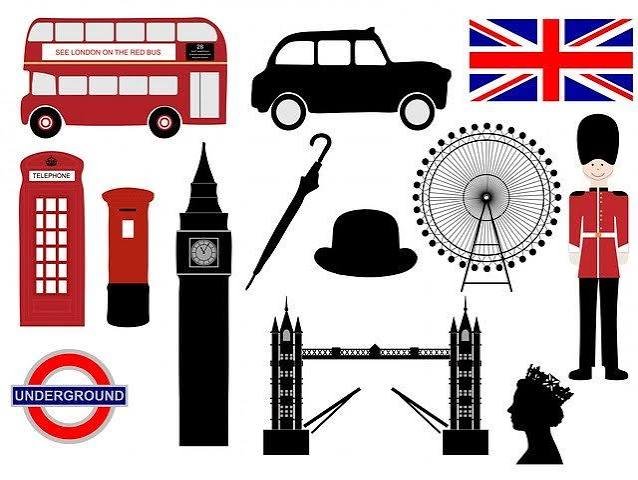
Here is a list of things. They are not random. See if you can identify what binds these things together:
The Union Jack, King Arthur, Monty Python, tea, Magna Carta, fish and chips, Shakespeare, the Beatles, Big Ben, 10 Downing Street, St. George’s Cross, and the anthem “God Save the King.”
These people, places, and things identify a particular people. They are, of course, expressions of English identity. And, it is at the same time true that not every Englishman is a fan of Monty Python or the Beatles. Not everyone in England is a follower of cricket. Many English don’t like fish and chips, and prefer to drink coffee instead of tea. There are plenty who prefer manga to the Bard. All that said, these things are all identifiers of a certain overarching identity. They are constituent parts of English identity, both to the English, and to the outside world.
Of course, identity does evolve over time. The Beatles and Monty Python are both new in the long sweep of English artistic history, and old in the course of popular culture. Millennials and Gen Xers may consider the Spice Girls to be part of English identity, whereas boomers might not. Culture and identity are always in a state of flux. There is a natural ebb and flow of what is part of a people’s identity, and what isn’t. It does change slowly over time.
Indeed, fish and chips shops have largely been replaced by curry establishments. Posters that say: Keep Calm and Carry On have faded from the English landscape. The once ubiquitous red phone boxes still exist, but only here and there for the sake of nostalgia. Yet these things persist in collective memory. Immigration has brought change to the cultural landscape of England. In time, it is likely that Earl Grey or English Breakfast tea will be replaced by masala chai as an identifying mark of England. Perhaps the English bulldog will cease being part of the English imagination as more and more people in England see dogs as haram. Already the most popular boys’ name in London is Mohammad, and we see the king of England, who is the head of the Church (sic) of England, redefining the monarch’s role as the champion of non-Christian religions in the realm.
Sometimes identity shifts organically, and sometimes it is forced by those with an agenda.
Would you smell a rat if someone were to come along with a straight face and say that in the above list, none of those things are part of English identity, but only those things that are narrowly and minimalistically defined by law and official documents? In other words, in the above list, only the Union Jack, the monarchy, and Magna Carta qualify as English identity. Maybe “God Save the King,” if it is established by and act of Parliament. Shakespeare, the Beatles, fish and chips, Big Ben - none of these are part of English identity.
We would conclude that such a person, and such institutions seeking to dogmatically redefine English identity, have some kind of agenda for change.
To take it in a bit of a different direction, there is not only national identity, but corporate and brand identity. For example, the Coca-Cola company has its distinctively shaped bottle, its specific font used in its branding, and the shortened form “Coke.” Does anyone seriously believe that these characteristics have nothing to do with Coca-Cola’s identity? If a faction in the company were opining vigorously that only Coca-Cola’s articles of incorporation and the official minutes of their board meetings are, by definition, Coca-Cola’s identity - we could safely assume that the motivation behind such an attempt to distance the company from its branding identity is to change its identity.
And maybe their motives are pure. Maybe the marketing gurus and the entrepreneurs within the company have determined that the old fashioned bottle and font are holding the company back, that like ballast being thrown overboard from a ship, these markers of identity should be jettisoned to reach new customers and markets. But, of course, identity is a powerful thing. To get rid of such things at Coca-Cola would require people to stop identifying with them. Hence, reframing the idea of Coca-Cola as being more about the corporation and its shareholders than its traditions and pubic perception.
The Rev. Heath Curtis, the district president of the Southern Illinois District, argues that one of the things that retain Lutherans generationally is a sense of identity. We have a distinct culture in the LCMS that is more than just the Bible and the Confessions. Of course, the Scriptures and the Book of Concord constitute the norms of our Lutheran confession, and they are certainly important aspects of our identity, but they are not the whole of it any more than English identity consists only in the legal acts of state.
In his book, The Small Town Lutheran Church & Pastor (which is valuable to more than just pastors and small churches), President Curtis argues that Lutheran identity is important to retention and discipleship. He writes:
So what makes for strong discipleship? We could approach that question by asking which religious groups do the best job in making lifelong disciples of their members. We have good data on this from the Pew Research Council. What religious groups have the highest numbers for retaining the folks they raise in their faith into adulthood? Hindus (84%), Jews (76%), Muslims (76%), Greek Orthodox (73%), Mormons (70%), Roman Catholics (68%). The number for the Missouri Synod is about 60%. This is a good starting point, and we can do better.
I would contend that these retention statistics are largely about identity. How important is your religion to your self-identity? Lutherans have a lot of strengths here: the distinctives of Lutheran worship and hymns; a strong sense of belonging and community; multi-generational churches, schools, and colleges. But it’s also the little things, the cultural markers that remind me, “I am a Lutheran,” things like saying Come, Lord Jesus before supper and reading Portals of Prayer every day.
Congregations that want to buck the societal trends of declining faith need to focus on discipleship, which means leaning in to our Lutheran identity.
And here is a clip from an On The Line interview in which President Curtis argues that recognizing and embracing Lutheran Identity is “missional” (as the cool kids say):
Identity binds people together.
Chicago Bears fans have an identity that expresses itself in the form of jerseys, the colors blue and orange, and the distinctive C logo from the team helmet. There are memories of Soldier Field, the stories of Coaches Halas and Ditka, and the narrative of the great players and championship years from the past. Reducing the identity of the Chicago Bears to a corporate contractual franchise within the legal entity known as the National Football League misses the whole point of what identity is.
As creatures in God’s created order, we all have identities: nationality, family, relationships that are involuntary, as well as identities over which we have more control. We have a Christian identity grounded in Baptism and the cross. We have a Lutheran identity anchored in Word and Sacrament - but also in our shared history, heritage, culture, liturgy, music, and ways that we relate to one another.
And what is at ground zero of this debate is the liturgy.
For how we worship is crucial to our identity, whether as Lutherans, Baptists, Presbyterians, Roman Catholics, Greek Orthodox, Mormons, Muslims, Jews, or Hindus. Based on our faith, we are bound together with those who believe as we do, and that naturally expresses itself in how we worship and in the customs that grow out of our deeply held religious beliefs. It would be strange indeed if all of these disparate groups worshipped the same way, or if Greek Orthodox worshiped like Baptists.
Lutherans can come together, whether at an International Lutheran Conference (ILC) meeting in Europe, South America, or Africa, and can find a home in the liturgy, in Word and Sacrament, in the ancient liturgical expressions that we kept intact at the time of the Reformation, and in our shared treasury of hymns. We can also gather as fellow members of the LCMS at a convention, seminary, conference, university, or seminar - and gather together for worship. At the Ministry to the Armed Forces annual training, LCMS chaplains can gather together from all over the country and join together to sing daily Matins, including hymns from our hymnal.
When our shared worship forms become shattered, we lose that unity just as much as if Chicago Bears fans were encouraged to just wear any color to the games, or the military were to abolish traditional customs and courtesies. When there is no more common language, common culture, common mores, shared folkways, and shared experiences, groups Balkanize and break apart, eventually atomizing into every man for himself. If the splintering reaches a breaking point, a critical mass, there will be no coming back from this. We may be there already.
The sharp lines we currently see in the “worship wars” are a case in point. There were no “worship wars” when we all used the same liturgy, hymns, and hymnal. When we all used the liturgy, we all knew the liturgy. Converts who did not know the liturgy learned the liturgy - and then they could worship at any confessional Lutheran church. Now converts (and those who visit other churches, or who move) have to learn an infinite number of non-liturgies, because every non-liturgical church does its own thing. The liturgy is the one way that disparate Lutherans can gather with each other and worship together. The liturgy builds bridges like the Holy Spirit at Pentecost ended the division of the chaos of disparate languages.
Were non-liturgical worship to become the norm in our synod, there would be no norm at all. It would be the kind of chaos in the public worship life of the LCMS that Paul encountered at Corinth. The message of the LCMS would be: “If you want dignified, liturgical worship, don’t be a Lutheran.” And that would be the message from the very same people who would artificially define Lutheran identity as only the Bible and the Book of Concord while ignoring God’s worship preferences (Ex 26-31) and what our confessions say about worship (AC 24, Ap 24). The advocates of CoWo in the church - even those who have both kinds of services in their congregations - are as divisive as those in the secular world who demand that we sing two so-called national anthems before football games rather than unite behind the one that is authentically an expression of American identity. We see the results of this kind of divisive subversion in the kingdoms of both hands. The kind of polarization we see in society is what CoWo has done, and continues to do, in the church. Our God is a God of order, not of chaos. But CoWo is chaos.
It’s all so tiresome.
Lutheran identity - including, but not limited to, the Bible and the Book of Concord - brings us into a sense of salutary and organic unity with other Lutherans. This is the edifying nature of identity, whether a nation, a religious body, a club, a family, or a company. This is simply part of being authentically human. We ignore it, or bureaucratically define it away, to our own detriment, and at the expense of the Gospel and its witness before the world.
Here are some of our past articles on Lutheran identity.