

You Have One Job
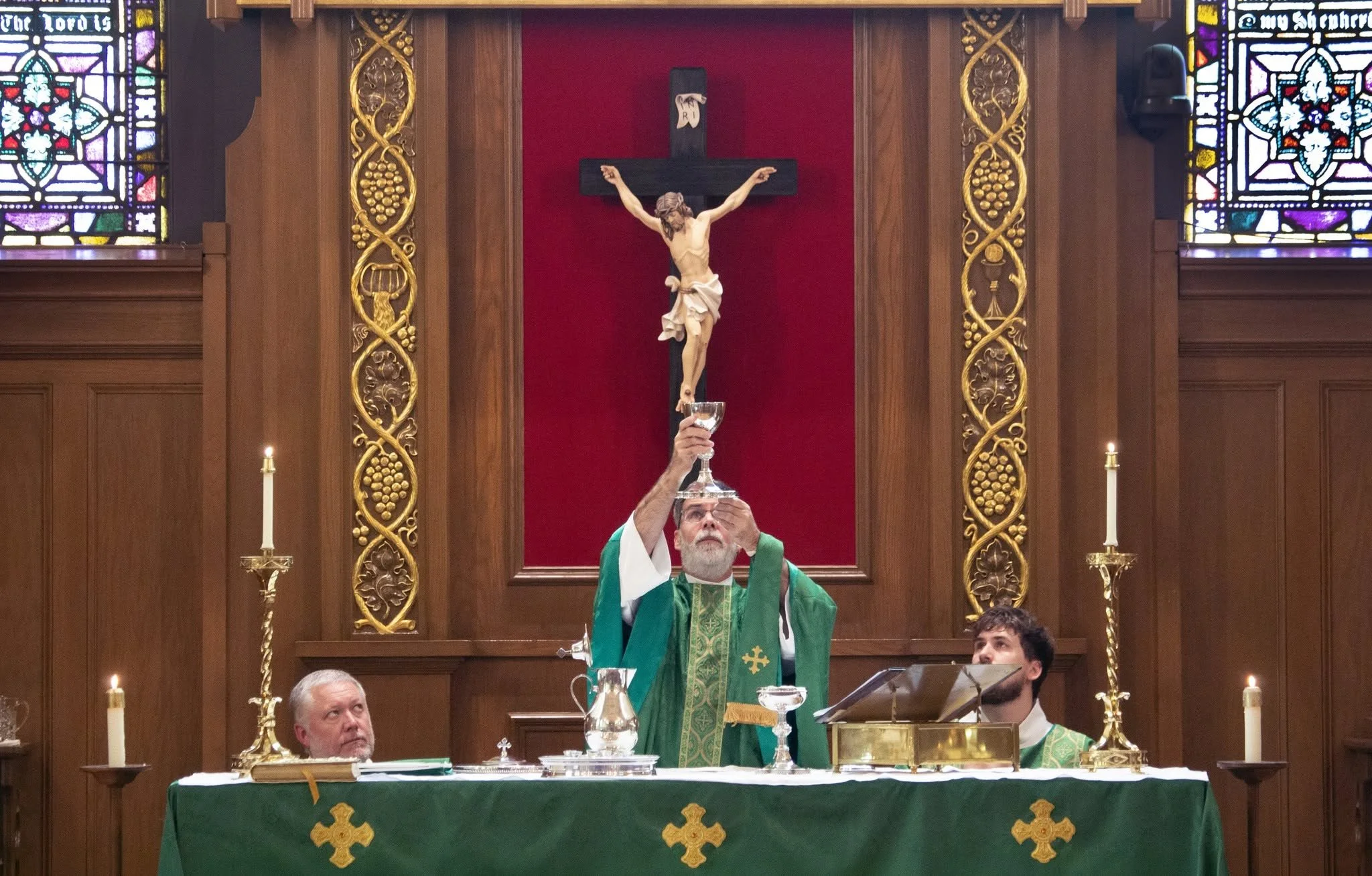
As with every other vocation, the pastor has many “jobs.” He is, of course, a preacher and teacher, a Seelsorger (provider of soul care), he administers sacraments, he is to set an example for his flock, and depending upon his particular call, may have other “jobs,” such as administration, chaplaincy, classroom teaching, serving as a missionary, etc.
But when it comes to consecrating the elements of Holy Communion, pastors have one job. That job is to unite Word to element. It is our one job. The problem is with innovation. Some guys feel like they have to do object lessons, change the words around to make them more “special,” or move the elements for the sake of convenience.
Guys, as celebrants, you have one job!
Of course, there is variation, but between pretty narrow guardrails. This is, after all, very important. We don’t want something so important to be subject to errors of commission or omission. So there is a checklist for the celebrant, and it is actually very easy. It appears under the heading “The Words of Our Lord,” and appears on five pages in LSB: 162, 179, 197, 209, and 217. The checklist is easy to follow. It includes a minimalistic script of the exact words, and two red rubrics indicating where the sign of the cross is to be made.
It really is that simple.
If you want to add ceremony to the bare minimum, you have the freedom to do so. But not all ceremonies are equal. Does your ceremony confess the miracle of the Mass, that is, the supernatural Presence of God incarnate in the body and blood, in the mystery of the sacramental union? Are you being reverent, and confessing, by your conduct and actions, that heaven has literally come down to earth? Are you trying to do something new and innovative and entertaining, or are you following a well-trod path of our fathers in the faith who have gone before us? Are you just trying to get the Sacrament over with, or are you drinking in this miracle and rejoicing in the gifts? And what are your actions teaching? What does your body language catechize about what is going on? Are you sending a mixed message between your words and your actions?
Now, concerning the celebration of the Service of the Sacrament, there are common sense things that are not spelled out, and shouldn’t have to be. But maybe they do. You need bread and wine (not grape juice). You need a receptacle for each of them. The bread may be put into a ciborium or on a paten. But it has to be somewhere where the pastor will speak the verba and make the sign of the cross over them. That requirement is built into the “checklist.” The wine also has to be in some kind of vessel, whether already poured into a chalice or being held in a flagon. The use of individual cups is an issue for another day. But at bare minimum, you need a container for bread and a container for wine. And you need a surface (a table?) to place these receptacles on for consecration. They need to be in close proximity to the celebrant. For just as “is” means “is,” so too does “this” mean “this.”
And you need a celebrant. Per Scripture and our confessions, according to the divine example of how God calls and sends (“apostello”) certain men (apostles) into the holy office, certain men are today set apart and put into order for this ministry of Word and Sacrament. They are ordained ministers. The celebrant is a pastor. He cannot delegate these words to a layman (male or female) in the choir, to the school principal, to a lay assistant, or to the congregation to speak together. One job, guys. Do your job! Don’t pawn it off on others who are not authorized to do it. You’re not smarter, more innovative, or more leadershippy than Jesus. You have one job. You are not in charge. Maybe we need an organization called the Pastoral Followership Institute. Our Lord called the apostles with the invitation: “Follow Me.” So do your job and follow and respect your Boss.
The celebrant may be vested elaborately, or simply, but per our confessions to which we all voluntarily adhere out of love and submission to one another (at least most of us), barring some extraordinary circumstance, he is vested. After all, he is standing in the place of Christ. He is offering a sacrifice of praise (not a bloody, propitious sacrifice) in the Holy of Holies. Our confessions refer to this sacrifice as “eucharistic” (meaning, a thank-offering). Vestments for ministers leading worship in the Presence of the Lord is not a human invention, but rather a divine preference. God likes vestments, and even mandated their use when it was completely unreasonable - while the Israelites were wandering in the desert. So vest. But once again, there is plenty of leeway within the guardrails. Not all vestments will be identical, just as there is Christian freedom regarding the level of ceremony in different congregations. To just trash all ceremony and all vestments is an abuse of that Christian liberty, and indicates a lack of love and unity in our synod.
The celebrant must intone the Words of Institution clearly. That is not an option. That is not an adiaphoron. He may sing them (as Luther did, writing the Gospel-based chant tone that is found in LSB DS3, page 197), or he may speak them. But don’t mumble them. Don’t rush through them like an auctioneer. Don’t monkey with the words. Don’t personalize them. They are to be recited. They are not your words. They are “the Words of our Lord.” The celebrant is only the King’s minister - he is not the King. So read the King’s proclamation. It doesn’t need your help. It’s not about you.
The celebrant is consecrating only those elements in his proximity, and he indicates which ones these are. Gestures such as motioning with the hand, making the sign of the cross, opening and closing containers, and the use of linens on the altar help to clearly communicate which elements are being consecrated. And unclear communication is no communication.
The celebrant is the steward of the mysteries. Once the elements are consecrated, he is to oversee what happens to all of them. He is responsible. He is to distribute the sacred body and blood. If an accident happens, he is to reverently address it. If there are reliquiae left over, he is to either consume them, or reserve them. He may not simply abandon them. For once again, what does that teach? And what kind of respect does that show our Lord. The elements of Holy Communion are sacred. They are not props for your show. It’s not a show. It’s a miracle that happens by God’s grace and mercy.
So there are things not to do:
Don’t introduce elements other than bread and wine. Don’t separate the elements to be consecrated on multiple tables or in the hands of the parishioners. Don’t consecrate elements only to leave them behind. Don’t introduce confusing additional ceremony to the consecration, like an object lesson - especially something that hints at Old Testament sacrifice like a slab of meat on the altar. Don’t monkey with the words, altering them, making them sound spontaneous, or being folksy.
And there are things to do:
Above all, be reverent. It is a confession that God has miraculously met you where you are, and you confess His Presence. Be mindful. Avoid the temptation to go on autopilot. Speak or chant clearly and with volume. Be aware of the spiritual warfare that is happening around you, and be cognizant of the saints and angels in heaven who are with Jesus, and thus with you. Don’t hurry. Feel free to show reverence by genuflecting, elevating, and ringing bells - though these are not necessary ceremonies. Nevertheless, they point to the miracle of Christ’s Presence. If you flub the words, start over.
You should commune yourself first, then any other clergy or assistants, and then the people who come to the rail, “Let the deacons, according to their order, receive the Holy Communion after the presbyters, from the bishop or from a presbyter” (AC 24:38). I realize that’s not a law, but what makes you think you know better than the church fathers, hundreds of years of Best Practices in the church, and our confessions (that we all supposedly subscribe and submit to)? How about a little humility? Distribute the elements reverently. Don’t rush. Once again, the first principle is to be reverent. Above all, be mindful of the Divine Presence - and the rest should follow. Reverently account for all of the consecrated elements, whether you consume them or reserve them. Cleanse the vessels (reverently!) of any consecrated elements. When it is appropriate to do so, reverently re-set the vessels on the altar and make sure it looks as close to perfection as possible. Isn’t that the least you can do for Jesus in light of what He has done for us? If our Lord could neatly fold his own linens after the resurrection (John 20:7), we can be respectful concerning what goes on at our altars. - before, during, and after the miracle.
Give thanks to our God and King who comes under our roof though we are not worthy (Matt 8:8). But we are made worthy, because the Lamb is worthy (Rev 5:12)! Rejoice in the vocation that God permits you to do. Never take it for granted.
You have one job, guys. And how glorious it is! There is no greater privilege.