

Let's Be Lutheran
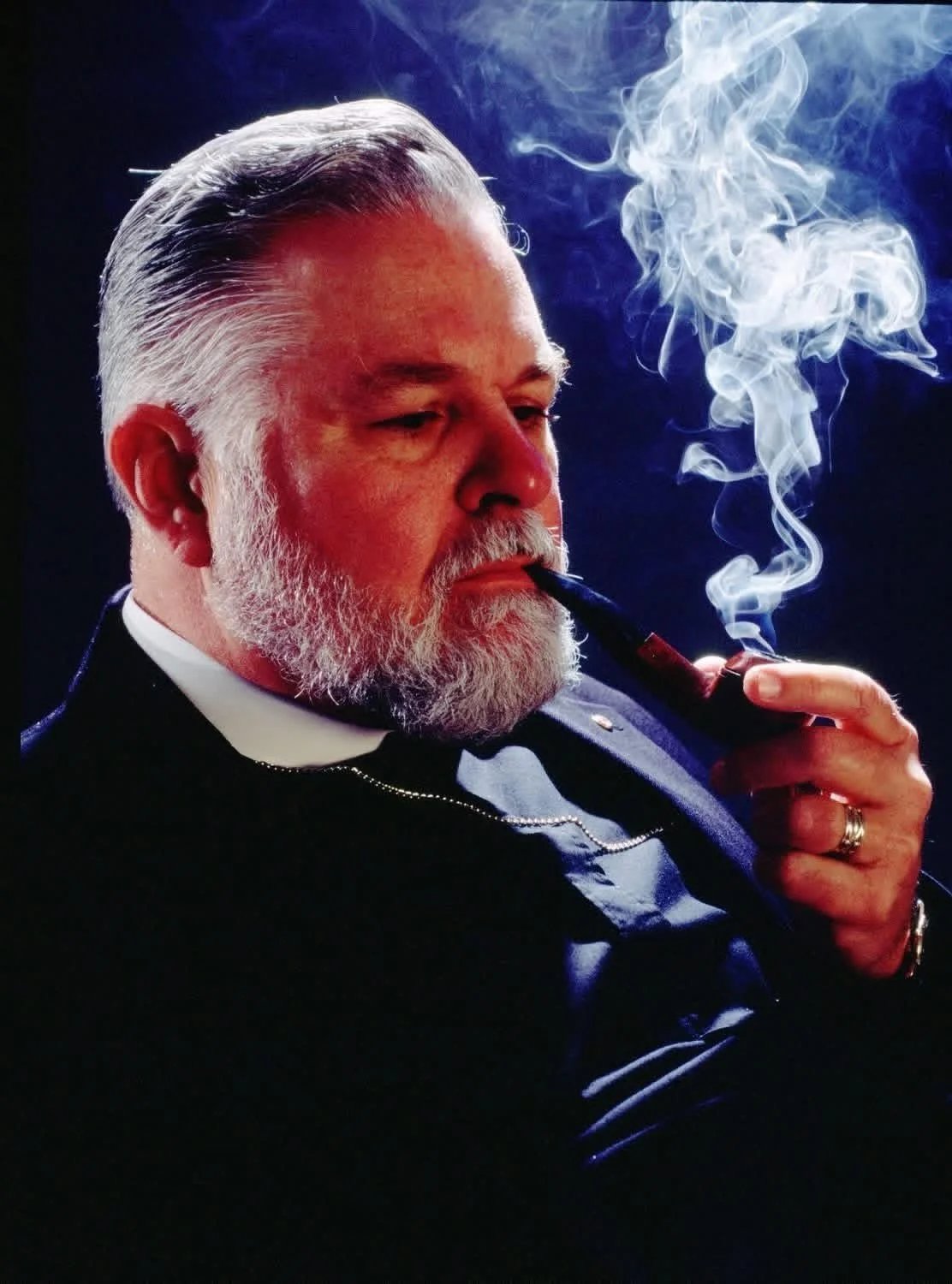
By the Rev. Frederick W. Baue, Ph.D.
This is an expanded version of a Facebook post from June 17 that garnered a lot of attention and engagement. — Ed.
The altar had been removed from the chancel and put into a corner with a tarp over it. I saw this at Our Savior’s Lutheran Church, Palm Springs, California, an LCMS congregation that had adopted Church Growth methods. Rev. Mike Coppersmith, a St. Louis Seminary classmate of mine, had a D. Min. from Fuller Theological Seminary, Pasadena, CA. Church Growth was being embraced by the LCMS at the time. I heard a Springfield graduate say with some fervor, “The sainted Gerhard Aho said to us, ‘Worship is Adiaphora.’” We can combine Lutheran substance and Evangelical style. Or, as the current LCMS Constitution, Article III, No. 7, says, “develop an appreciation of a variety of responsible practices.”1 The altar is also missing at Hales Corners Lutheran Church, our largest congregation, and also King of Kings Lutheran Church, Omaha, which is 100% committed to Church Growth and is promoting Joel Biermann for LCMS president. Zach Zehnder, who interviews Biermann on social media, is the son of Mark Zehnder, another classmate who embraced Church Growth. When we were students, President Ralph Bohlmann hired Elmer Matthias, who, with his Fuller D. Min., was to teach us all about Church Growth. In the years after the Walkout and Seminex, it was all the “Battle for the Bible.” We at St. Louis did not have the strong emphasis on the Confessions that they did at Ft. Wayne under Robert Preus. It was a book we had to read to graduate, but it was not relevant to daily life and theology as pastors.
Yesterday, June 17, I read the current Lutheran Witness. It was all about unity in doctrine and diversity in practice. There were lots of quotes from the Lutheran Confessions. But one was conspicuously absent: Augsburg Confession Article XXIV, "Falsely are we accused of abolishing The Mass." What is the Mass? The Divine Service culminating in the Sacrament of the Altar. What is the Sacrament? It is a holy rite where Christ is really present to forgive sins. Why do Church Growth congregations remove the Altar? BECAUSE THE SACRAMENT IS AN IMPEDIMENT TO GROWTH. This is what the faction promoting Biermann represents. Synod is in decline, they say. We need to grow. To grow, we have to change. I am not breaking the 8th Commandment. I am speaking the truth. Why am I upset? BECAUSE TO REMOVE THE SACRAMENT IS TO REMOVE CHRIST. To be Lutheran is to embrace the Divine Service. It is to revere the Sacrament. It is to love Christ. When the Gospel is under attack, as it is in America today, we are in a Time of Confession. And in such times, as our Lutheran fathers have taught us, in such times when we have been excommunicated by the pope, when we are being attacked by the Holy Roman Empire, when we are forced into the Prussian Union, when Rationalism has dominated our theological schools, when a false bishop betrays the trust of his immigrant followers, when our country takes away our German language and culture, when our seminary professors reject the Word of God, when we are under the Cross—nothing is adiaphora.
When I taught Lutheran Confessions at the Mekane Iesus Seminary in Ethiopia, the byword was, “Recovering Lutheran Identity.” The implication was that Lutheran identity was something they once had but now had lost. One day over coffee (dark macchiato, pungent and sweet) on the patio, the faculty and I talked about this. I asked, “Well, if we’re going to recover it, what are the marks of Lutheran identity?" They knew, and spoke up:
Gospel Preaching.
Liturgical Worship.
Holy Communion.
Use of the Chalice.
The Three Solas.
Confessional Subscription—Quia!
Lutheran Hymns… and so forth, right down the line.
“Good,” I said. “We know what Lutheran is. Now the next question is, ‘How Lutheran are we?’ Fifty per cent? Seventy per cent? What? And the question after that is, ‘How Lutheran do we want to be?’” The question hung in the air that afternoon in Ethiopia, as it hangs over us in the Missouri Synod today.
I say, let's be 100% Lutheran, one hundred and one proof, straight up, no chaser. Who stands with me?
Notes:
1 In the original 1847 LCMS Constitution, this Objective was “To strive for the greatest possible uniformity in ceremonies.” This was watered down during the 20th century to what we have now. Also, the 1847 Constitution, under Conditions of Membership, expressly prohibited the use of Finney’s revivalistic “New Measures.” These measures are manifested today in Church Growth methods, used by many LCMS pastors and congregations.