

The Adultery of Open Communion
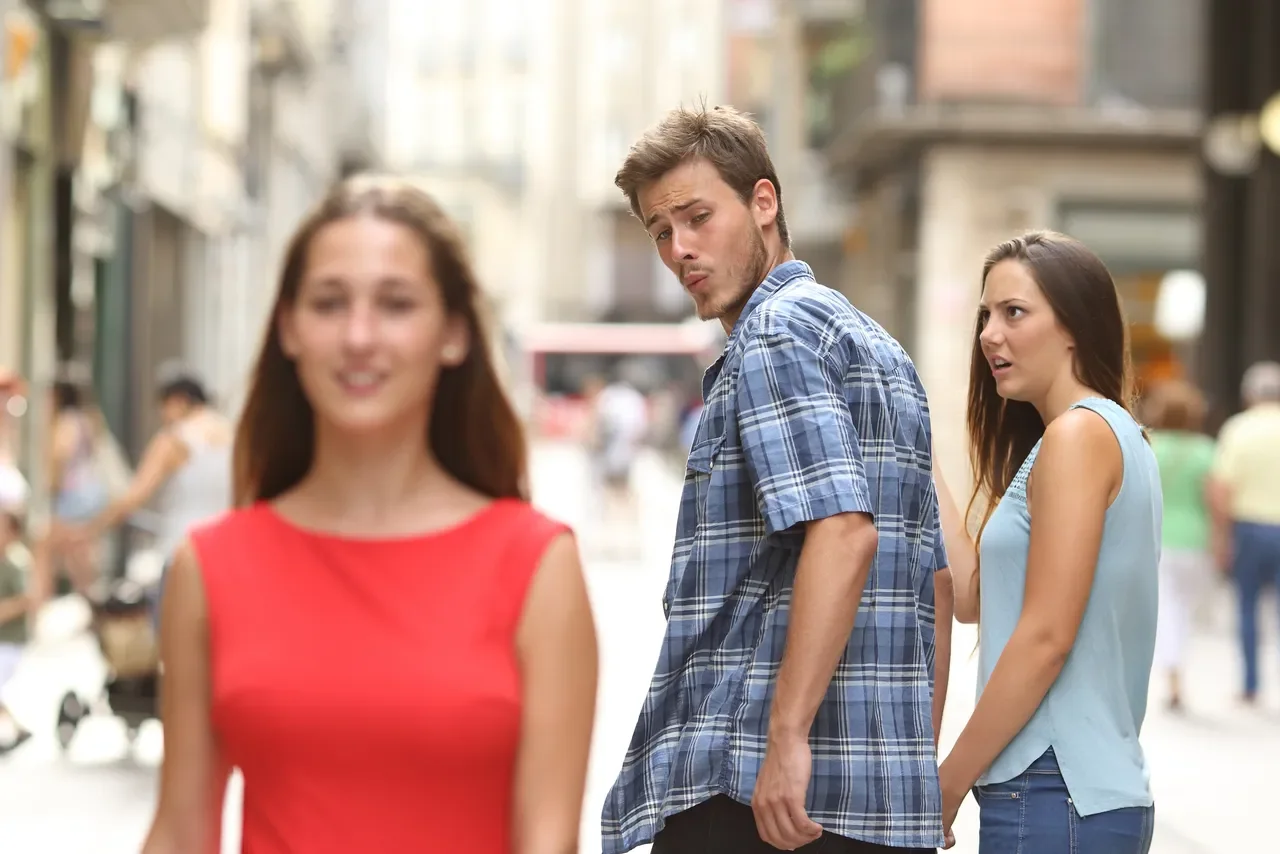
Building on my previous article, I have a few more thoughts regarding the epidemic of open communion in our synod.
Of course, it is practiced in the name of being hospitable, and is treated as an adiaphoron. But open communion is really hostile, as well as self-contradictory. It is not inclusive, it is exclusive. It is the spiritual version of adultery, and worse yet, it is a form of abusive cuckoldry, complete with gaslighting and shaming of the one who is being wronged (the one who is remaining faithful). But it has become so common that aside from anemic and impotent resolutions at conventions that everyone who wants open communion simply ignores - it is just overlooked with impunity. We just accept this abomination as normal, and the ones who complain about it are told to close their eyes and think of church growth.
Meanwhile, its practitioners assure us that they really are in fellowship with us, that we are walking together, and that we shouldn’t let a little thing like this interfere in our relationship with each other. After all, we all have our own “contexts.” And those who treat practitioners of open communion as if we are truly in a state of unimpaired fellowship, by going on their podcasts and engaging them as if nothing untoward were going on, are sending a message that they probably don’t intend or believe - but they are sending it nonetheless. They are being used and cuckolded, and are making cucks out of the rest of us.
Closed communion is the very reason we have a synod. As I pointed out earlier, it is why many of our “Old Lutheran” forbears left the German states for America. Fellowship (koinonia) is both inclusive and exclusive: it includes the circle of those who partake in it with one another, and it excludes those who are outside of it. It is a border that unites us with some, and separates us from others. An open border is no border at all. The same is true of “open marriage.”
And in today’s culture that holds equality and inclusion above all things, in a worldview where we don’t want to exclude anyone, in a churchly paradigm where we are desperate to bolster flagging numbers - the temptation to fling the doors of communion fellowship open to all is not only alluring, but easily justifiable under the rubrics of “evangelism” and “growth.” Besides, it’s uncomfortable for pastors to practice closed communion. Better to just look the other way and congratulate ourselves for our virtue.
But what is communion? What is fellowship?
It is like a marriage. In Holy Matrimony, a man and a woman are called by God to unite and become one flesh. It is inclusive, as the individuals open themselves up to intimacy the other. But it is also exclusive, since godly marriage involves one man and one woman - thus excluding the other eight billion people on the planet. Moreover, it excludes an entire sex from even being in the running. This kind of godly exclusion is anathema to our postmodern culture. It is seen as elitist and exclusionary - anything but hospitable and loving.
A couple years ago, I read the autobiography of Roger Daltrey, the now 82 year-old singer for The Who. In many ways, he led a clean life for a rock star - eschewing the drugs and alcohol abuse that plagued the rest of his bandmates. He wouldn’t even smoke cigarettes because of the effect on his voice. In many ways, he was the adult voice of reason that kept the band intact for now over six decades - even through the overindulgence of the 60s and 70s. But one thing struck me as extraordinary. Although he remains married to his (second) wife of 55 years, they had an unusual arrangement. When the band was on tour, he was permitted to enjoy the conjugal company of other women. I don’t think the agreement was reciprocal. I suppose Mrs. Daltrey benefitted by being Mrs. Daltrey, and felt the infidelity was simply a price worth paying. Their arrangement is their business, but it does go beyond the biblical and natural law definition of marital intimacy and fellowship. And the “context” argument that the normal rules don’t apply to Roger Daltrey (because of his context of being a rock star) - just rings hollow.
Perhaps we in the LCMS see communion fellowship the way Mrs. Daltrey saw her married life. Maybe the benefit of not splitting up outweighs the cost of simply looking the other way. Maybe sacramental infidelity has become so ubiquitous that we simply accept the lowered bar and count our blessings that it is only this and not something worse, like being physically abused. Maybe we just do the ecclesiastical version of just smiling and looking happy for the pictures, playing our role, and then maybe popping a few pills and putting away a few martinis afterward to cope.
Of course, there have always been those who reject the divine paradigm. Sometimes they engage in extramarital affairs in the shadows, so as to avoid the embarrassment among those who still cling to the older traditional arrangement. Some in the church have become more openly “progressive” about it. This “modern” approach to marriage is reflected in the character of Gunnar Schenstedt in the final novella of Bo Giertz’s Hammer of God:
To me all that Jesus taught is summed up in the commandment to love. Isolated Bible verses, disconnected commandments and laws, they are all relative and human. Only love is eternal and divine. It may very well appear in a way that seems to be absolutely contrary to the moral concepts of times gone by. And yet it is the love of Jesus that is expressed in the new ways, and if one does not want to act against the love of Jesus, then one must go the new ways. It is my firm conviction that all those old taboos that the church has fenced around marriage now are ready to be dispensed with. Just think about it: They all are based on the idea that the man owns a woman as his property. But now she has fully come of age and can no longer be treated as an investment. She now has her freedom. And a Christian relationship is characterized by love alone. The spirit of Jesus demands that we should be good and considerate, not hurting one another but making each person as happy as we can. Applied to marriage…
Of course, in recent decades, the biblical paradigm has been challenged by those who simply no longer believe it. They may engage in various forms of self-justified extramarital sexual license. Today, it has been normalized by a clinical-sounding name that has political punch: “polyamory.”
Open communion is ecclesiastical polyamory. It is to adulterate our fellowship. It is intimacy beyond what we have all promised to do. For the synod is not supposed to be simply a means to employment benefits. It is, by definition, a communion. LCMS congregations have “altar and pulpit fellowship” with other LCMS congregations. And that fellowship extends to partner churches both here and abroad with whom we share our confession of Biblical inspiration, infallibility, and inerrancy, and a quia (unconditional) subscription to the Book of Concord. In the ecclesial sense, synod is a marriage. And in marriage, fidelity is both vowed and expected.
And that fellowship, being extended to LCMS churches and pastors, as well as to those with whom fellowship exists outside of the LCMS, by definition, excludes those outside of that same fellowship. Though we do confess one church (una sancta), and in a broad sense, we have fellowship with all Christians, we do not have “altar and pulpit fellowship” with Roman Catholics, Eastern Orthodox, non-Lutheran Protestants, nor with heterodox or heretical bodies that use the name “Lutheran” (such as the ELCA and the LCMC). Nor are we even in communion fellowship with other confessional Lutherans with whom there are still remaining impediments to fellowship, such as the WELS and the ELS.
In a very real sense, we in the LCMS excommunicate most Christians in the world: all those outside of the LCMS and its “partner churches.” But when a church’s communion statement is something that literally every Christian - or at very least every Christian that confesses the Real Presence (according to his own subjective standard as to what that means), that church has essentially unilaterally extended “partner church” status to potentially every Christian and every congregation on the planet. One example of such an open communion statement that is used in some LCMS congregations is the “Four Questions:”
1) Are you baptized in the name of the Triune God?
2) Do you believe in the Real Presence?
3) Do you need God’s grace and mercy [i.e. the forgiveness of sins]?
4) Do you desire to walk in step with the Holy Spirit [i.e. sanctification, the new obedience]?
There is no mention of church affiliation in such communion statements. That has been replaced by a vague, subjective bar that is so low, adherents of any Christian church body can be welcomed at these altars.
There is great irony here, since we in The Gottesdienst Crowd are often slanderously called “Romanizers.” The reality is - and I am especially speaking for myself and my congregation - we don’t commune Roman Catholics. But the communion statements of some of our non-liturgical megachurches are so loose that they have essentially restored fellowship to nearly a billion and a half Roman Catholics around the world, anyone who visits their congregation and wants to commune. So who are the actual Romanizers?
This opening up of sacramental fellowship negates all the work and dialogue between church bodies forging church-to-church agreements of koinonia. It is to destroy the very idea of church fellowship. This is also why it is a scandal when LCMS churches - usually of the megachurch, non-denominational ilk - bring in non-Lutheran pastors or laity to preach in their services. It is also a scandal when such churches have Lutheran laity (rostered or not) preaching in their services. For that also violates the “marriage” vows that we all took at our ordinations. If a pastor from another LCMS church, or the pastor of a church from the Lutheran Church - Canada, or another one of our partner churches, is preaching in our pulpits, this is fitting and proper. For that is what fellowship is. But if our pulpits are opened up to ministers (or non-ministers) who should not be there, that is like cheating on your wife.
The argument that maybe the non-LCMS pastor is more faithful than the LCMS clergy, or that the non-LCMS communicant’s beliefs are more in line with our confession that many LCMS members is a hollow-ringing canard. For a man can just as easily attempt to justify adultery by saying that Smith might take better care of his mistress than Jones does his wife. The sinful flesh can always find a workaround.
As a fellowship, we share the Sacrament of Holy Communion within the confines of our fellowship. Members of LCMS congregations are welcome to commune at other LCMS altars. This is because we are extending trust to one another that we are examining and absolving those to whom we admit to communion fellowship. This is why trust is so important. This is also why pastoral oversight and catechesis are so important. This is why pastoral formation is so important. For when that trust is broken, it threatens to destroy the relationship - like a marriage that has been stretched to its limits by adultery.
Just as we don’t invite the local Roman Catholic or ELCA pastor into our pulpits, neither do we invite Roman Catholics or members of ELCA congregations to commune at our altars. That said, faithful closed communion recognizes rare pastoral exceptions. But those are indeed exceptions, and they serve to prove the rule. Obviously, this is a very real difference between the fellowship between churches and that between spouses: a place where the analogy falls short. But it only falls short at the extreme margins.
Open communion, like open marriages, is often practiced, well, openly. You can read the communion statement in the bulletin, or sometimes the pastor announces it during the service. Often, open communion is partially closed, such as limiting it to those who confess the Real Presence, or those who are “sorry for their sins” or some such. Hopefully, baptism is at least a requirement. But the open communion that is most common is to remove church affiliation from the equation. In other words, communion statements often make no mention of being in fellowship with the LCMS. Usually, the communion statements are self-administered, with no pastoral oversight. It becomes a subjective statement of beliefs, a do-it-yourself pastorless self-stewardship rather than something objective, such as membership in a sister church.
So based on a lot of churches’ communion statements, there is nothing to prevent a Roman Catholic or even a lady ELCA ‘pastor’ from participation in the body and blood of Christ at an LCMS altar. And if a person sees no sinfulness in cohabitation or in a sexually-deviant lifestyle - not to mention doctrinal errors such as confessing the pope as the head of the church, or denying baptismal regeneration - such a person can judge himself to be in fellowship with the LCMS.
Again, this is like a husband tomcatting and telling his wife that he’s just being nice to all the other women. Of course, he still loves her too. His contextual inclusivity with other women is not a reason for her to be resentful or jealous. In fact, Jesus told us “judge not” and that we should “love thy neighbor.” “Love wins” and all that. We Christians need to “love on" everybody. If the wife isn’t willing to share, she’s the problem. If the cuckolded husband is jealous, he needs to just grow up. This is not your grandfather’s marriage.
I don’t know of any LCMS non-liturgical megachurches that practice faithful closed communion. Maybe there are some. But I have yet to see it online. However, this is not to absolve liturgical congregations. For they too have their share of eucharistic promiscuity.
I argue that such adultery and cuckoldry breaks the fellowship. Yes, we have a “marriage” on paper, but the vows have been shattered. This calls for repentance, and a restoration of fellowship by renouncing the adultery and recommitting to fidelity. And this may well be a tricky, long-term project for a pastor who has walked into such an arrangement. But the first step is admitting that adultery - marital or ecclesiological - is a wrong to be righted instead of a virtue to be celebrated or a context to be encouraged. And I do believe that candidates for synod president who go on podcasts of pastors who practice open communion ought to have the stoneware to raise the issue with their interlocutors.
If you cheat on your wife and gaslight her, don’t expect her to have dinner waiting on the table for you when you come home from your latest tryst. Don’t say we are all “walking together” when we can all see you out for a stroll with your mistress.
There is a repeated lament among the podcaster-elites in our synod: that we don’t trust each other. As soon as you hear that complaint, check the communion statement of the congregation of the person making that statement, and see if that pastor and that congregation practice open communion. Yes, nothing destroys trust faster than promiscuity. If there is any hope of restoring trust, there has to be repentance and a restoration of the fellowship that was broken. Walking together with some means not walking together with the many.
There can be no trust until closed communion is restored.