

The Comma Must Stay
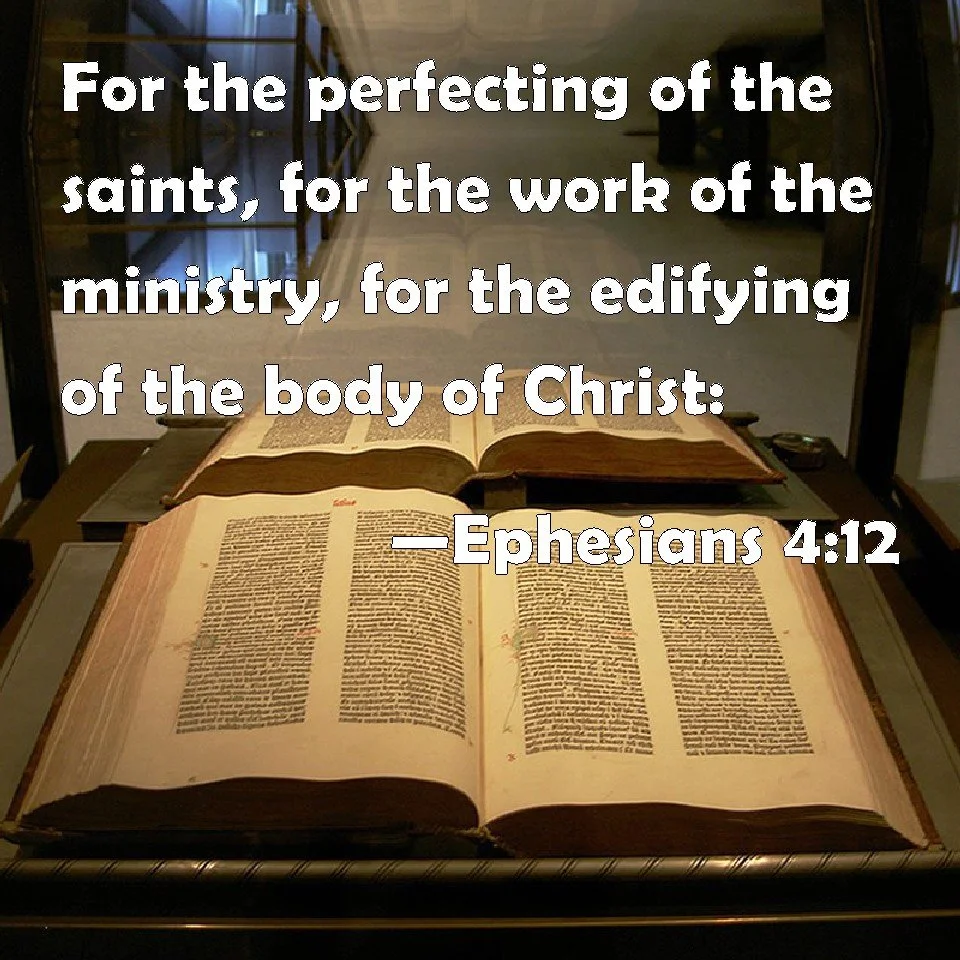
This article was published in the Easter 2016 issue of Gottesdienst.
Unsurprisingly, my previous column (“The Results Are In”, Christmas 2025) has generated some pushback. My broadside against Christ Greenfield has found its mark; in particular, my demonstration that their “contemporary” style of worship is indeed incompatible with genuine Lutheran substance. Their defense doubles down on their conception of the “priesthood of all believers” and their corresponding insistence that “ministry” is something for all Christians to do.
A recent “Lead Time” podcast was aptly named “Priesthood of All Believers: The Debate that Still Shapes the LCMS.”[1]. “Lead Time” is produced by Unite Leadership Collective, an organization headed by Christ Greenfield’s pastor, Rev. Tim Ahlman, and Mr. Jack Kalleberg, who is listed as the “Executive Director” at Christ Greenfield.
In this episode they interview Rev. Dr. Robert Scudieri, who for half a century has been a leading voice for the “missional” wing of the Missouri Synod, in collaboration with other like-minded synodical leaders, including Leroy Biesenthal, who in the 1970s was promoting “Dialog Evangelism,” the Missouri Synod’s version of the [in]famous “Kennedy Evangelism” program that swept across the fundamentalist American Evangelical regions as a result of his blockbuster book “Evangelism Explosion.”[2] In the ensuing years, emphasis on evangelism took hold of the Synod in spades, under the leadership of President Ralph Bohlmann and Dr. Ed Westcott, the Mission Executive for the LCMS Board for Missions. Professor Eugene Bunkowski was also deeply involved, and he and Scudieri began the Lutheran Society for Missiology in 1992. Anyone familiar with the strife that engulfed the Fort Wayne seminary in the 90s will recognize these names, aware that this “missional” faction of the Synod, as it happens, was also intent on removing the “confessional” emphasis there, which was under the leadership of Dr. Robert Preus. Bohlmann removed Preus from the presidency of the seminary, immediately following the notorious Wichita Convention in 1989, at which the Synod essentially amended the Augsburg Confession to allow laymen to preach and administer the Sacrament. Bohlmann’s victory proved Pyrrhic because he was himself ousted, and Preus reinstated, at the next convention (Pittsburgh 1992). But the “missional” forces reemerged when Gerald Kieschnick was elected Synodical President in 2001, and the “evangelism” push continued to drive synodical politics until he was defeated in 2010 by Matthew Harrison, who is currently in office. Under Harrison’s leadership, the Synod in 2016 (the Milwaukee Convention) reversed the Synod’s blot on the Augsburg Confession by resolving that all "Licensed Lay Deacons" must transition into either the ordained ministry or cease their performance of pastoral duties.[3] At the Synod’s most recent convention (2023, also in Milwaukee), this was reaffirmed as the delegates resolved to reaffirm AC XIV, which unequivocally states that no one should publicly teach in the Church or administer the Sacraments without a “rightful call” (rite vocatus).[4]
So the “confessional” vs. “missional” battle has raged on for decades. True confessional Lutheranism has always been serious about missions, but equally serious about how missionary activity is watered down when false notions about the ministry are bandied about. Hence, “missional” needs to be in quotes because technically it’s a bit of a misnomer; the irony is that when their errors gain headway, the Gospel in its purity is diminished and true missions end up suffering.
Lately the confessional side has been making great headway. In recent years, the St. Louis seminary has undergone significant changes toward the elimination of “missional” excesses, beginning with Harrison’s appointment of Dr. Daniel Preus as interim president in 2020. In the following year, Dr. Jon Vieker joined the faculty and became dean of the chapel, leading toward some sorely-needed reforms of the chapel, and in the same year Dr. Thomas Egger became seminary president. These changes have undoubtedly been frustrating to the “missional” side, whose influence has been greatly diminished there.
Small wonder, then, that this new Unite Leadership Collective has popped up in recent years and began to clamor for alternate routes to ordination, now that both of the Synod’s seminaries have managed to steer away from the “missional” emphases that are odious to true confessional Lutheranism. The “missional” wing had to find another outlet for its efforts, and we have to play whack-a-mole with it.
In this episode of “Lead Time,” their rebuttal of my claims now includes a bold insistence on the removal of the fractious comma at Ephesians 4:12. I had argued for its inclusion in “The Results Are In”:
The KJV had it right:
And he gave some, apostles; and some, prophets; and some, evangelists; and some, pastors and teachers; for the perfecting of the saints, for the work of the ministry, for the edifying of the body of Christ: till we all come in the unity of the faith, and of the knowledge of the Son of God, unto a perfect man, unto the measure of the stature of the fulness of Christ.
But if the comma after “saints” is removed, which became common beginning with the publication of the Revised Standard Version in 1952, then it is the saints who are doing the ministry rather than the apostles, prophets, evangelists, and pastors and teachers. And beginning with this little change, “ministry” began to be seen less as a reference to the preaching office, and more as a reference to one or another kind of service or program or group within the church.[5]
The “Lead Time” interview with Dr. Scudieri responds to this. First, he suggests that the early church, being less formalized in the pre-Constantinian years, was more geared toward mission and evangelism (more “missional,” that is), but when the church became more institutional, this “took the initiative away from local Christians and from the Church at the local level.” His discussion soon leads to the battle between Walther and Grabau at the time the Synod was founded and Walther’s insistence on congregational supremacy. And here he brings up the contested passage in Ephesians 4 and the controversy over the comma. At this point Mr. Kalleberg brings up my article: “Somebody decided to do a critique of Christ Greenfield and wrote a whole newsletter article about it.” Here he asks Pastor Ahlman, “What's the name of that publication, Tim?” And Ahlman responds, “Gottesdienst.” Then Kalleberg continues, “A guy watched our livestream, and he also scanned our website. And, you know, he could have just called us and asked us questions if there was anything unclear about it.” (I didn’t need to do that, incidentally, because nothing was unclear to me.) “In his article, he mentioned the comma and he was very passionate and adamant that the comma belonged in there because he wanted to stand by the belief that it's not the lay people that are doing ministry; it's the people who are specially called that do it.”
At this point Scudieri admits that the comma is in the KJV, but that in the RSV it was taken out, and after that the great majority of English translations left the comma out, and Scudieri takes this as a kind of proof that the comma shouldn’t be there. John N. Collins traces this painstakingly in his important little manuscript, Are All Christians Ministers? (Collegeville, Minn.: Liturgical Press, 1992), showing that this change came about in the 1971 version of the RSV,[6] and he references Hans-Ruedi Weber, director of Bible studies for the World Council of Churches, who referred to this as a “Copernican change.” The research of Collins leads to the inescapable conclusion that “the idea of a general ministry of all Christians is a thoroughly modern view and that, although it admirably suits the spirit of our democratic age, it is ultimately only as sound as the interpretation of Ephesians 4:11–13 on which it mainly rests.” [7]
What of that passage, then? In particular, what of the comma? The original Greek, of course, admits no punctuation marks at all, leaving it to interpreters to decide where they belong when translated. So, for centuries the prevailing view was to insert a comma after “saints,” in which case it is the apostles etc. who are the ones doing the ministry, but when the RSV removed the comma, it became the saints who do it, being so equipped by the apostles etc.
For all the debating about the comma, surprisingly little has been said about the word καταρτισμον, which the KJV has translated “perfecting” while RSV has opted for “equip[ping].” Ancient, original use of the term tends strongly to favor “perfecting,” as in perfecting a thing for its final destination or use,[8] and, more significantly, St. Paul’s use of the term always has the import of completion, of making perfect and complete.[9] Never does Paul have the concept of equipping for service in mind when he uses this term. Hence the idea newly minted by the removal of the comma, that the apostles etc. were given an order to equip the saints to do something, namely in this case, to minister, is simply incongruent with Paul’s use of καταρτιζω/καταρτισμον anywhere else in his epistles. Not only, therefore, is equipping the saints for ministry a thoroughly novel idea historically speaking, it is also foreign to Paul’s use of the term.
Rather, the KJV translators (as usual) understood the import of the passage correctly, interpreting it as giving the purpose for which Christ gave some as apostles, and some as prophets, and some as evangelists, and some pastors and teachers; and that purpose is toward the perfecting, that is, the completion, of the saints. The substance of the work of the ministry of the apostles etc. is, in other words, “the edifying of the body of Christ, till we all come in the unity of the faith, and of the knowledge of the Son of God, unto a perfect man, unto the measure of the stature of the fulness of Christ” (vv. 12–13). Nothing in this entire context refers to the activities of the saints, but rather the destination of the saints. The excision of the comma has the effect of putting into this passage a concept that is simply not in view. While, to be sure, the life of sanctification is commonly a concern of Paul’s, and he speaks of it often, that subject is not here.
What is here, rather, is the purpose for which the Office of the Ministry was established, and here it’s worth saying that the pastoral office is not some “elite” group, or “some hierarchical group of guys,” as they routinely and falsely charge us with thinking; rather, it exists for the edifying of the Body of Christ. The reason confessional Lutherans insist that it’s the pastors who do the ministering is that if this is not maintained, it’s not the pastors who are harmed but the saints to whom they minister.
Those saints are, of course, elsewhere exhorted to serve one another in love, and here the Second Table of the Commandments comes to mind, but the Body of Christ has many parts, and it isn’t helpful to confuse those parts (see 1 Cor 12:1–20). But confusion has most certainly resulted from the unfortunate removal of that fractious comma. Let us, rather, insist: the comma must stay.
[1] Feb. 24, 2026, youtube.com/watch?v=YQMMBNcrWnQ.
[2] Tyndale, 1970.
[3] Resolution 13-02A (2016).
[4] Resolution 6-02 (2023).
[5] Gottesdienst, Christmas 2025:4, 8.
[6] Collins, 18f.
[7] Collins, 22–24, emphasis mine.
[8] James Moulton and George Milligan, The Vocabulary of the Greek Testament (1930), s.v. καταρτιζω.
[9] See Rom 9:22, 1 Cor 1:10, 2 Cor 13:11, 2 Cor 13:9, Gal 6:1, 1 Thess 3:10.
[PE1]Did you mean to use a URL that goes to a particular point in the video? Because that’s what it does - it goes to 17 min in, but it’s not talking about Gottesdienst. I changed the URL to be the video directly, starting at the beginning.
[BE2]Good, that’s better
[PE3]This may be smoother than “the idea of the things the saints do”
[BE4]Yes, that’s much better