

Liturgical Exegesis, or How the Liturgy Teaches Us to Read Holy Scripture - Lauds in the Easter Octave
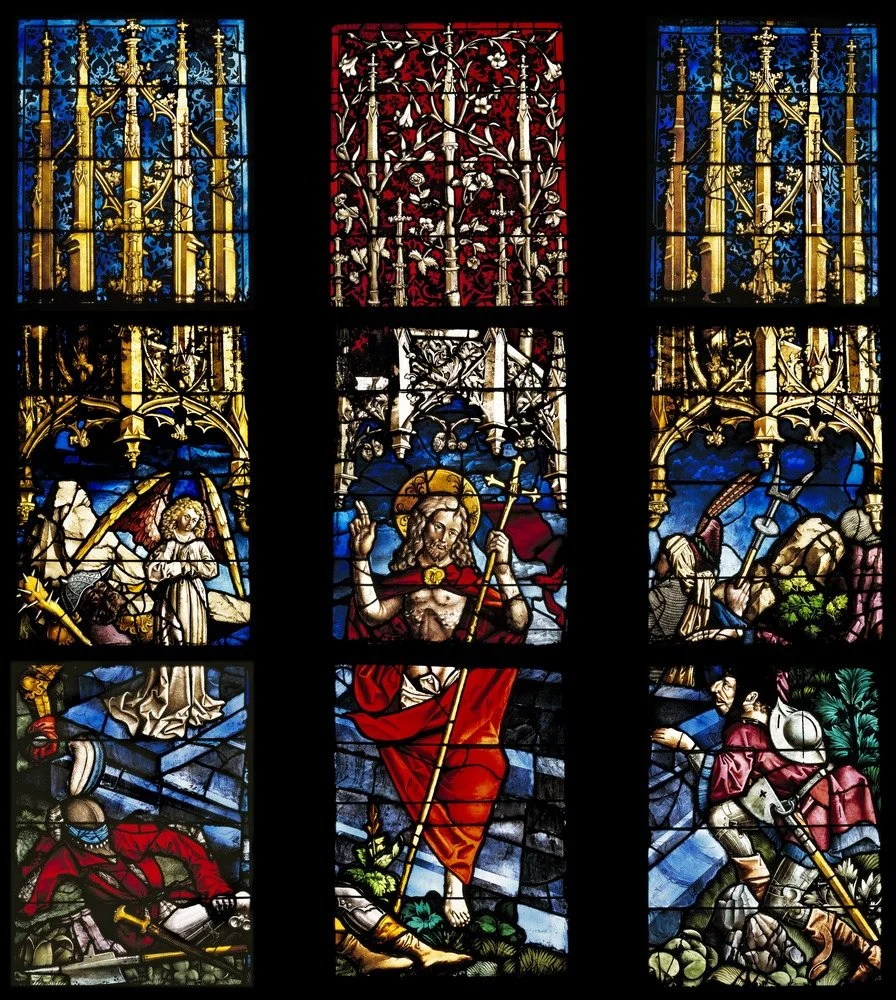
“Beginning at Moses and all the prophets, he expounded unto them in all the scriptures the things concerning himself.”
On this Easter Monday, as we hear the account of the road to Emmaus in Luke 24, in which Our Lord lays out for his apostles the “things concerning himself” in the Old Testament, some of the antiphons at Lauds seem especially striking. The five psalm antiphons at Lauds, on a normal weekday, are typically an excerpted line or two from the psalm or Old Testament canticle in question. So, for example, on a typical Monday throughout the year, the psalms and antiphons at Lauds would look like this:
Psalm 51 - Miserere mei, Deus
An. Have mercy upon me,* O God.
Psalm 5 - Verba mea
An. Consider* my meditation, O Lord.
Psalm 63/67 – Deus Deus meus
An. Early will I seek Thee,* O God.
The Song of Isaiah (Isaiah 12:1–6) - Confitebor tibi
An. Thine anger is turned away,* O Lord, and thou comfortedst me.
Psalms 148–150 – Laudate Dominum
An. Praise God* in the heights.
In every case above, the ferial antiphons are drawn more or less directly from the text itself, with the Benedictus antiphon also typically following this pattern. (Monday Benedictus antiphon: Blessed* be the God of Israel.)
On feasts and in various seasons, however, antiphons particular to the occasion are appointed. The Lauds antiphons for Easter and its octave (with the usual festal psalms) can be found below.
Psalm 93 – Dominus regnavit
An. For the angel of the Lord descended from heaven,* and came and rolled back the stone from the door, and sat upon it, alleluia, alleluia.
Psalm 100 – Jubilate Deo
An. And, behold, there was a great earthquake:* for the angel of the Lord descended from heaven, alleluia.
Psalm 63/67 – Deus Deus meus
An. His countenance was like lightning,* and his raiment white as snow, alleluia.
Benedicite omnia opera
An. And for fear of him the keepers did shake,* and became as dead men, alleluia.
Psalms 148–150 – Laudate Dominum
An. And the angel answered and said unto the women,* Fear not ye: for I know that ye seek Jesus, alleluia.
As you look through the antiphons above, you see that they are, more or less, the account of the resurrection from Matthew 28, as heard at the Vigil of Easter, traced out line by line. But it isn’t just that — if you look closely, you begin to see the genius of the ancient order of the Daily Office.
In the first Psalm (Dominus regnavit), the imagery is that of God as king, robed in majesty, seated on his throne, whose voice is more powerful than the roaring waves of the sea. The antiphon from St. Matthew’s Gospel helps us to see with fresh eyes the angel seated on the stone of the tomb, who demonstrates that, in the resurrection of Christ, even God’s angels are “enthroned” over the power of death, similar to the language of the beloved Easter chorale, “Jesus Christ, My Sure Defense,” which places death underneath the feet of the Christian:
Laugh to scorn the gloomy grave
And at death no longer tremble;
He, the Lord, who came to save
Will at last His own assemble.
They will go their Lord to meet,
Treading death beneath their feet.
But the fourth antiphon is the one that caught my attention in particular. The Benedicite is sung on every Sunday and feast, and its origin is in the book of Daniel, as the song of Shadrach, Meshach, and Abednego (Ananias, Azarias, and Misael) when they are thrown into the midst of the fiery furnace after they refusal to bow down and worship the idol of Nebuchadnezzar. The furnace was so hot that “the flame of the fire slew those men that took up Shadrach, Meshach, and Abed-nego.” The antiphon for the Benedicite in the Easter octave draws the parallel between those Babylonian guards who sought to carry out Nebuchadnezzar’s orders and kill the righteous three young men, and the guards who guarded the tomb of the perfect Son of God, who “became as dead men.” The image is the same in both instances: the life of the righteous is preserved, while those who seek to kill him “fall into their own nets.” Quite beautifully, this is commemorated throughout the year by the usual Sunday antiphon for the Benedicite: “I see three men walking in the midst of the fire, and the form of the fourth is like the Son of God.” Thus the promise of the resurrection is carried through the Sunday office the remainder of the year, and we are reminded that the one who walked through the fire with the three young men is the same one who walks through the fire with us, and the one who has burst the bonds of death and triumphed over the grave will finally see his enemies cast down and unable to rise.
“Beginning at Moses and all the prophets, he expounded unto them in all the scriptures the things concerning himself.”