

The Challenge of District Presidents
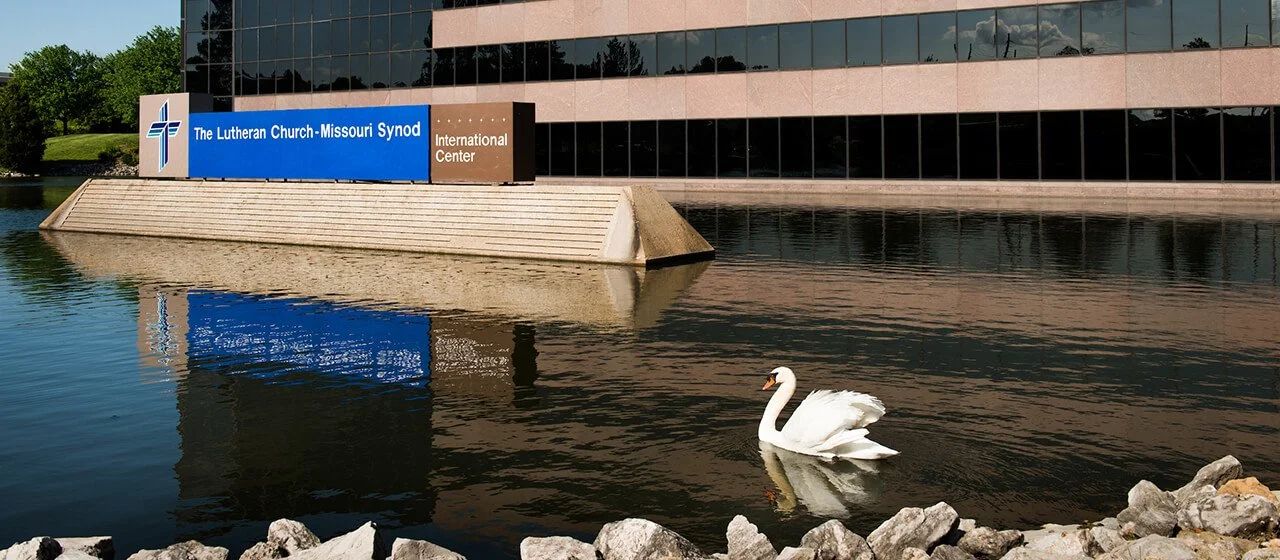
In our polity in the LCMS, we have episkope but not episkopoi. In other words, we have ordained men charged with oversight (episkope) of pastors and congregations, but they are not bishops (episkopoi). They are “presidents.” It’s a bit of an unfortunate turn of phrase, as a president is one who presides over a parliamentary meeting. Our district and synod presidents do this, but they have other tasks as well in addition to chairing the triennial conventions.
They are not bishops (even if they are given the honorific of “bishop”), as bishops of Lutheran (and non-Lutheran) church bodies around the world are. Our presidents are elected by delegates at a convention. And they serve three-year terms and must be re-elected. This is not like the episcopal service of the apostles, the apostolic fathers, or historic bishops cited in our confessions, men like Leo, Gregory, John Chrysostom, Ambrose, or Augustine. Nor is it like the service of more recent Lutheran bishops, like the sainted Bo Giertz.
To a certain extent, we ask the impossible of them. In the words of C.S. Lewis: “In a sort of ghastly simplicity we remove the organ and demand the function.” We remove the eposkopoi, but we demand episkope. For the former is an adiaphoron (at least when the term is used in the sense of polity and not in the sense of the pastoral office), but the latter is not. We tell a man to do the right thing, and then we make him stand for re-election at the hands of the very people he has to oversee and discipline.
Or to put it into terms a pastor might understand: Can you imagine if you did not have a call (as our presidents don’t), but instead had to be re-elected by the voters’ assembly every three years? How might your ministry be different? What if a husband or father were subjected to a triennial re-election campaign? It is a bit like comparing a professor who has tenure vs. one who does not. Certainly, the professor who has tenure can afford to be a little more bold than one who has to get good ratings from his students or he will lose his job by which he supports his family.
And, of course, our polity is experimental, innovative, and recent in the long history of the church. The jury is still out as to whether or not it can work. We have what we have partially because during the Reformation in Germany (over and against the Reformation in Sweden), there were no extant German bishops who would join with the Lutherans (co-called) - at least not at first. The other thing that happened was in 19th century America: the deposition of the Rev. Martin Stephan and the replacement of that old-world hierarchical polity with a new-world kind of hybrid hierarchical and democratic-republican model. We have replaced the ecumenical council with the convention, and we have redefined the word “synod” from its ancient, longstanding, and universal meaning of a gathering of bishops into a 501 (c) (3) corporate organization governed by a convention of roughly half pastors and half laymen of both sexes under the auspices of Robert’s Rules and the collective will of the parliamentary body by appeal to the majority, seeking the “vox Dei” not in God’s Word, butrather in the “vox populi.” And this is the process by which the Lutheran Church in Australia came to establish Satanic priestesses in what used to be Christian churches. In their case, the vox populi was the vox diaboli. The delegates were once again asked, “Did God actually say?” and the Eves and Adams in the voting assembly fell for it all over again.
Concerning how we govern ourselves, our confessions express not just a preference for episcopal polity, but that it is our “greatest wish”:
Concerning this subject we have frequently testified in this assembly that it is our greatest wish to maintain church-polity and the grades in the Church [old church-regulations and the government of bishops], even though they have been made by human authority [provided the bishops allow our doctrine and receive our priests]. For we know that church discipline was instituted by the Fathers, in the manner laid down in the ancient canons, with a good and useful intention.
— Apology 14:24 (emphasis added).
But that said, we were dealt two historical hands that have left us with what we have: the German Reformation and the American Innovation. And in general, we make it work - especially at the parish level, where for the most part, we are free to preach the Gospel and administer the Sacraments unmolested by our own hierarchy in parish and in district (with some exceptions - yes, many of us have “war stories”).
So being a district president has its own unique challenges - just as being a pastor does in our parademocratic form of congregational polity. It is what it is. But we do remunerate our district presidents well, provide them with full benefits, and none of them (to my knowledge) has a two-point district or are moonlighting at Home Depot. They are paid well, as they should be - given the level of responsibility that goes with episkope.
All that said, there is something I don’t understand regarding presidential episkope. And that thing I don’t understand is why some of them apparently need to have pastors jump through hoops before they will address public and unambiguous issues of oversight.
By way of example, district presidents, consider the hypothetical of a pastor in your district (let’s call him Smith) posting to social media - in multiple places and without ambiguity - that he doesn’t believe in the Trinity, or the Two Natures of Christ, or Baptismal Regeneration, or the Real Presence in the Eucharist - take your pick. I’m not talking about a whispered rumor, but an unambiguous public declaration in the words of my U.S. Senator from Louisiana, “As big as Dallas.”
Now if this happens, and you have oversight over this pastor - would you require some other pastor (let’s call him Jones) to first contact and confront Pastor Smith, initiate the bylaw launch sequence, and follow up with a face-to-face meeting and submit the notes to you - before you are permitted to take action? Would you really be powerless to call Smith yourself, to question him, or even to suspend him, unless and until some Pastor Jones out there stepped up to jump through the hoops? What if Jones is a husband and father and doesn’t make district scale and has to work a side hustle? What if he is already serving a dual parish? What if he can’t really afford the time to go on a paper chase, or if he lives a long way away and can’t afford to get on a plane or drive however far to seek out Smith for some kind of face-to-face meeting (which might not even happen)? Why can’t the district president just have the face-to-face meeting with Smith himself?
I know of the case of the Valparaiso professor who was removed from the LCMS roster, but only after a fellow pastor had to practically move heaven and earth to get the ball rolling. Why? And if the district president were harboring someone who was teaching heresy - not some kind of gray area - why was that district president himself not held accountable?
The best construction is that all of our presidents are are good men who really do practice oversight, but are inhibited and held captive by our polity.
If you really are powerless to remove a guy who holds and teaches unscriptural views without a Pastor Jones to cross the tees and dot the “ayes,” doesn’t this strike you as a problem? Shouldn’t fixing this be the top of the agenda for your COP meetings and for the synod Board of Directors? But, to be honest (and doesn’t the Eighth Commandment include “not telling lies”?), I’m having a hard time believing that your hands really are tied to such an extent. Because it seems to me that if a pastor were (in the words of a former governor of Louisiana) “caught in bed with a dead girl or a live boy” (yes, Louisiana is a politically colorful place), you wouldn’t need Pastor Jones to do something. Or worse yet, if one of your pastors declared bankruptcy. Rumor has it that this is the one unforgivable zero-tolerance sin for pastors. Everything else is negotiable.
So I’m skeptical that district presidents’ hands really are tied when it comes to disciplining pastors who believe, teach, and confess unbiblical doctrines. Maybe the best construction is that there are unseen political and financial considerations that get in the way and complicate matters.
Now, I don’t know of any current LCMS pastors who deny the Trinity. But there certainly have been some recently who have promoted women’s “ordination.” I’ve even seen resolutions put forth in convention workbooks to that effect. Why? Why should this be permitted? Why is this any different than denying the Trinity? This is biblical doctrine, not something that a convention has the right to vote on. I was once at a district convention in which a lady delegate argued that we could ordain women if we wanted to, but we just chose not to. The district president at the time, who was presiding over the meeting, did not correct her. I understand that he could not have done so as the chairman presiding over the convention, but he could have temporarily recused himself from the chair (as Robert’s Rules allows) and briefly confessed the biblical doctrine from the floor. He could have asked for a point of personal privilege to clarify our doctrine. He did not. Do we subject doctrine to the ayes and nays like they did in Australia, where they now have lady “pastors” by virtue of a certain number of votes? Is that our system of polity? And if it isn’t, why can such a resolution even be proposed to a convention with impunity? What if it had passed?
Can anyone explain to me how a resolution that, on its face, contradicts Scripture or the confessions is even permitted to be sent up the chain, published, discussed, debated, and voted on? Anyone? Class? Bueller?
So if a pastor were to openly promote women’s “ordination,” or advocate for homosexual “pride” parades, or speak in favor of transgender ideology - all of which are contrary to scripture - why are these pastors not being overseen and disciplined? If they persist in such false doctrine, why are they not removed? How can pastors speak of a man’s “husband” or call for same-sex couples to be allowed to commune because they don’t think they’re doing anything wrong? Why are they able to believe, teach, and confess unbiblical teachings with impunity? Are you waiting for Pastor Jones to fill out the right paperwork or something? I honestly don’t get it.
Maybe it is my own ignorance of the bylaws. But if our bylaws truly don’t allow district presidents to oversee, to exercise discipline, then not only are they not episkopoi, nor to they really exercise episkope either. And if that is the case, then I think that our district presidents should exercise a kind of de facto episkope by publicly condemning certain men and certain churches by name, and warning the faithful against them. St. Paul did this in his epistles - even mentioning false teachers by name. So do our Lutheran confessions. If you can’t remove a false teacher from the roster because of the burden of bureaucracy and bylaw complications, you can at least be the prophetic voice of the watchman on the wall. It does seem to be your job. Have I missed something?
But if you do and say nothing, you are giving tacit approval. And I cannot tell you how crushing this is to the morale of the pastors and laity who deal with the fallout of such things. These are not private sins between pastors. This is not a case of Pastor Smith selling a truck to Pastor Jones that had an unrevealed transmission problem. Such a case should not be settled in Caesar’s courts. That kind of dispute should be settled Christian to Christian, and if necessary, in a separate ecclesiastical forum: a dispute resolution process within the church. But public false doctrine is a different story. It seems to me to be the top reason why the office of district president exists.
In matters of publicly confessed doctrine, the dispute resolution process seems to be the wrong vehicle. For there can be no dispute resolution where there is no dispute. Are doctrines like the Trinity, the Two Natures, male-only ordination, opposite sex monogamy, and creation as male and female really a matter of dispute, up for grabs, and subject to the most votes in convention? In matters where there is ambiguity, where the facts are not clear, or in cases where an appeal is in order - then there should be due process and protection for the accused. That said, the onus should not be on Pastor Jones, who already has enough on his plate, and who is not charged with exercising episkope.
Those who teach contrary to God’s Word should be removed from the roster. That should not be a controversial statement. And if we can’t do that, our polity will be judged as a failure by generations yet to be born. For unless we can remove the cancer of false doctrine, we will simply become just one more counterfeit body like the ELCA and the NALC, from which true Christian pastors and congregations have to flee in order to remain faithful to the Word of God.
And before someone misconstrues my hard questions, I am really sincere when I say that our district presidents have a difficult task - especially within the parameters of our polity. And I know several of our district presidents personally, and know them to be honorable men. In fact, I’m really encouraged at how many of them I do know - either in person or by reputation - and I rejoice that they are there: including my own district president. But there is clearly something broken and dysfunctional that needs to be fixed - whether it is the polity, the bureaucracy, or the culture of oversight - within our synod.
I invite any of our district presidents to comment.