

Ashes are Not a Sacrament
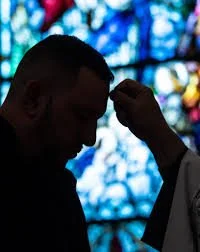
The imposition of ashes is a classic example of an adiaphoron. There is no biblical mandate for, or biblical prohibition against, this rite. Ashes, of course, are biblical. Dust is the substance of Adam’s creation. Reminding our Old Adam that we are dust, and to dust we shall return is biblical. The use of sackcloth and ashes as signs of repentance are biblical.
So the rite has biblical overtones, but it is not a mandate - just as Ash Wednesday and Lent itself, not to mention the entire church calendar, are all adiaphora.
That means the rite of ashes may be done or omitted without sin. Pastors, churches, and individual Christians are free in such matters.
Ashes are also not sacramental. Nothing supernatural happens when ashes mixed with oil are applied to the forehead with the admonition: “Remember, O man…” This means anyone can administer the rite - to himself, to his family, to anyone. It can be done in the church or in the home. They can also be administered to anyone. There is no such thing as “closed ashes.”
I recently heard about a pastor who is abolishing the imposition of ashes this year, with a couple of reasons given that 1) It is a relatively new practice, only dating back to the 1200s, and 2) Luther abolished the imposition of ashes. Prior to the 1200s, ashes were used ritually in a different way on Ash Wednesday and at other times of penitence, such as by sprinkling them on the head rather than tracing a cross on the forehead. But even if you consider 800 years to be too short a time to establish a rite in the church, we should also keep in mind that chanting the Words of Institution was only established by Luther in the 1500s. This practice is a mere 500 years old. Singing “Silent Night” by candlelight on Christmas Eve is a custom that is only a couple hundred years old. I’m not sure that this is, in itself, is a strong reason for its abolition.
It’s also a fact that Dr. Luther did things like abolishing the elevation, and then changed his mind later. Luther changed his mind back and forth on a lot of things. We treat Luther with reverence as a father of the church and the blessed reformer, but we didn’t trade out one “infallible” pope for another one. We were called “Lutherans” by our opponents - a badge of scorn that we bear with honor - but we are not Lutherists or Lutherolatrists. Luther also abolished the rite of confirmation. That too is an adiaphoron, but an abolitionist might want to tread softly on that beloved custom in his congregation.
Apparently, this pastor, instead of ashes, is going to trace baptismal water on people’s foreheads as a substitutionary rite. For the baptized, dipping one’s fingers into the font and making the sign of the cross is also a beautiful and edifying ritual: a reminder of baptism. But for the unbaptized, participation in such a rite has the look of being a baptism - and would seem to send a mixed message. And this is the problem with liturgical innovation: there are always unintended consequences. While we don’t practice “closed ashes,” if it is going to be replaced by Ashless Water Wednesday, it might be pastorally wise to close it off to only baptized Christians.
As for those who want to participate in the rite of ashes, since it is an adiaphoron, you are free to do so. Since it is not a sacrament, there is no ordained minister needed. If your church doesn’t practice it, or if your pastor is abolishing it, you are free to do it yourself.
Now, I prefer it to be done with the saints gathered for worship. I find it a helpful spiritual exercise and ritual reminder of that which we too often push to the back burner: we are indeed dust, and we are indeed mortal because of our sinful flesh. We do focus on our sins in this time of fasting, and we do hear the call of the Word of God to repent, to discipline ourselves, and to “return to the Lord your God, for He is gracious and merciful.”
I find it poignant to see my parishioners, young and old - even babies and children - marked with the ashen cross that identifies them as mortals destined to die, but also as those for whom Christ (the Anointed One) died on the cross. Indeed, in 20 years in the same parish, I have traced the ashen cross on the foreheads of many of my same beloved parishioners - young and old - whom I also ministered to on their deathbeds, tracing the sign of the cross on their foreheads. I trace the sign of the cross on the foreheads of their bodies after death. I trace the sign of the cross on their caskets after they have been slid into the tomb, reaching my hand inside - which always reminds me that we are both in time, and in eternity, and that the grace of the cross and Holy Baptism reach beyond this temporal life into the portal of eternity itself.
Preaching on Ash Wednesday is a somber reminder, looking out and seeing black crosses everywhere - reminding the preacher to preach the Word as if everyone in the congregation were suffering from a terminal illness. For in a very real way, they are. Preaching is a life and death endeavor. It gives life to the dying. And it is a similar reminder to the hearers of the Word as well.
But if receiving ashes is not an option at your congregation, I would encourage you to incorporate it into your private or family devotions. Church supply stores sell finely pulverized ashes. They are very inexpensive, and you will receive a small zip-lock that actually contains more than enough ashes for hundreds of applications. You mix a tiny amount of ashes with a couple drops of oil. You can use olive oil or a special anointing oil that may be tinged with frankincense (also available at the church supply store). Mix them together into a paste. You can use a toothpick or your finger. Be forewarned - ashes with oil are messy. Be ready to clean up your finger and the vessel into which you are mixing the ashes
In applying ashes, I prefer to use my right pinky finger instead of my thumb. There are two reasons for this: 1) the pinky provides a smaller “brush” and gives me greater control, and 2) I will be communing the faithful with my thumb and forefinger, and I don’t want any residual oil and ashes to end up in the mouths of the communicants. When I have finished distributing ashes, I cleanse my finger quickly and as best that I can with soap and water. I dry my finger off with a paper towel. Again, ashes are messy!
You may have to experiment to get the mix of ash and oil right. You don’t want it to be either runny, or powdery. Again, you want a moist paste. And you don’t need very much at all!
And when I apply ashes to myself and to others, I use the traditional formula: “Remember, O man, that you are dust, and to dust you shall return.” For the pastor, as a practical matter, he must also remember to take care vesting, as any contact with your vestments and your forehead will result in a mess.
May this coming day of Ash Wednesday, this coming season of Lent, and Lent’s associated rites of remembrance be a blessing, dear friends. And remember that Sundays within Lent are still feasts. We do have seasonal alterations to the liturgy, but if you are fasting for the season, it is traditional to relax your fast on Sunday. However you choose to walk the path of the Forty Days, do it with humility, knowing that you are free in such matters. Do it with grace, knowing that Christ has taken all of our sins and failures to the cross - of which that cross of ashes is also a reminder.
Remember, O man!