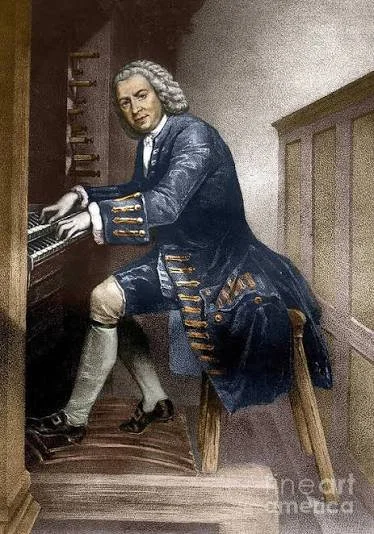

The Organ Refuses to be Silenced
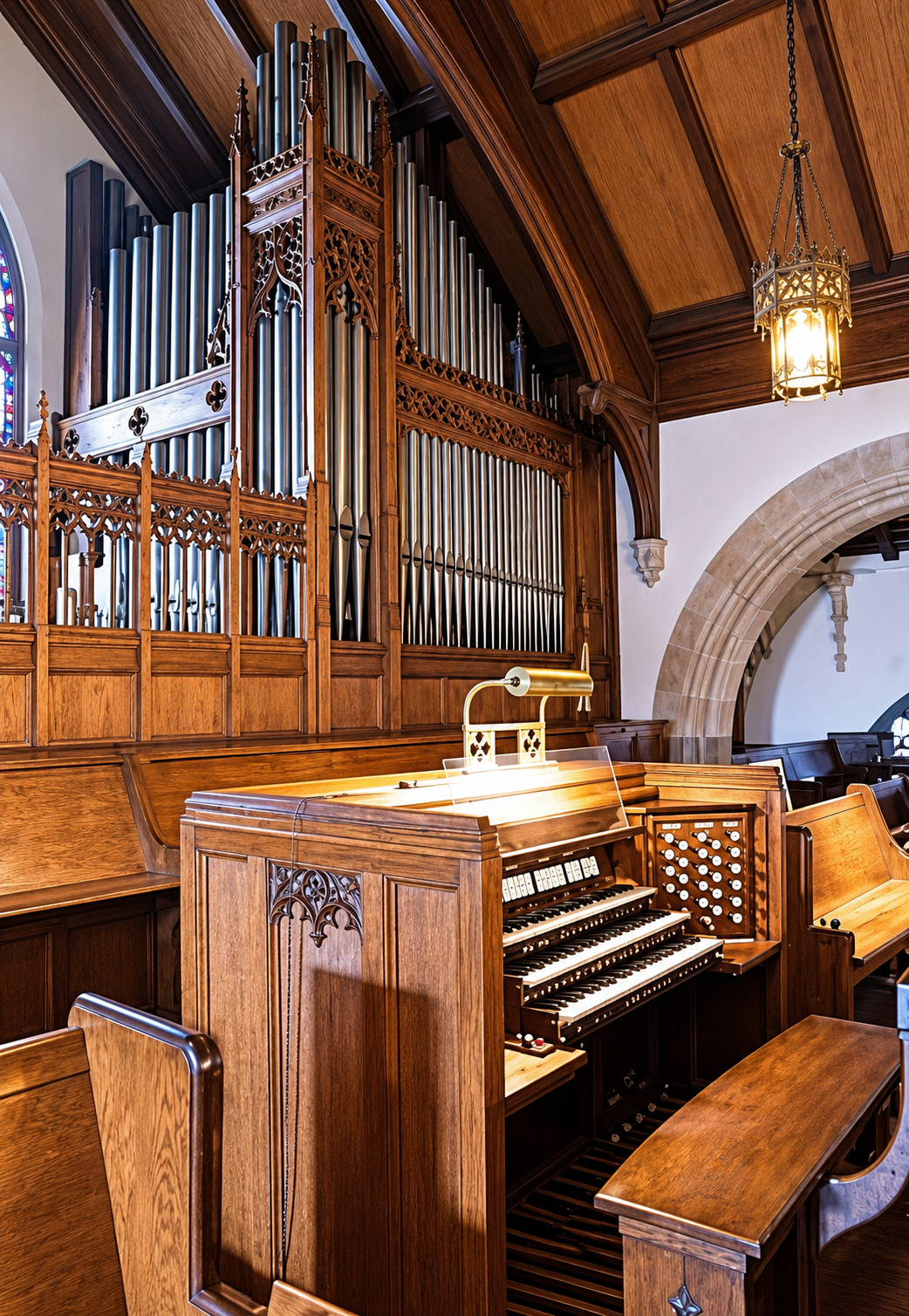
The organ at Zion Evangelical-Lutheran Church, Detroit, Michigan
The organ has been at the center of our Lutheran church music for five centuries. The “king of instruments” had already established itself in the west centuries before Luther and the reformers. And since one of the objectives of the Reformation was to restore music and congregational singing to the worship life of Christians, it makes perfect sense that the organ would become so endearing and enduring to our Lutheran identity.
And this is not just a matter of subjective preference.
The organ is objectively the best instrument to lead congregational singing. For the pipes make sound the same way that the human voice does. And unlike string or brass instruments, there is no bending of the pitch. Organists play with both hands and both feet, making both a broad range of pitch, and four-part harmony possible. And the sound of an organ can fill a vast cathedral in a way that a piano or harpsicord cannot.
Even though organs are expensive to buy and maintain, our churches managed to have them for hundreds of years. Of course, other confessions in the west make use of the organ, but not like the Lutherans. Our early chorales are like no other hymnody in the church. Johann Sebastian Bach was not only a Lutheran, but was an able lay theologian who translated the Gospel into musical notes, intricate compositions, and exquisite harmonies. Praetorius, Mendelsohn, Brahms, and the ultimate one-hit wonder, Pachelbel, are also “ours.”
Organists led congregational singing in virtually all of our Lutheran churches for more than 400 years. In the 1930s, electric organs appeared on the market. Today’s electronic organs make use of sampling, and can be hard to distinguish from their pipe-bearing ancestors. When The Lutheran Hymnal came out in 1941, nearly all of our congregations used that same hymnal, its single liturgical setting (page 15) for the Divine Service (as well as its regrettable page 5 “Dry Mass”), and the hymns, - and our services were led by organists.
So what happened?
In the twentieth century, young people began not only to experiment with new sounds, but to reject earlier music. Rather than building on earlier foundations, the desire was to revolt and rebel. Post-WW2, Rock and Roll would take the world by storm. It was seen as a severance from classical music. Chuck Berry’s whimsical “Roll Over Beethoven” (1956) deals with this theme. Rock music changed the world. There was no going back.
But something interesting happened in the 1960s. (I’m not a musical historian, just a consumer who lived through a lot of pop music eras). With their classically-trained producer (who did a lot more for the band than only production), George Martin, the Beatles began to reinsert classical music - including strings and organ - back into rock music. Their 1967 “Sgt. Pepper” album was incredibly influential, as rock music continued to mature and evolve.
In the late 1960s, synthesizers were introduced to the musical world. Beginning as experimental, they brought synthesized organ music back into the pop world - as with Walter (later “Wendy”) Carlos’s "Switched on Bach” (1968). Pete Townshend of the Who was fascinated with the synthesizer, and it played a prominent part in the “Who’s Next” album (1971). The return of classical themes led to a subgenre known as Progressive (“Prog”) Rock - which openly borrowed older classical riffs, and added new ones. And even before the synthesizer, Procol Harum’s “Whiter Shade of Pale” (1967) was an homage to Bach’s “Air on the G-String” that opened with an electric organ solo. The rock music of the 1980s was filled with synthesizers, as the keyboard player became almost a mandatory part of rock bands in the age of MTV.
I believe this led some people back to the sources. We see this in church organist Virgil Fox’s 1970 tour called “Heavy Organ,” in which he performed Bach’s organ music to sold-out venues of young people who cheered as if they were at a Led Zeppelin concert.
A lot of Heavy Metal calls to mind baroque organ music - even when played with electric guitars. Ozzy Osbourne’s prodigious guitarist, Randy Rhoads - who died tragically in a plane crash in 1982 at the age of 25 - was an LCMS Lutheran who was classically trained by his mother. At the time of his death, Rhoads considering leaving the rock world to pursue a classical career.
His classical composition written for his mother amazingly made it on Ozzy Osbourne’s 1980 album, Blizzard of Ozz.
Fast forward to today.
A man in his early thirties, Ben Maton, has a unique YouTube channel. He is an English classical organist who visits country churches all over, and relates history - sometimes of songs, composers, churches, etc. He then plays the various organs in these churches. It’s fascinating, and mesmerizing to watch and listen to. In a recent episode, he reveals how he got into the organ in the first place: from the Prog Rock band Emerson, Lake, and Palmer.
Another classical organist who is about the same age, Anna Lapwood, has gone viral with her contageous love and joy for the instrument. Here is her YouTube channel.
As young people are increasingly interested in what their parents and grandparents have jettisoned, including the hymns and liturgies of the church, we are seeing a renewed interest in the organ. As I attend Wittenberg Academy family retreats and Consortium for Classical Lutheran Education conferences every year, it is delightful to see young men and women congregating around pipe organs the way old movies from the 1930s and 40s depicted young people singing around a piano. As our older organists retire, we will need our young people to take their places at the bench.
And they are!
What the world is only now starting to rediscover, we Lutherans have had all along - in our churches, our schools, our colleges, our seminaries - all over the world. The organ refuses to be silenced. It is today louder and bolder than ever.
Not only is the organ suited to lead participatory singing, it is capable of a mind-boggling scope and range of sound. It can be as soft as a barely audible whisper, or it can rattle the windows and thump the chest. It can weep with those who weep, and rejoice with those who rejoice. The organ doesn’t just make sound, it literally sings. No other instrument has its raw power. And skilled organists who play in church give glory to God, even as their forebear Johann Sebastian Bach signed all of his ecclesiastical music with the abbreviation SDG: Soli Deo Gloria - to God alone be the glory.