

Church Growth Liturgies in a Lutheran Context
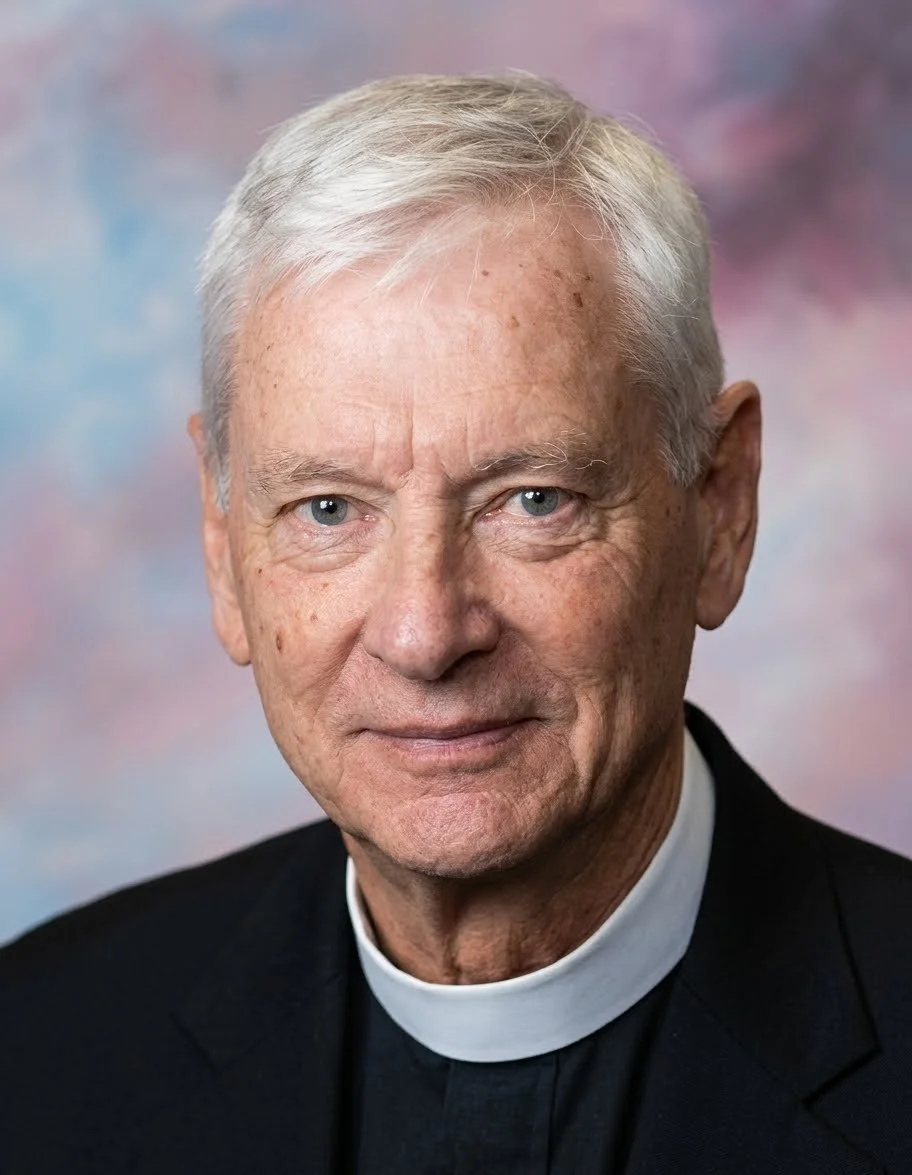
Note: seventeen years ago, in 2009, I wrote a reflection about the sainted Rev. Prof. Kurt Marquart. And this was regarding a magnificent paper of his that is now 48 years old, but remains relevant today - almost prophetically so.
And Prof. Marquart also spoke well ahead of his time when he addressed the worship wars and church growth in this talk entitled: “Church-Growth Liturgies in a Lutheran Context,” given at the CTSFW Symposia, Jan 23, 1997. You can find the audio here. Thank you to the person who sent this to me. I don’t want to “out” him without his permission - so let it be known that I am grateful to once again hear my late professor’s voice and wise teaching.
Here is the transcript (and thank you to the person who delivered the transcription to me). Again, if you really want to capture a lot of the subtlety and humor of the presentation, you can listen here — Ed.
Church-Growth Liturgies in a Lutheran Context
by Kurt Marquart
Thank you very much, and good morning, all. The the words of kindness from Dr. Feuerhahn, and it was a great, delightful surprise to have him here, and an honor to be introduced by him. But these words of kindness are too heavy for me, and they remind me of the beautiful custom I saw again in our Ukrainian sister church, where the absolution begins in this form. “Upon this your confession, I, as his unworthy servant, announce to you.” In that way, things are set in the right perspective.
I'm thankful for the topic that I've been assigned, and there ought to be, in good Lutheran style, some theses. Only four in number, so we should get through before lunch. I wonder, have have you received these yet? No. Well, never mind. They'll come in due course. Our competent departmental assistants are attending to the matter now, and I think it'll happen shortly. You'll get this little sheet summary theses on liturgy in the current struggle for church and confession.
And the first thesis is this: the Lutheran Church has no one officially prescribed liturgy.
But first, by way of introduction, church growth liturgies in Lutheran context. The topic is worded in such a way as to allow considerable creative ingenuity in choosing what one ought to cover obviously is boundless. The worship wars among us may not be dismissed simply as a case of more or less healthy turbulence to be expected in an age of cultural change and instability. We chatter all too glibly and reassuringly about culture, when in fact the crisis in our cultus goes to the bedrock of our faith, doctrine, and confession. Under the guise of sensible cultural adaptation, we are in fact being robbed of the dogmatical and sacramental substance of the Gospel. It is time to wake up from pleasant delusions, to sound the alarm, to watch and pray, not to be lulled to fatal sleep by soothing untruths.
The challenge is to frame the theological issues and criteria in such a way that they cannot be evaded with slippery rhetoric about adiaphora: things neither commanded nor forbidden in Holy Scripture. That the Lutheran Church suffers from a strange debility, not to say paralysis, in this field, many a participant in these debates has discovered, to his chagrin. At first sight it may even appear that the flaw lies in our confession itself. In point of fact, as we shall see, the root of the trouble is historical, and the solution lies precisely in that apparent confessional weakness which is its real strength.
To avoid undisciplined meanderings and fulminations, I submit four theses with some commentary attached, and some Dr. Feuerhahn unfortunately will be bring-and-tell, show-and-tell, because you've got to have the horse's mouth right here, and sometimes the other side.
Number one, the Lutheran Church has no one officially prescribed liturgy. To go at once to the heart of the matter, strictly speaking, there is no such thing as the Lutheran liturgy. Though that phrase, reminiscent of Luther Reed rather than of Martin Luther, is often bandied about, it carries more historically descriptive than theologically prescriptive weight. Luther himself made it abundantly clear that his liturgical suggestions were not to be taken as binding law, even in in introducing his very traditional Latin Mass of 1523, Luther cautions:
“But in all these matters, we will want to beware lest we make binding what should be free, or make sinners of those who may do some things differently, or omit others. All that matters is that the words of consecration should be kept intact, and that everything should be done by faith? For these rights are supposed to be for Christians, that is, children of the free woman (Galatians 4), who observe them voluntarily and from the heart, but are free to change them, how and whenever they may wish. Therefore, it is wrong in these matters that anyone should either seek or establish as law some indispensable form by which he might ensnare or harass consciences. These things neither can nor should be bound by laws. Further, even if different people make use of different rights. Let no one judge or despise the other, but every man be fully persuaded in his own mind (Romans 14). For external rights, even though we cannot do without them, just as we cannot do without food or drink, do not commend us to God. So the kingdom of God is not any rite, but faith within you, etc.”
Luther always adds that, etc.
Nor does the Book of Concord impose particular liturgical forms and details. This approach to Christian liberty is not a late polemical refinement that happened to get into Article 10 of the Formula of Concord. It belongs rather to our confession's deepest understanding of the Church, as articulated in the famous Article Seven of the Augsburg Confession:
“It is sufficient for the true unity of the Christian Church that the Gospel be unanimously preached in accord with its pure understanding, and that the sacraments be administered in accordance with the divine Word, it is not necessary for the true unity of the Christian Church that ceremonies instituted by men should be observed uniformly in all places.”
For this reason, the churches of the various countries in the individual territories that became Lutheran in the 16th century exhibited considerable variety in respect of liturgy and structure, yet remained maintained full doctrinal confessional oneness and fellowship. Herman Sasse put it like this:
“Our church is, in its essence, a confessional church, in a sense in which the Roman and the Reformed churches are not, for all these churches have beside their confession still something else, which shapes their distinctive characteristics and holds them together, namely their constitution, their liturgy, their discipline, or whatever. The Lutheran Church has none of that. It belongs to her understanding of the divine word, to the differentiation of law and gospel, that she finds in the New Testament no laws about church constitution, church discipline, and liturgy. She can live in episcopal, presbyteral, or congregational forms of constitution. Her liturgical possibilities extend from Swedish High Churchism all the way to Württemberg's lack of liturgy. She has only her confession: if gospel and sacrament are the notae ecclesiae by which we recognize the presence of the Church of Christ, then the notae ecclesia literani, a distinguishing mark by which we recognize whether a church is Lutheran or not is the Lutheran confession.”
I'm reminded of Löhe’s beautiful remark that the Queen is a queen even without her regal attire, and so the confessional, the Orthodox Church, remains the Orthodox Church with her full dignity, even without the array of her liturgy, which, however, is the right complement to it.
Historically, the Lutheran and the Anglican churches are the only two liturgical churches that issued from the Reformation. Their history is so closely intertwined that the Anglican has been called a Lutheranizing church, and the Lutheran Church in English-speaking countries turns without hesitation to the unparalleled liturgical and hymnological treasures with which Anglicanism has enriched and sanctified the English language. Yet these two churches are liturgical in very different ways.
A pamphlet I picked up years ago in the Anglican Cathedral of Melbourne bears various high ecclesiastical endorsements and the title "The Genius of the Church of England.” In it, Canon Charles Smythe of Westminster explains:
“the dual principle of maintaining a decent uniformity in the external worship of God, according to the doctrine and discipline of the Church of England, as the basis and condition of a wide liberty of theological speculation. You can afford variety in the pulpit so long as you have uniformity at the altar. The Anglican principle is here the direct antithesis of the Roman. The Church of Rome encourages an almost luxuriant variety of devotion, but insists on theological uniformity. The Church of England embraces many shades of theological opinion, but desiderates liturgical uniformity.”
That comes from the booklet, The genius of the Church of England.
Meanwhile, Vatican II has shown that Rome too will put up with many shades of theological opinion, so long as a papal monarchy is left intact. Theologically, Rome's alleged Petrine rock turns turned out to be papier-mâché, as time noted wryly. Although both the Anglican and the Lutheran churches have both confessions and liturgies, their roles in the respective churches are nearly reversed. If the Augsburg Confession, in particular, and the Book of Concord, in general, are the signposts of identity. That function belongs in Anglicanism more to the Book of Common Prayer than to the 39 Articles. Modern Lutheran churches seal the abandonment of their confessions, a state of affair affairs which is often already of long standing in these churches, when, like the Nordic and Baltic churches in Europe and the ELCA in America, they coalesce with their Anglican counterparts on basically Anglican grounds.
The ELCA clergy are to be inoculated with apostolic succession in the Anglican sense, which, for both partners, partner churches, now includes that most strident bit of counter-apostolic sectarianism — the ‘ordination’ of women — but the Episcopal Church need not conform its preaching and sacramental life to the Augsburg Confession in the slightest. That is how the coordination of faith and order avenges itself. In the end, a beefy dog of order wags the flimsiest tail of faith. The Divine Liturgy of the Gospel and sacraments deserves better than that.
Two liturgical details can be a diaphragm, but the liturgy, as a holistic organism of preaching and sacrament, is not.
Except for what the formative concord in Article 10 calls a case of confession, details of rite or ceremony may usually be regarded as adiaphora. Whether an introit or gradual is chanted this way or that or not at all is technically indifferent, which precisely does not mean that we may go about it sloppily or indifferently. But the real point here is something else. It is often assumed that liturgy, as such, is in the realm of adiaphora. Not so fast here, friend.
Details of rite and ceremony are one thing; the theology of public worship is quite another. David Luecke’s The Other Story of Lutherans at Worship muddies the waters thoroughly on this point. On the one hand, one must be thankful that Luecke bothers with historical and confessional arguments at all. But on the other hand, one wishes he had left them alone, if the result is confusion worse confounded.
Take Luecke's recurrent annoyance with the term liturgy. After a sentence which is either very wrong or else got very garbled in the printing, he says, "But the main point of the confessor's discussion is that liturgy is not the preferred vocabulary. Confessional terms are ceremonies and practices.” But the liturgy of Apology 24:80 is precisely not the same thing at all as the ceremonies and practices of the Formula of Concord. Ceremonies and practices belong to the how, to the realm of form in detail. In other words, adiaphora. But liturgy in Article 24 means content, the what of public worship. The term
“does not really mean a sacrifice, but in public service. Thus, it squares well with our position that a minister who consecrates offers the body and blood of the law to the people, just as a minister who preaches, offers the gospel to the people, as Paul says, First Corinthians 4:1: This is how one should regard us as ministers of Christ and dispensers of the sacraments of God, that is, of the Word and sacraments.”
Again, thus the term liturgy squares well with the ministry. How does Luecke deduce from this that the term is regarded as undesirable in the Confessions when it squares so well, or that it is equivalent to ceremonies and practices? He has muddled things up thoroughly, keeping in mind the natural fit between liturgy and ministry. According to the Apology, consider this choice proposed by Luecke. “One group sings praise songs and prays together for about an hour. For the same amount of time, another hears pastor-led scripture readings, sermon, and prayers. Which is better worship?” Page 37. Luecke suggests that the question is unanswerable.
That is not true.
Of course, if one assumes faith for one group and unbelief and impenitence for the other, the answer is clear: true worship is where there is true faith. But that's obviously not the issue, since only God can read the heart. The question is whether, other things being equal, one practice is as good as another. If so, if it is, then a family devotion or a hymn-singing Bible class is indistinguishable from a church or congregation, and preaching, and the divinely instituted preaching office, let alone the sacraments, make no difference at all. That may be fine Pentecostalism, but with a Lutheran understanding of the Church and her worship, it has nothing in common.
This is not style. This is substance. Luecke asks the right question.” What basically is worship? A simple question. It is a fundamental question for issues of worship in churches today.” He says. More's the pity that he again escapes into confusion. He answers, “There is no simple Answer.” And continues, “The many traditions of worship in Christian churches today stand as testimony to differences in emphases, even among biblically centered churches.” This odd conception of biblically centered churches — do they accept baptismal regeneration or the Lord's body and blood, according to His Word. This odd conception of biblically centered churches, whether or not they're sacramental, may may account for Luecke’s strenuous efforts to debunk the Holy Communion as the standard Chief Service for Sunday and holy days. His heroes are the Pietists, and the villains the liturgical restorationists.
But he is quite wrong about Luther and the Confessions. The Augsburg Confession’s claim of weekly celebration, Luecke dismisses as mere diplomatic accommodation on the part of Melanchthon. But he has overlooked the Apology's comment: “We religiously keep and defend the Mass.” If mere passive compliance is meant here, the statement is thoroughly dishonest. Far from such sullen, hypocritical conformity, the Augsburg Confession confidently exults. “Thus, the Mass is preserved among us in its proper use, the use which was formerly observed in the church, and which can be proved by St Paul's statement in 1 Corinthians 11:20ff, and by many statements of the fathers.” All the apology.
This use of the sacrament, when faith gives life to terrified hearts, is the worship of the New Testament, because what matters in the New Testament is the spiritual motivation, dying and being made alive. For such use, Christ instituted it as He commanded 1 Corinthians 11: ‘Do this in remembrance of me.’”
That is exactly Luther's point in the introduction to the Latin Mass of 1523, “The service now in common use everywhere goes back to genuine Christian beginnings, as does the office of preaching.” The German version has a nice wording here. Basically, it says.
“Our commonly used service has a fine Christian pedigree, but as the latter, the office of preaching, has been perverted by the spiritual tyrants, so the former has been corrupted by the hypocrites. As we do not, on that account, abolish the office of preaching, but aim to restore it again to its right and proper place, so it is not our intention to do away with the service, but to restore it again to its rightful place.”
That Luther and the Confessions insist on sound preaching needs no further proof here. The built-in link between the preaching and between preaching and the Supper, as constituting the Mass or liturgy, may not be so obvious.
Luecke tries to use Franz Lau, the Reformation scholar, to undermine the idea of sermon and sacrament as the standard service commended by Luther. In the first place, Lao has quite some Pietistic axes to grind. He compiled a book of quotations entitled, I give the English equivalent, "The Faith of the Reformers, Luther, Zwingli, Calvin.” But he's only trivially right when he dubs it “a historical fable and nothing more that most services in the wake of Luther and Wittenberg were sacramental services.” Luecke quotes that. It’s quite misleading. Of course, Luther had Matins and Vespers too, and not only on Sundays but every day. So statistically, of course, these predominate. But this does not in the least disprove the fact that the full Mass, sermon and sacrament, was the Chief Service for Sundays and holy days, indeed Luther inveighs against the custom of omitting the consecration on Good Friday and using the so-called pre-sanctified elements left over from Maundy Thursday. Says Luther, “Nor is it proper to distinguish Lent, Holy Week, or Good Friday from other days, lest we seem to mock and ridicule Christ with half of a Mass and the one part of the sacrament.” It is this mockery that Luecke is warmly recommending, as a matter of principle, not of emergency.
A little later, still in his 1523 Mass, Luther says, "For properly speaking, the Mass consists in using the Gospel and communing at the table of the Lord,” and in his German Mass of 1526, Luther says, "For among Christians, the whole service should center in the Word and sacrament.” Accordingly, several of the 16th-century church orders, Lutheran church orders, provided that if the Holy Supper could not be celebrated on a given Sunday for lack of communicants, then the service should end after the sermon with a prayer, the Our Father, and a benediction, but only after an admonition had been read against despising the sacrament. That's what's missing in the Lutheran hymnal, page five.
The Lutheran confessions know of no Lutheran liturgy, in a canonical sense, just as they know of no Lutheran church. The point is to take the church's historic service and make the appropriate Evangelical corrections. When that has been done, the result is a perfectly good Lutheran liturgy, whether the prototype be Roman, Ambrosian, Gallican, Byzantine, or what have you. The principle is the same in every case. That belongs to our theology of worship, and is therefore emphatically not an adiaphoron, but rather a matter of confession at some length in Article 24 of the Mass of both the Augsburg Confession and its Apology.
Behind the confession stands the instituting mandate of the Lord. This do in remembrance of me. It is in response to this mandate and invitation that the Church gathers to receive from the resurrected Savior forgiveness, life, and salvation. And that instituting mandate is addressed to and may be observed only and exclusively by the Church, the Eucharistic community. It is not addressed to seekers on Mars Hill. That is why the congregation meets on Sundays and holy days, and that is why its liturgy or Divine Service is, first of all, for the Church herself, the bride and body of Christ. Others may be present. Indeed, the missionary magnetism of this liturgy makes that highly desirable. But they cannot take part in the essence of it. They must first enter the temple by Holy Baptism and the appropriate instruction.
I must now summarize and do the show-and-tell with particular examples, because thesis three proposes that the Lutheran liturgical malaise arises from the paradox that a) theologically the liturgy is for Lutherans shaped not by legal, be they biblicalist, canonical, or political, but by Evangelical considerations, namely faith and love. Yet b) historically, Lutheran liturgies have in fact been prescribed by law in the context of established state church.
The first point: it's the whole theology of worship in the Book of Concord that the liturgy is determined by the shape of the Gospel. It is not determined by some sort of imaginary Levitical law to be distilled from the New Testament. So it's not a matter of biblicistic precedents, and since it says nothing about girl acolytes, therefore you can have them, or may have them, or must not have them, or ought to have them. That kind of argument, on the basis of simply external precedent, doesn't get anywhere. The liturgy has got to be shaped by the church's confession. The truth of it, that means, as our distinguished predecessor in this place yesterday said, Dr. Oliver Olson, that the Eucharistic prayers of the type which which make of the Eucharist again of the sacrament again a sacrifice are wrong. It is frightening to what extent the Gregory Dix's four-action scheme has been uncritically accepted by many Lutheran liturgiologists, so that the service with with the four action scheme as a skeleton again becomes basically something we do for God, an act of sacrifice that we offer to Him.
I was surprised to see, I had to officiate the other day in a former church of another background, and they're in the service book. What is it? The Service Book and Hymnal of ’52 or so. One of the predecessor bodies of the ELCA has this wording in the prayer of thanksgiving. First, you have the Words of Institution, fine. Then, after the Words of Institution, “remembering therefore this salutary precept, his life-giving passion, death,” and so on, “we give thanks to Thee, and we beseech Thee mercifully to accept our praise and thanksgiving, and with Thy Word and Holy Spirit to bless us, Thy servants, and these Thine own gifts of bread and wine, so that,” and so on.
Now, wait a minute. This is after the consecration. Has he forgotten the writer who is supposed to pray that he forgotten is just consecrated? And now this is the Lord's body and blood. And now we are thinking that that either the Holy Spirit or the officiant is so confused that we now need to pray for this bread and wine for us to be a blessing. The theology of the Formula of Concord that the essence, what makes a sacrament, is not these fourfold external actions, but the consecration, the distribution, and the reception. And this kind of Eucharistic prayer falls under Luther's condemnation. Luther gets very caustic, you know, when he criticizes the Canon of the Mass. I deeply appreciate Dr. Brian Spinks's defense of Luther on that point. That Luther really does apply theological criteria, and he says, "Here is a prayer. Receive, O Lord, this spotless and pure sacrifice for the sins.” And the silly man is biting himself in the cheek. Doesn't he realize it hasn't been consecrated yet? What does he hope to achieve? Offering to God a piece of bread and wine-is that supposed to be doing anything? So there is deep confusion in in the canon, and I think this sort of thing is a surprisingly thoughtless example of it. But we'll have some more theological considerations in in the conclusion.
I should like to add now also this is also love that shapes the liturgy. I mean the external form of it, and that goes a long way. Luther's principle is love is empress in ceremonies, and that means that those who lead the people in worship must not have the attitude that the Pharisees had: “Oh, what about this ignorant rabble? These cattle-they don't know anything. Let them take it, and if they don't like it, too bad.” But rather, the attitude of the Lord was that He had, when He saw the people, how confused they were, like sheep having no shepherd. He felt compassion for the multitude, and so the absolute prerequisite for healthy and sound liturgical leadership is also the sense of compassion for the people. Luther constantly, in his masses, says, "Look, don't burden the people with endless readings that are too long, or this or that. It's too too demanding. Their attention will lapse, and then what's the good of that?” On the other hand, though, when Luther speaks scathingly about all the frightful howling and growling all day long that the monks do, but he he perhaps overlooks and forgets that he if he hadn't howled and growled the Psalms frightfully for many years, he wouldn't have known them so well either, and his his own devotion and his hymnology absolutely arises out of the craggy grandeur of the Psalms, and that is the other story.
But Luther was extremely sensitive and very, very much aware that in liturgy, in the matter of the external form, there's got to be mutual accommodation, and this is why in the Confessions, in Article 28, the Augsburg Confession, says that yes, bishops may make regulations, and the assembly ought to keep these, but not as though they were conscience binding, the Grabau idea, but out of unity and love. Unity and love; these are the things that need to be cultivated in the church. And here is, incidentally, where Dr. C. F. W. Walther surpasses the, say, the approach of Grabau.
Grabau tried to reintroduce in America the approach of of church orders imposed from above, but that takes us now to point B. Historically, Lutheran liturgies have been prescribed by law in the context of established state churches. So, we're not so far from the Anglican situation in that at all. If for us some particular church order doesn't play as large a role as a Book of Common Prayer, it may be in part because the external social stability in the British system proved greater, so that the church orders lasted a longer time and were more stable, whereas things went rather helter-skelter in many Lutheran countries, and besides, there were too many to choose from. But I believe that this fact that the details of our liturgical life were ordered by the government, also in consultation with church leaders, but this fact has created in us this strange inability to make provision for it in freedom.
Walther tried very hard to establish the church in a post-Constantinian situation, where the church would order her life in accord with her own principles and not in accord with the dictates of governmental power, which, by the way, Peter the Great so envied in the Lutheran and other Protestant churches that he got rid of the patriarch and imposed on Russia a synodical system patterned on the ones he found in Germany, so that the government could control the church all the better. He saw how that worked very clearly. We learned yesterday from Professor Olson, and I'm deeply grateful to learn that that it was Melanchton who introduced this basic system, and Flacius who fought against it. That means that Melanchthon did not take Luther's advice as he had written him in July 1530, where Melanchthon had been willing to agree that we must obey the bishops in ceremonies, inasmuch as they are authorities in the state. Luther said, "On no account, a bishop as a bishop has nothing to command,” and he gives the example of Bugenhagen wearing different hats. Bugenhagen is a bishop of the church at Wittenberg. He is also the head of his own household. The fact that he can command his servant at home do this or that doesn't mean that he can command his church to do this or that. So the domestic authority does not transfer to the church.
It is a great pity that Melanchthon prepared the way for the takeover of the secular powers in this realm. It may do us good to remember this commonality, especially in this 450th anniversary year of the death of King Henry VIII, but what is meant practically is that the average Lutheran pastor and congregation did not have to worry their heads about what to do and how to do it. These decisions were taken by the higher ups. Read, for example, that book about liturgical life in Leipzig during the time of Bach. A certain rationalistically inclined superintendent Rosenmüller comes and takes over, and he says, "From now on, we don't have to keep these laws anymore. You don't have to pray the prayer of the day, don't have to preach in the gospel of the day. You can be free. And the result was cacophony. People had not been trained on how to how to internalize, how to make the decisions from within the spirit of the liturgy. So, if we are to recapture that, then much more is needed than simply perfunctory repetitions of slogans and clichés, and that means that our pastors need to be thoroughly imbued with the spirit of the liturgy, and our congregations come to learn again what it means to take these decisions on in a churchly way.
And therefore, I hurry. Are you signaling that? No, you're signaling. All right. The Ministry of Standing Orders, I called it at the Pittsburgh Convention.
We come now to Thesis 4. Well, actually, how much time do we have? Okay, just a few words because I think it's important to illustrate this point at the hands of a particular example. There developed a dispute in Nuremberg under Osiander about absolution, and here the dynamic becomes clearly evident. The city council of Nuremberg were so happy to be rid of the jurisdiction of the bishops and their power to excommunicate, they were not to hand over that again to the Evangelical clergy. And so the idea developed that now they were going to absolve everybody en masse, and there was to be no individual confession and absolution. Osiander protested against that. He said, "What kind of nonsense is this? What kind of absolution do you call it when you throw out the words like pearls to the swine, be they unrepented, adulterers, murderers, who knows what? You simply declare them all forgiven, and you renounce the binding key.” So Osiander strongly criticized his practice, and so, of course, and he he was not given to understating the matter, and so there was enormous turmoil in the city. The city fathers wrote to Wittenberg for an opinion. Luther and Melanchthon, in several opinions, tried to make peace. Well, let's have the public confession and the private confession. Despite the efforts of the Nuremberg City Council, despite the extremism of Osiander in some cases and the enormous hostility that existed for him, Luther and Melanchthon refused to throw him to the wolves. They kept on maintaining that the principle is right; we cannot throw out private confession, but Osiander should accept public confession too, so that both could remain in Christian freedom side by side.
That was obviously a compromise, because Wittenberg did not wish to lose the adherence of Nuremberg to the Reformation. A church order signed by Luther in 1542 said, and Walther quotes that, that under no circumstances should it ever happen that the absolution is said to a whole crowd of people standing together. No, that should be said only to individuals. That's obviously the intent of that wording, “Therefore, I forgive you.” So here's an example of how the dynamic of church and state works together, muddles through with a compromise, but the result is that in our church today we have no clear conception just how absolution ought to be handled, and this matter is sort of an agenda item that ought to be pursued when time permits.
Now, thesis four: typical church growth liturgies fail not in terms of a checklist of details, but by surrendering the biblical confessional nature of worship as a whole.
In particular, the twin dimensions of truth and transcendence are systematically assaulted by two things: a) the intrusion of secular cultural norms and values, including even musical forms of a carnally degraded and degrading provenance, and b) the cultivation of a generic, unconfessional religiosity of the pop-American experiential charismatic type. I was happy to hear the distinction between three kinds of culture yesterday, but I'm mindful of Walther's insight that even the highest culture is simply refined flesh. ABC and other channels may present adultery in very coarse and vulgar terms. PBS presents adultery in the most exquisitely tasteful fashion.
So it's very important to see that this is not a question of simply of culture, of preference, of taste, or social class. This is a question of flesh or spirit, of heaven or hell. And so, for instance, the intrusion of secular norms and values. Three things in particular. First of all, I don't have time to inflict on you the huge collection of examples of horror that I've got. There's one I just got from Pastor Pless. I thank him very much. It hasn't been published yet, but it's such an awfully reworded, non-confession, non-absolution, that I can only describe it as a piece of unbelievably flatulent verbosity. That it ends up saying nothing. Or here is a prayer. One example. Here is supposed to be confession. “God of Majesty and all, we confess our failure to truly live” — split infinitive — “to truly live the Christian life, we have wanted too many times to remain in the past when you want to challenge us with the future.” So, 15-year-old kids are praying that. Sorry, we've lived in the past. We need to go. “And the abundant life you promise each of us through faith, with eyes that fail to see, we miss the vision of the glory of serving in Christ's name. Forgive us all our sins. Restore us to the life you have planned for us in your world, Amen.” The words of assurance: “In light, truth, and grace, God surrounds us with a love that will not let us go, turning our mourning into joy, our sin into forgiveness, our fear into awe, our despair into rejoicing.” Good heavens! What is all this chatter? “Tonight, God calls each by name, welcomes us into the family of faith, and grant us now peace now and into the future, which the world cannot give. We are forgiven. We are free. Thanks be to God. Amen.” That shows perhaps there is wisdom in having church orders after all. To strain this sort of Effusive chatter. Why can't we stick to the book, not embroider? So we're struck by the sheer triteness and the the awful emptiness of much of this.
But of course, that is not the worst. That is absurdity and sheer secularity. What about this? Here is a Super Sunday coming up, offering clergy a chance to score. So the bulletin for the sermon won't be the same, much different from the programs at Joe Robbie's Stadium in Miami. The bulletin starts with kick-off at 10:45 a.m. Then an invocation or a pre-game prayer. Instead of the Star-Spangled Banner, the flock will sing what he terms the unofficial anthem of churches, "Amazing Grace".” Misuse of that wonderful hymn. Then I have a united cheer, and the next thing I have on the program is the huddle with the team owner. For added authenticity, he throws in commercial breaks.
Has anybody any idea of what worship is to inflict such a horror on a Christian congregation? The football ideology, entertainment evangelism. But the absurdity is not only to be found in one direction. I've got one here from an Anglo-Orthodox source: a suggestion, an organic anthem, a rewording of “A Mighty Fortres"s” in a more organic way. Let me read just the first stanza. The others are better, but here's the first: “A mighty flowing out his God, He flows throughout the ages, and so to flow Himself to man, He comes to us in stages. Yet still, one God is He, one flow eternally. His stages pave the way to flow through man today, and now he flows within us.”
Well, the the final thing I must have. I've got quotations from encyclopedias that show encyclopedias of music that show the unspeakably horrid carnal background of the so-called rock music. One of our mutual colleagues at your institution finds it offensive that I regard rock as intrinsically unsuitable for worship. When Paul said, however, he becomes all things to all men, he did not include there that he therefore will accommodate himself to Corinthian prostitutes and to their ethos, and bring that into the congregation. He protests against that. Therefore, you can prove that because of his background, this music has entirely wrong associations and does not belong in the beauty of holiness.
The final thing is, as Sasse always points out, the Lutheran identity is shaped not just by the article of justification, but it's a kind of ellipsis, a double center justification and the true presence of the Lord's body and blood. Luecke threw that to the wind, and the church growth liturgies, on the whole, create in fact instead an interdenominational, unconfessional solidarity with quasi-Pentecostalism. Therefore, I'll read the conclusion without further ado.
These are no trifles that are at stake in our worship wars. It is God's gift or human counterfeits. Who wants a roistering block party with pop artists caterwauling through blaring loudspeakers when we can have God's heaven on earth? The Divine Service is our Mount of Transfiguration. The Epiphany of the Son of God is consummated there, in the star of His Gospel Word, the open heaven of Jordan's baptismal flood, and the wine of Cana become for us His very blood. Here we taste in advance of the restored Tree of Life in the midst of the new heavens and the new earth. Though we must regularly leave and return, the Lord goes with us. He does not drive us out as from that first paradise, but gently leads us to Himself, strengthening and cheering us whatever depth or the valley of the shadow of death we must traverse. And at the entrance stands no sword-bearing, avenging cherubim barring our way, on the contrary, angels and archangels welcome us back ever again, with all the company of heaven, till our pilgrimage and transfiguration be accomplished.
That we cannot surrender.