

The Newman Option
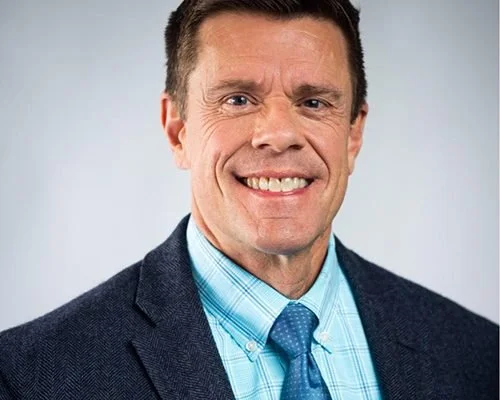
In this journal (Lutheran Mission Matters, November, 2019), former Texas district president, the Rev. Michael Newman has a modest proposal that I think we should consider. Beginning on page 11, he writes:
***
Action Two: The LCMS Starts a New Church Body in the Third Largest Mission Field in the World.
The Lutheran Church—Missouri Synod has demonstrated biblical Kingdom multiplication for nearly 175 years:
Believers reached out to new people. By God’s grace, through the Word and Sacraments, disciples made new disciples.
Churches planted new churches; sometimes a single congregation heroically and faithfully birthed multiple new churches in many communities.
Districts of the Synod launched new districts. For example, the Southern District gave birth to both the Texas and Florida-Georgia districts, as missionaries were sent to new places in order to expand the reach of the Gospel.
AND, the Lutheran Church—Missouri Synod started new church bodies around the world.
Resolution 2-01 from the 2019 LCMS convention was titled, “To Thank God for 125 Years of International Mission through The Lutheran Church—Missouri Synod.” That resolution articulated one facet of LCMS church multiplication: “WHEREAS, The planting of churches and raising up of pastors and church workers has resulted in the formation of 35+ partner church bodies. . .”
The LCMS has actively started new Lutheran church bodies in different places and cultures, among people of different languages and customs, at opportune times and for the purpose of seeing the Gospel reach new people so that more might confess the name of Jesus and receive the gifts of forgiveness and eternal life.
According to my research, at least ten of those 35+ partner churches were started from scratch by the LCMS through missionary outreach to new places and cultures around the world8 :
Africa:
The Evangelical Lutheran Church of Ghana: started in 1958, became a partner church in 1971
Asia:
The Lutheran Church—Hong Kong Synod: started in 1915, post-1949 became an independent synod • India Evangelical Lutheran Church: started in 1894, became a partner church in 1959
Japan Lutheran Church: started in 1948, became a partner church in 1968 • The Lutheran Church in Korea: started in 1958, became a partner church in 1971
Gutnius Lutheran Church (New Guinea): started in 1948
The Lutheran Church in the Philippines: started in 1946, became a partner church in 1971 • Lanka Lutheran Church: started in 1927, became a partner church in 2001
South America:
Evangelical Lutheran Church of Brazil (IELB): started in 1900, became a district of the LCMS in 1904, became a partner church in 1980
North America:
Lutheran Church-Canada: started in 1854, became an autonomous partner church in 1988
What is even more encouraging is that the new church bodies started by the LCMS have continued the pattern of multiplication. Disciples are making new disciples. Congregations are planting new congregations. Partner churches are even starting new partner churches! The Evangelical Lutheran Church of Brazil (IELB) started the Evangelical Lutheran Church of Portugal in 1959. LCMS fellowship with this new body was established in 2019. The IELB is now in the process of starting a new Lutheran body in Mozambique. God’s Word multiplies!9 Where is the next place the LCMS should consider starting a new church body?
Where is there a need to reach a new culture in new ways? What about the third largest mission field in the world behind China and India, the United States of America?
What if the LCMS recognized that, like any long-standing entity, its reach has narrowed? The Missouri Synod has a limited connection with new generations. The Missouri Synod is very mono-ethnic. It has structures, costs, and preferences that create barriers to the emerging “new nation” that is developing within the United States. Is it time to send missionaries to launch a new church body in the US? Is it the right season in history to give birth to a new biblical and confessional voice that can speak Christcentered, grace-focused, sacramental-rejoicing, and Scripture-founded words into the spiritual conversation happening in America today?
I’m not talking about division; I’m talking about multiplication. Might the launch of a new movement, rooted in and founded upon Reformation theology, be just what is needed to reinvigorate the multiplication legacy of the LCMS—and the Lutheran Church in Western civilization?
Picture it:
A younger, more diverse and nimble church in which Article XIV of the Augsburg Confession (“Order in the Church,” “rite vocatus”) is unencumbered by European educational structures and Western accreditation requirements. Envision a church that has the option to use the older models of pastoral formation and certification, but also has the ability to be faithful to the Confessions while making use of new technology and new systems that accomplish faithful pastoral formation and sending for greater Gospel outreach.
A church that is able to practice Article VII of the Augsburg Confession (definition of the Church and true unity of the Church) outside of a Western, European, sixteenth-century overlay, free to use the best of what God has provided in external forms and ceremonies throughout the years, while at the same time incorporating other biblical paradigms that honor God and speak to an emerging generation.
A church that can meet the chaotic fallenness of today’s culture with sound proclamation of Law and Gospel, applying Article IV of the Augsburg Confession (Justification) without being afraid of the “new” sins of this generation.
What if the Lutheran Church—Missouri Synod did what it has always done: send missionaries to start a new church body in order to reach a new nation—even the new and emerging “nation” developing in the US?
***
I disagree with some of the details and motivations in this article, but this proposal would solve the ongoing “Tale of Two Synods” that nobody is really happy about. Even the Rev. Zach Zehnder’s latest survey reveals a shocking degree of division in our synod that defies compromise - forcing even him to come to grips with the reality that we are not walking together on many issues that are important across the board, including: pastoral formation, liturgical worship, and the role of women in the church. There are doctrinal and confessional issues that are not reconcilable, largely based on our different interpretations of the Bible and Confessions.
Some issues can be discussed and compromised: how many districts should we have? What should the mascot and colors be of one of our Concordia universities? What is the division of labor between synod and district? Term limits? How to resolve disputes within synod? Questions like these can be hashed out.
But there are issues that simply cannot be compromised. One faction or the other will win, and one will lose: Can women preach and administer sacraments to other women? Should women lead the public liturgy (such as Nicene Creed) and read the scriptures in worship (including the Gospel)? Should women serve as elders and distribute communion? Should women lead men (even pastors) in public devotions? Is the male-only pastorate biblical, or merely cultural? Should there be a non-residential formation option for pastors? Should laymen who are not field workers or vicars preach, or should any laymen consecrate the elements in worship services? Should an agreed-upon liturgical Divine Service from one of our hymnals be used? Should we ordinarily commune people who do not belong to LCMS churches or to churches with whom we share fellowship (closed communion)?
On these and similar issues, the possible answers are mutually exclusive. And we are divided in the synod about them.
They cannot be both permitted and not permitted.
There are those who say Article 24 can be disregarded, whether for the sake of the Gospel or by its supposed recension by other parts of the confessions, and others who hold to a strict quia subsciption and cannot abide any of the articles to be set aside by churches in our communion. Again, these are questions that will ultimately be decided by a one-size-fits-all decision - probably at a convention. And even then, we see district presidents and pastors who simply refuse to comply with synod, knowing that our polity makes discipline virtually impossible, and that even the decisions of conventions cannot really be enforced.
And so we are left with perpetual bickering. We are a Tale of Two Synods. We are in a de facto state of broken fellowship. Both sides are frustrated. Why do we have to live like this?
President Newman has the solution: dissolution. Why don’t the “missional” churches peel off and form a new church body? They could outright mandate congregational freedom to worship any way they like. They could form pastors and leaders - including women, if that is their choice - without residential seminary training. They could use Kairos and Luther House of Study, or they could do a kind of congregation-based internship - without any pushback from members of the LCMS. They could experiment freely and be entrepreneurial without being anchored to those who oppose them in the LCMS. They could re-evaluate the principles of biblical and confessional hermeneutics. They claim that they know how it can be done better. Well, maybe they should have the opportunity to prove it. Talk is cheap, after all.
Their big churches could get more representation if they want to organize into a synod or some convention structure. If Caesar’s courts approve of the CTX steal, they could even have a “forward-thinking” university with a lady president - and they could re-start CTX’s certification of church workers. They would be free to remove the name “Lutheran” from their churches and institutions without reproach from anyone in the LCMS - and without alienating potential members who might see the label as a turnoff.
They would have no more complaints about their being too many collars and chasubles and miters in synod publications, and not enough CoWo at synod and district functions.
This just seems like a win-win.
I sometimes wonder if the only thing standing in the way of a peaceful separation is financial: things like LCEF loans and employee benefits. There is no reason why the LCMS couldn’t figure out a way to either grandfather in churches that leave, or expand eligibility for our benefits beyond the LCMS.
The Reverend Professor Kurt Marquart was openly calling for a friendly dissolution 25 years ago. Our divisions have only gotten worse since that time. Abraham and Lot were honest enough with themselves to realize that they needed a little more space between them in order to keep the peace.
We should consider the Newman Option by spinning off a new and experimental church body.