

Dealing With a Mob in the Church
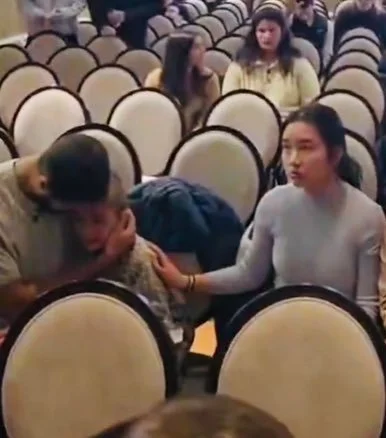
The recent incident of a church in Minnesota being invaded by a mob has, of course, elicited a lot of responses in our own circles.
I have read some foolish, naïve, and stupid responses, borne of ignorance and romantic illusions. The one response that I think is spot-on was offered by Ad Crucem News. You can read it here. I highly recommend that you do so!
My thoughts on this are based on my own encounters with Antifa mobs over the course of the summer of 2017 in New Orleans. I received a quick and immersive education on the subject.
Romantic Illusions
Two romantic responses that I’ve read - obviously grounded in a lack of experience - are 1) the Dirty Harry response, and 2) the Church Growth response.
The former manifests itself by guys saying how much they would welcome this situation in their churches because they and other men in the congregation carry firearms. “Let them try that here,” they say as they puff out their chests, “and they’ll leave feet first.” Tell me you’re a TV-watching LARPer without telling me that you’re a TV-watching LARPer. Using firearms in a church is, in the real world, a last resort used to stop someone who is brandishing a weapon and is an immediate threat. Such a response is fraught with risks. It is not a thought that any sane person relishes.
This is not a serious strategy from a serious person.
Likewise the “ignore them and just keep on with the service” advice. No, this is not an opportunity to welcome new people into the church: handing out surveys and directing them to the “I’m New” tab on the church’s website (so they can find out where to drop the kids off to children’s church and top off that latte). This isn’t a serious response either. Not everyone is actually welcome in your church. Even if surveys indicate that 98% of Millennial and Gen-Z Antifa mob members are not comfortable with liturgical worship, I would not recommend “Antifa-seeker” worship songs to be employed as a “best practice.” These people are not “visitors.”
Nor are you going to win them over to Jesus by just carrying on with the readings and the sermon or showcasing our magnificent traditional liturgy and hymnody, and having the organist play louder. This is not an evangelism opportunity.
They Are Not Protestors
We need to stop calling them “protestors.” They are not in your church trying to lobby city council to put up a stop sign on Main and First. This is a mob. Their goal is to intimidate. And when they are on private property (and your church is private property), they are criminal aggressors, trespassers, and invaders. They are not exercising their “first amendment rights.” The first amendment is not applicable to private property. And no, not everyone is welcome in your church. People are invited to enter this sacred space, and they certainly can be uninvited. We have got to rid ourselves of this suicidal empathy that is a diabolical subversion of God’s Word and God’s will. We are to oppose the demons, not empower them and congratulate ourselves on being “Christian” about it by turning the other cheek to the devil. Cowardice is not a Christian virtue.
Call them what they are: aggressors.
Mobs are Unpredictable and Scary
Again, mobs are already violent - even if they are only threatening violence. They are a mob because they are there to intimidate. They are there to silence the Word of God and the Gospel. They are there to frighten people into staying home. People who have never experienced a mob scene can’t imagine what it is really like. Mobs are not screened. Mobs attract the mentally ill, the violent, and the self-righteous. There are revolutionaries scattered in the mobs. You don’t know whether they are armed or not. There is a sense of anonymity in the mob that causes people to do things that they would not normally do. In a sense, being part of a mob is like being drunk. Inhabitations are lowered, even as emotions and adrenaline are surging.
In 2017, I did not see any firearms among the Antifa mobs. But they did throw glass bottles, sprayed bear spray, and carried small pocket-sized razors, using them to slash people. They threw burning objects as well. So keep that in mind if a mob shows up at your church. Even if they seem “peaceful” (again their very presence is violent), you have no idea what is coming next. As one of the combat veterans repeatedly told us in 2017: “Keep your head on a swivel and watch your six.” In other words, be aware of your surroundings all the time. Don’t assume that these people standing and chanting will be the extent of the incident. You have to strategically plan for the worst-case scenario.
The time to think on these things is now, not when it is sprung on you.
Don’t Take the Bait
If the media is embedded with the mob, don’t do an interview. Don’t say anything to anyone other than: “You are not welcome here. You have to leave.” Say it over and over again. No, this is not an opportunity to “share the gospel” or “love on your enemies.” This is not a way to get some quick credits on your antique Ablaze counter, or clicks on the church’s Facebook page. The pastor and and the lay leadership have to stick to this script and not be drawn into a discussion.
In the incident above, the media “call girl” Don Lemon was part of the conspiracy to invade this church. He left behind video evidence that he was not there spontaneously. He was part of the plan to invade the church. However, I think the pastor made a grave error by submitting to an interview with him. He essentially invited him to be there, and made prosecution difficult if not impossible.
Don’t take the bait!
So What Should We Do
Others may certainly have honest disagreements with me on this, but this is how I think we should approach this situation.
Call 911
Livestream/Record
Evacuate the vulnerable
Alertly protect and watch
Continue to disinvite
Call 911
Don’t call the police. This is an emergency. That is what 911 is for. In a loud mob scene, you may not be able to speak to the dispatcher. That’s okay. Call 911 anyway - as many people as possible. They will ping your signal and find you. If you can speak to the dispatcher, tell them there is a mob in your church and you don’t know if they are armed. Don’t call them “protestors.”
And even if your government is corrupt and the police have been ordered to stand down (as was the case in New Orleans in 2017), 911 calls are recorded. They are also a record of what was happening as well as the government response to it. Not even the most liberal jurisdiction wants the trouble of having done nothing only to have violence or a fire break out while they dither. The idea is to get law enforcement to the church ASAP to handle the situation.
Calling 911 takes no time at all. Even if you just dial it and put the phone on speaker and say nothing, it will help.
Livestream/Record
This is another way to record what is happening that costs nothing, and it takes nothing more than a couple keystrokes. As many people as can should be livestreaming or recording the incident.
Evacuate the Vulnerable
Heads of household should take charge of their families and evacuate them. Escort them to the exits. This calls for some discernment and making a plan ahead of time. If families gather in the parish hall or school building, will they be able to get out if need be? Or will they just find themselves trapped? I think the safest bet is to get outside into a place where the public can see. Get away from the building and away from the mob.
Pastors and lay leaders should look to help the vulnerable: not only women and children, but the elderly and the handicapped. Evacuate them as well. Do so as quickly, but as orderly, as possible. Think of the school fire drills. Don’t panic, but also move with purpose. Treat this as an active shooter drill - because it could quickly become just that.
Those who are in charge of security (again, work this out ahead of time) should either stay, or should return after evacuating their own families. They and the pastor should stay and observantly be there to protect one another and the church’s property. And should a member of the mob brandish a weapon, be it a knife or a gun, those who are armed should be prepared - without brandishing and without escalation. Again, the use of force is a last resort. Hopefully, help will be on the way soon, and the threat will be neutralized.
Continue to Disinvite
Remember to continue saying, “You are not welcome here. You have to leave.” Now is not the time for a theological, political, or legal discussion. Be firm on this. Make sure there is a record of the leadership repeating this. Keep watching, and continue to be a disincentive for theft or vandalism on the part of the mob.
An Ounce of Prevention
If you believe that your church may be a target, or if you are tipped off about something, or if conditions just suggest this to be wise, put someone on guard duty at the front door well before the service starts. If a mob is coming, have the sentry lock the door and call 911. It’s better to keep the mob outside than let them in.
Have plans in place so that you’re not scrambling during an unexpected incident to deal with it on the fly. Make sure lay leaders and heads of families know what they are to do. I would not make a big deal about it, and bring panic to people, but it is always good to plan for the worst. Check your local and state laws about being armed in church. It was only a few years ago that my own state, one that is friendly to firearms, gave the okay to carry concealed in church.
It is good for the pastor and the lay leadership to have a good relationship with the chief of police and others in law enforcement. Share your concerns with them and assure them that you are planning ahead so as to avoid a violent confrontation. Pastors, you might want to consider volunteering to be a police chaplain. That will build trust and loyalty.
The Pastoral Vocation
We pastors want to preach and administer sacraments. That is the most important thing that we do. It is how we get saving faith (that is, if we believe what we say we believe in AC 5). That said, the word “pastor” is Latin for “shepherd.” The shepherd’s vocation shifts depending on the needs of the sheep.
For example, King David, the author of the 23rd Psalm, before he was King David was a shepherd. And he may well have passed the long hours of his vocation in prayer. In fact, we could say he was serving as liturgist with his flock, perhaps composing the very Psalms that we count as God’s Word in our Bibles and hymnals. David may well have been prayerfully singing a Psalm when a wolf or lion appeared to threaten his flock. At that moment, his vocation called for him to stop singing, stop praying, and put down the harp. His pastoral call then was to take up his sling and interpose himself bodily for the sake of the sheep. Maybe that would be enough to scare away the predator, but maybe not. We know about David’s prowess with a sling and rocks. We know about David’s bravery in physically slaying attackers.
I’m not suggesting that the pastor must himself be prepared to dispatch a physical threat, but he should delegate such authority to those with those skills and talents. It is the pastor’s job to plan and to act in the interest of the sheep - and not to simply ignore the threat and continue chanting the Proper Preface as if nothing were happening.
Fathers of families are also shepherds of their families. And families would do well to have these kinds of discussions about what to do if violence erupts - not only at church, but at the playground, the store, or at school. We should work on having our children prepared for trouble, without driving them to unnecessary fear. Odds are in our favor that no violence will come to us in our churches, homes, or places where we work and study. But sometimes it does. Let us be wise.
A bit of wisdom can be gleaned from Proverbs (22:3):
The prudent sees danger and hides himself, but the simple go on and suffer for it.