

A Devotion For the Feast of St. Wilhelm Loehe
Note: Published as “Today’s Devotion” today at my Substack. — Ed.
Today's Devotion
Friday, January 2, 2026 – St. Wilhelm Loehe - Luke 2:1-20
Jan 02, 2026
In the name of + Jesus. Amen.
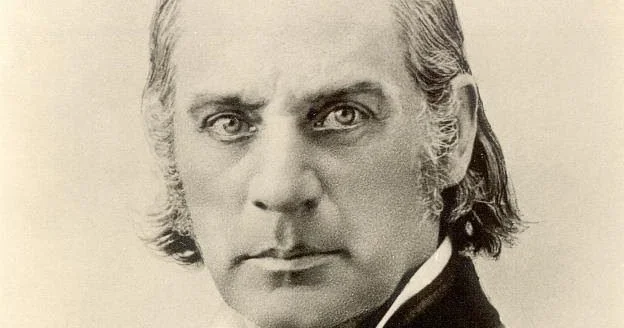
St. Wilhelm Loehe was a German missionary to America who never set foot in America. He was a Bavarian pastor who was fiercely dedicated to the liturgy and the Eucharist, as well as pastoral training. He also established an order of sisters who would care for the sick and elderly. Thanks to Wilhelm Loehe, Concordia Theological Seminary was established in Fort Wayne, Indiana in 1846, and is still going strong today. He wrote a magnificent book of pastoral practice and the giving of soul-care entitled simply The Pastor.
For the church still needs pastors: men who provide care as shepherds of Christ’s flock. And pastors are also preachers: heralds of the good news. Our message is the same as it was when St. Luke wrote his Gospel and was accompanying St. Paul in preaching the Gospel. Our message is the same as it was when Wilhelm Loehe was training pastors in 1846. And our message will be the same until Jesus returns.
And a big part of that message, that Gospel, that Good News, is our Lord’s incarnation: His coming to us in the flesh. Even the world, try as it might, cannot ignore Christmas and the impact of our Lord’s coming as a baby in Bethlehem. We are now in the ninth day of Christmas, and the story of His birth is still a wonder for Christians to ponder.
Luke’s summary in the second chapter of his Gospel relates the careful historical precision of a historian. He tells why the Holy Family was in Bethlehem, far away from their home. It was the “decree” from the government that “all the world should be registered.” And Luke is careful to point out that this was in the specific census of Caesar Augustus, the one that happened “when Quirinius was governor of Syria.” For this is how time was measured “in those days.” The world sharing a common year tied to the first Christmas was still centuries in the future.
The natural birth of Jesus was also supernatural. St. Mary “gave birth,” swaddled Him (if human experience is to be trusted, it was likely Joseph who did the swaddling), and He was put down to sleep – in a cradle that was really a food trough for the animals. This is all very natural and earthy. But we also see the supernatural part in the fulfillment of the ancient prophecies, and in the coming of the “Angel of the Lord” to the shepherds, “and the glory of the Lord shone around them.” The angel, as is almost always the case when they appear to men, said, “Fear not.” And then he preached the Gospel, the “good news of great joy that will be for all the people,” not only for the shepherds, nor for only the Jews, nor for only people living in Judea in the first century. “For unto you is born this day in the city of David,” says the angel, “a Savior, who is Christ the Lord.”
And the angels taught us to sing the Gloria in Excelsis Deo that we still sing in our liturgy: “Glory be to God on high: and on earth peace, goodwill toward men.” And with the Blessed Virgin Mary, we “treasure up all these things, pondering them” in our hearts. And the shepherds, the pastores “returned, glorifying and praising God for all they had heard and seen, as it had been told them.” And we still do today!
Amen.
In the name of the Father and of the + Son and of the Holy Spirit. Amen.