

Dr. Bruss Responds to Attack on Seminaries
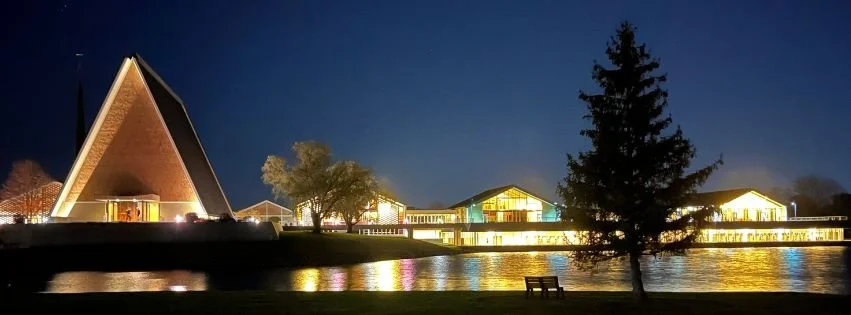
Note: The Rev. Dr. Jon Bruss, president of Concordia Theological Seminary, posted the following to his personal Facebook account. I think it needs to be widely read and forwarded. — Ed.
Unite Leadership Collective recently published a piece in which they asserted it costs our church half a million dollars to $650K to produce a candidate of theology. Here is my response.
Please publicly retract this post, for two chief reasons: (a) it is riddled with false information; (b) it peddles in misattribution of motivation.
It is not possible to calculate the cost to educate using your formula, which I'm not sure how you derived, and therefore you came up with an entirely false and inflated cost to educate (by a factor of 4 times).
A couple things are important: the budget of both seminaries includes more than merely MDiv preparation: it includes deaconess training, advanced degrees (such as MA for numerous overseas students, STMs, PhDs, and DMins); it also includes the significant outreach and broader educational efforts of both seminaries in the form of Continuing Education (CE) for pastors already in the field and underwriting many costs associated with providing theological education in the flesh in Europe, Asia, Africa, and South America, and coordinating with LCMS OIM and ONM and the International Lutheran Council on the most effective ways to bolster the true confession of Jesus Christ in the US and around the world. It furthermore includes such things as lay education in the form of conferences, gatherings, camps, both on and off campus, etc. It includes a significant amount of Bylaws-mandated time invested in work on committees, commissions, etc. Those costs, which are represented in the overall budget, have to be subtracted, and they are significant (costs that you CANNOT subtract include costs to raise money to support the education, but only money to support that education). You also need to focus in on which group of students you're talking about and which institutional resources get used for their education. When you look at that cost, which in most cases is closely reflected in the tuition cost, you get a much better picture: in other words, instead of deriving the number you did (I cannot even figure out how you got there) you could look at the PUBLISHED (and available) tuition cost to get a strong sense of that. But you can be even more precise and do the back-end budget work, which ATS can do. In fact, ATS just made a presentation to the joint boards of the seminaries back in early November. Now, bear in mind when I float this number, that this is discounted to $0.00. But here we go: the number is $38,000/student/year. By comparison with other residential and high-touch institutions (think of private liberal arts colleges), this number is about 60% less than what one would normally anticipate (when you consider things like student:faculty ratios and average class sizes).
Take-away number one: the two LCMS seminaries are delivering a very cost-effective education. Very capable faculties with, at least at CTSFW, a cumulative 235 years of full-time called pastoral work in contexts ranging from church planting, to international missions, to rural, suburban, urban, large, medium, and small parishes, to parishes with schools ("traditional Lutheran" ones as well as "classical Lutheran" ones), to parishes without schools, from growing congregations to congregations in demographic decline and over 500 years of cumulative experience in turning men into pastors work at our seminaries at a salary discount: every one of them could do financially better in parish service (and probably live more where they want to live than in St. Louis or Fort Wayne). The seminaries are staffed by extremely gifted people whose skills would receive much higher remuneration in public service or commerce. And all of them do it because they acknowledge the importance of faithful formation of pastors who will preach and teach the whole counsel of God in accordance with the Christian Book of Concord of 1580 and thereby bring Christ in His fullness through Word and Sacrament to church and world, bringing to and keeping condemned sinners in the faith in Jesus Christ until they die.
Take-away number two: the church generously supports this type of formation and does not at all see it as a waste of money. In other words, if people vote with their dollars, the church is telling the two seminaries: KEEP DOING IT. The cumulative support of the church for the two seminaries around Giving Tuesday alone is, last count I am aware of, at $350,000. For this support the seminaries are deeply grateful and the students greatly encouraged. Praise God!
Take-away number three: if we published our pre-discounted cost for the MDiv, tuition would be $0.00. $0.00/year/student to be steeped in the Word of God, be sharpened as iron by iron through interaction with the future ministerium of the church, be shaped into a servant of Christ willing to go where the Lord through His church calls for the benefit not of a single congregation, but of the entire church. This fact--that a student pays $0.00/year for a residential MDiv is further testimony to the zeal of the people in the pews of parishes of The Lutheran Church--Missouri Synod for the formation of faithful, dead-orthodox, vigorous, markedly and distinctly Lutheran ministers of Word and Sacrament. They know that the only way they and anyone come to the glory promised is by being kept "firm and steadfast in God's Word and faith until they die," and so they vigorously and sacrificially, for the sake of church and world, support the residential shaping and education of pastors capable of rightly handling the Word of God, of preaching His Word with power, and of living holy lives according to it.
In sum, false information like what you wrote in this post is extremely damaging to the church and to the seminaries. It is not walking together as a Synod. It sows discord. It erodes the church's confidence in her seminaries. And the entire thing needs to be publicly retracted not by quietly editing the blogpost, but by a new blogpost that explicitly disavows this one (and by perhaps even posting this message not in the comments section but as a post). Finally, assignation of false motivation is likewise incredibly harmful. "Protection of the institution" is hardly the issue. Institutions come and institutions go. It is the studied (studied!) judgment of those to whom governance of the church's seminaries has been commended by the church (that is, the regents of both seminaries and their chief administrators), not to mention that it is the considered will of the Synod itself as expressed in 2023 Resolutions 6-02A and 6-03A, that it is not best for the church to allow idiosyncratic formation of her future pastors through heterodox institutions and that it is not best for the church to raise up a generation of pastors who lack the fortitude to drop their nets and serve where the Lord wishes them to serve. Indeed, the church has said, "Keep giving us faithful, orthodox Lutheran pastors who know how to put our confession on the ground and bring the light of Christ to all the poor sinners, including us, who without Christ are doomed."
You can read the piece prompting this response here.